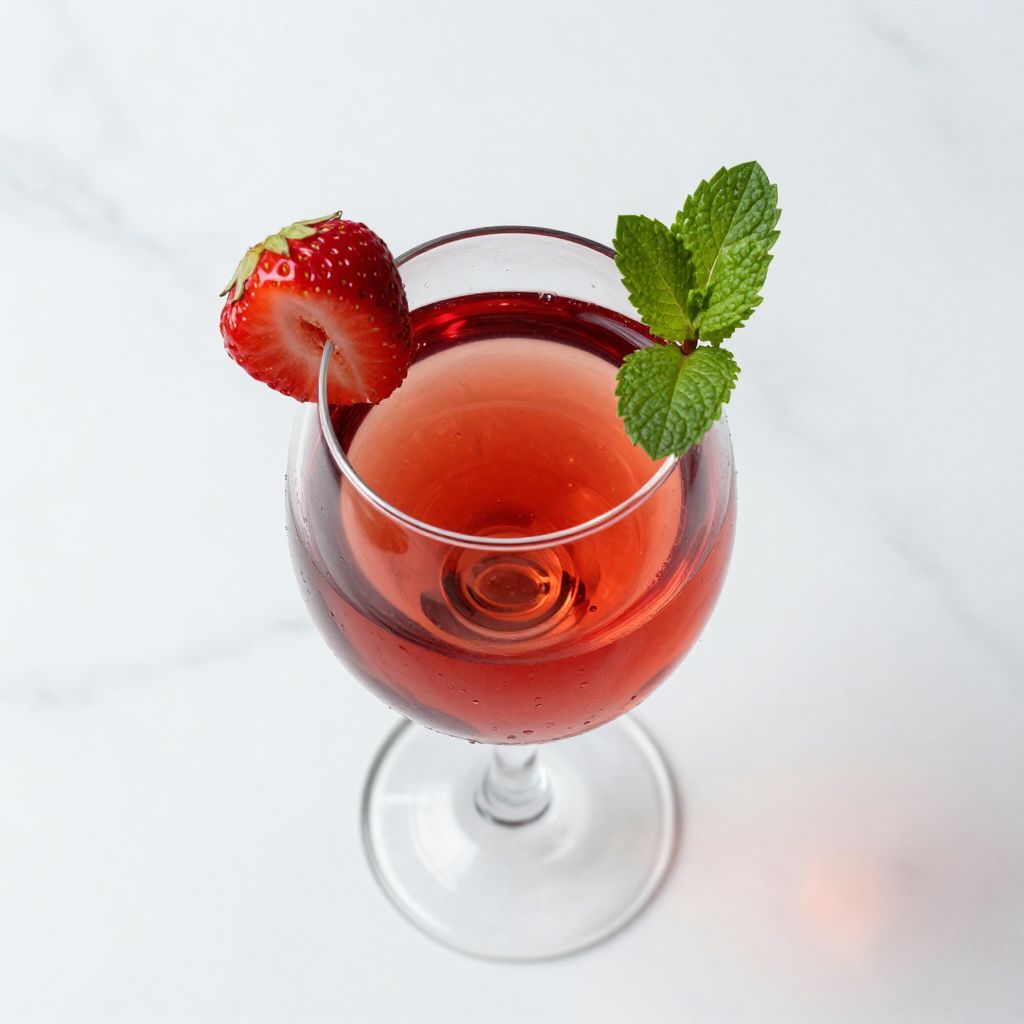
Ingredients
Equipment
Method
- Thoroughly clean all equipment with hot water and rinse completely. Sanitize everything with a no-rinse sanitizer like Star San, following package instructions.
- Rinse your strawberries under cool water and remove the green caps and any damaged spots. Crush them by hand in a large pot until they release their juices.
- Stir the pectic enzyme and acid blend into the crushed strawberries. Let this mixture sit for 24 hours at room temperature.
- Combine 3 pounds of sugar with 1 gallon of water in a large pot and heat gently until the sugar dissolves completely. Let this mixture cool to room temperature.
- Pour the cooled sugar syrup into your sanitized fermentation vessel, then strain the strawberry mixture through cheesecloth into the vessel, pressing gently to extract all the liquid. Add the tannin powder and stir well.
- Mix your wine yeast with yeast nutrient in a small cup of lukewarm water (about 110 degrees Fahrenheit) and let it sit for 15 minutes to rehydrate. Pour this mixture into your fermentation vessel and stir gently.
- Insert your airlock into the rubber bung and place it in the carboy's opening. Monitor primary fermentation for 7 to 10 days at room temperature between 65 and 75 degrees Fahrenheit. Check the hydrometer reading after 7 days; when specific gravity drops below 1.010, primary fermentation is nearly complete.
- Using your siphon tube and racking cane, carefully transfer the clear wine into a clean secondary fermentation vessel, leaving behind the fruit solids and sediment. Top up the secondary vessel with cooled boiled water if needed, then reinsert the airlock.
- Let the wine sit undisturbed for 2 to 3 months at room temperature while secondary fermentation gradually finishes. The bubbling will slow significantly and eventually stop completely.
- Once fermentation has completely stopped and the wine is clear, siphon it into another clean carboy, again leaving sediment behind. If desired, add a fining agent and let it settle for another week before a final racking.
- If you want to stop fermentation and prevent any future fizz, add potassium sorbate dissolved in a small amount of water and stir gently. Let the wine rest for a week before bottling.
- Siphon the finished wine into clean, sterilized wine bottles, filling to just below the neck. Cork or cap immediately and store bottles upright in a cool, dark place for at least 2 more weeks before opening.
Notes
The most critical step is sanitization; any contamination ruins the entire batch. Use filtered or bottled water if chlorine is present in tap water. Store finished bottles on their side in a cool, dark place to keep corks moist. Wine truly improves with 3 to 6 months of bottle age. Serve well-chilled at 45 to 50 degrees Fahrenheit.