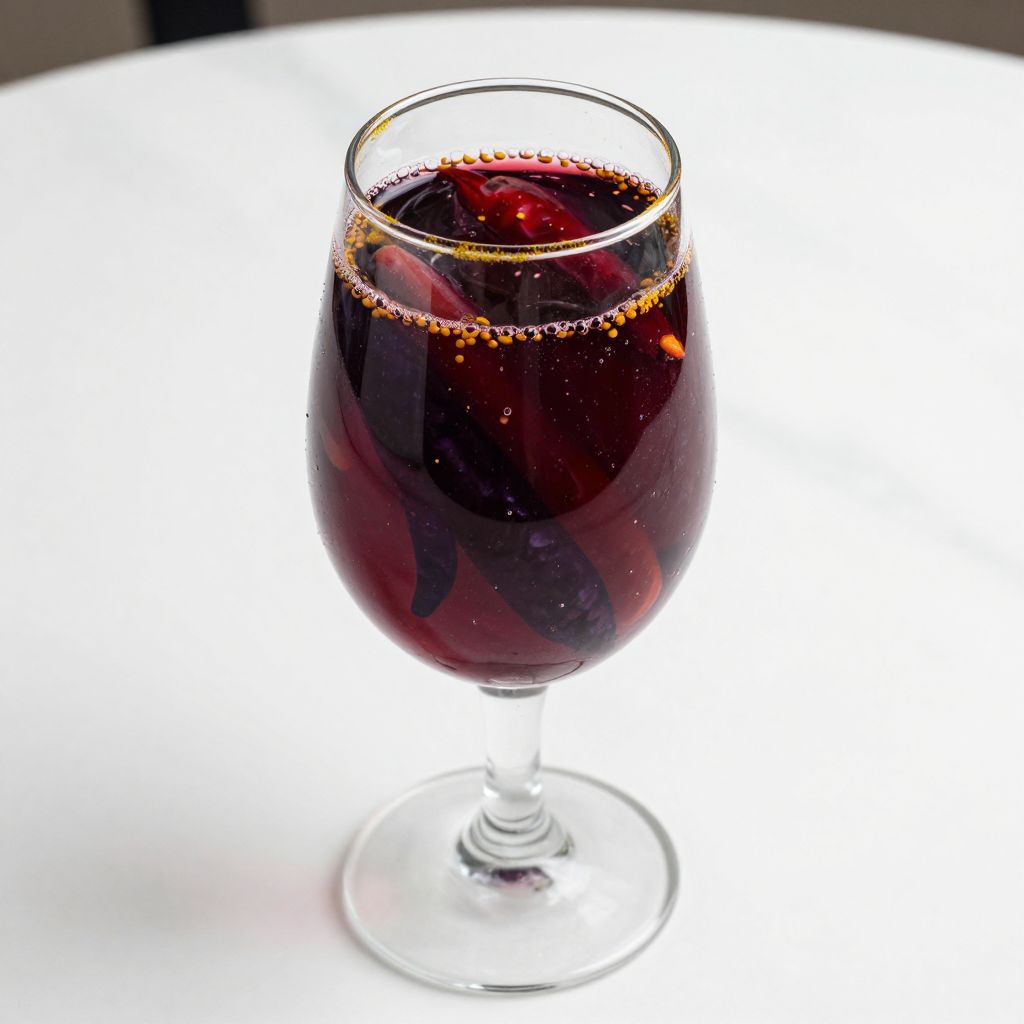
Ingredients
Equipment
Method
- Rinse your glass jar thoroughly with hot water and let it air-dry completely to prevent unwanted mold and ensure beneficial bacteria dominate the ferment.
- Slice black carrots into thin rounds (about 1/4 inch thick) or cut them into matchsticks to expose more surface area for faster fermentation and flavor extraction.
- Add a handful of carrot slices to the bottom of the jar, then sprinkle with a pinch of mustard seeds, a small piece of red chile, and a tiny bit of salt. Repeat this layering pattern until all carrots and spices are used, finishing with a carrot layer on top.
- Pour the 1 liter of filtered or cooled boiled water into a separate container and stir in the 2 tablespoons of salt until fully dissolved.
- Carefully pour the salt water over the layered carrots and spices until everything is fully submerged.
- Sprinkle the turmeric powder and fenugreek seeds over the top of the brine, stirring gently to distribute.
- Place a cloth or coffee filter over the jar mouth and secure it tightly with a rubber band to let carbon dioxide escape while blocking dust and insects.
- Place the jar in a warm, dark corner of your kitchen away from direct sunlight at 70 to 75 degrees Fahrenheit for 3 to 5 days.
- Stir the jar gently once daily to keep the carrot pieces submerged and ensure even fermentation throughout the batch.
- After 3 to 5 days, open the jar and take a small taste. The liquid should taste tangy, fizzy, and peppery. If you prefer more sourness, ferment another day or two.
- Pour the kanji through a fine-mesh strainer into a clean bottle, pressing gently on the carrot pieces to extract all liquid. Discard the spent carrots and seal the bottle.
- Refrigerate immediately. Kanji keeps refrigerated for 2 to 3 weeks and continues developing flavor slowly. Serve chilled.
Notes
Use filtered water or boiled and cooled tap water to eliminate chlorine. Taste your kanji daily starting around day three as fermentation speed varies with temperature. Reserve a few tablespoons of finished kanji to seed your next batch, which cuts fermentation time by a full day. If you notice fuzzy mold on the surface, discard the entire batch and start fresh. The brine gets funkier and more probiotic-rich the longer you ferment.