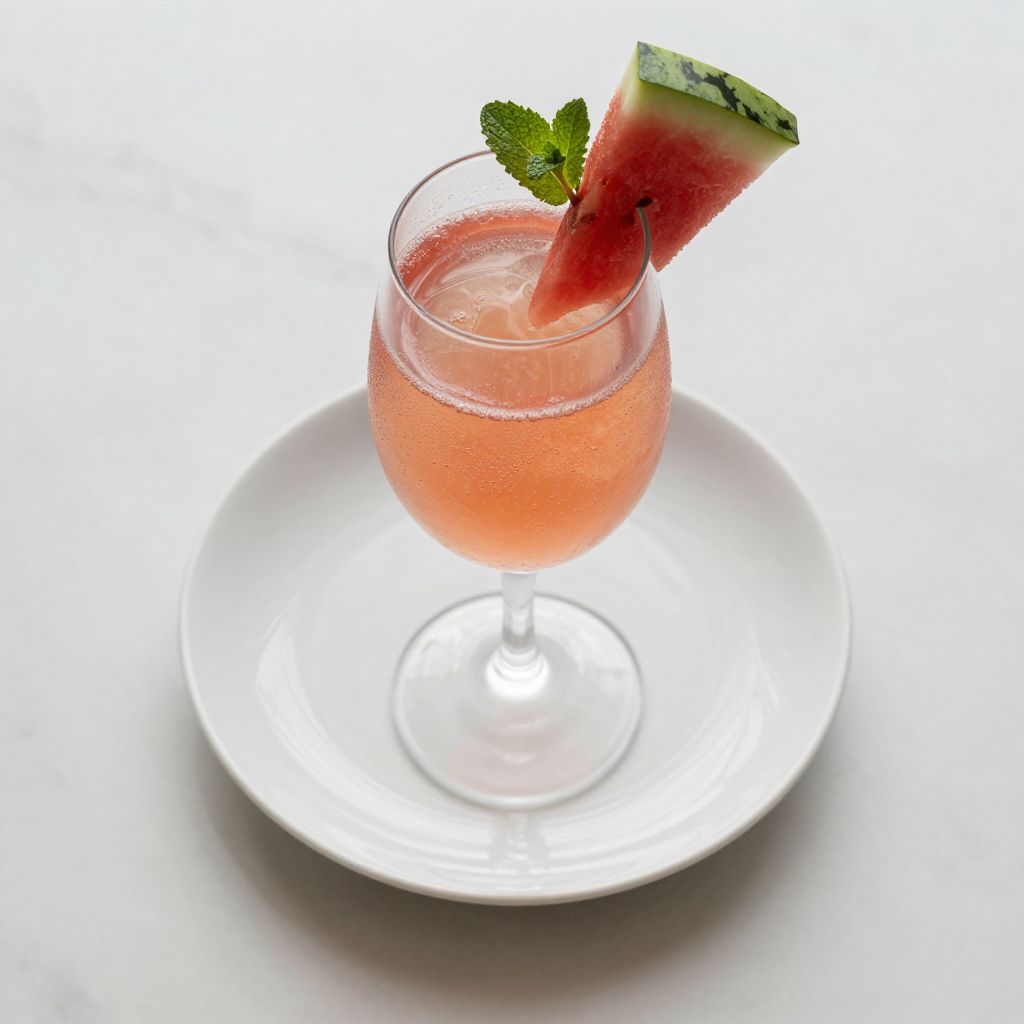
Ingredients
Equipment
Method
- Cut and prepare the watermelon: remove rind, discard seeds, and extract juice using a juicer or blender, then strain to yield about 3 cups of juice.
- Sanitize all equipment by dissolving 1/4 teaspoon potassium metabisulfite in warm water, rinsing the carboy, airlock, bung, pot, spoon, and any other tools.
- Combine the juice and water: pour 3 cups of strained watermelon juice into the pot with 1 gallon of cooled water and stir in 3 pounds of sugar until dissolved.
- Add 1 teaspoon yeast nutrient and 1 teaspoon acid blend, stirring gently to balance pH and provide nutrients for the yeast.
- Check the temperature: ensure the mixture is between 65 and 75°F, then sprinkle the wine yeast packet on top, wait 5 minutes, and stir gently to distribute.
- Transfer the must to the sanitized carboy using a funnel, leaving about 2 inches of headspace, then insert the bung and airlock.
- Allow primary fermentation to proceed at 65–75°F in a dark place for 3–4 weeks until airlock bubbling slows significantly.
- Rack the wine by siphoning the clear liquid off the sediment into a clean carboy, taking care to leave the lees behind.
- Let secondary fermentation occur at 65–75°F for another 2–3 weeks until the wine clears and fermentation fully stops.
- Bottle the wine by siphoning into sanitized bottles, seal with corks or caps, and age for at least 1 month in a cool, dark place before serving.
Notes
Store bottles in a cool, dark place and age for at least 1 month before opening to develop flavor and clarity.