
Imagine opening a bottle of homemade wine on a hot summer evening and tasting pure, refreshing watermelon with a subtle sweetness and a gentle fizz that catches you off guard. Watermelon wine is a delightful homemade beverage that transforms one of summer’s favorite fruits into something elegant and unexpected.
This recipe captures the essence of fresh watermelon and transforms it into a light, fruity wine that’s perfect for warm weather gatherings. The process is surprisingly approachable, even for beginners, and yields a stunning pink-hued wine that tastes like summer in a glass.
Why You’ll Love This Recipe
Making your own watermelon wine delivers something store-bought bottles simply cannot match: the pride of creating a unique, personalized beverage from fruit picked at peak ripeness. It’s an affordable way to experiment with winemaking without investing in expensive equipment or ingredients.
- Creates a refreshingly light wine with natural watermelon flavor
- Perfect for learning basic fermentation and winemaking techniques
- Uses simple ingredients you likely already have on hand
- Yields approximately one gallon of wine for minimal cost
- Makes an impressive homemade gift for friends and family
My Experience Making This Recipe
The first time I made watermelon wine, I was honestly skeptical about whether fruit juice could truly ferment into something palatable. I started with a medium-sized watermelon, juiced it carefully, and mixed it with sugar and yeast, then waited.
Within 24 hours, the airlock in my carboy started bubbling steadily, and I knew something magical was happening. After three weeks of watching the fermentation process, I bottled the result and waited another month for it to fully mature.
When I finally uncorked that first bottle, the aroma was incredible: pure, sweet, fruity, and inviting. The taste was crisp and light, with the watermelon flavor shining through without any harsh, vinegary notes that can sometimes plague homemade wines.
Recipe Overview
- Recipe Name: Homemade Watermelon Wine
- Servings: Approximately 8 to 10 servings (one gallon)
- Prep Time: 30 minutes
- Fermentation Time: 4 to 6 weeks
- Total Time: 4 to 6 weeks plus 1 month aging
- Course: Beverage
- Cuisine: American
- Alcohol Content: Approximately 10 to 12 percent ABV
Equipment You Will Need
- One gallon glass carboy or fermentation vessel
- Airlock and rubber bung
- Large stainless steel pot for mixing
- Long wooden spoon or stirring rod
- Juicer or blender for extracting watermelon juice
- Strainer or cheesecloth for filtering
- Hydrometer for measuring specific gravity (optional but recommended)
- Siphon or auto-siphon for bottling
- Glass bottles with caps or corks
- Sanitizing solution such as potassium metabisulfite
- Kitchen scale for measuring sugar
- Thermometer for monitoring temperature
Ingredients for Watermelon Wine
- Fresh watermelon juice: 4 pounds or approximately 3 cups of freshly pressed juice
- Granulated sugar: 3 pounds
- Wine yeast: 1 packet of dried wine yeast, such as Lalvin EC-1118 or Red Star Premier Cuvee
- Water: 1 gallon of filtered or boiled water, cooled to room temperature
- Yeast nutrient: 1 teaspoon
- Acid blend or citric acid: 1 teaspoon
- Potassium metabisulfite: 1/4 teaspoon for sanitizing equipment
Ingredient Notes and Substitutions
- Fresh watermelon juice brings natural sugars and flavor that dried juice cannot replicate; if fresh watermelon is unavailable, use unsweetened frozen watermelon juice thawed and strained, though the final wine may taste slightly different.
- Granulated white sugar is essential for fermentation and does not add flavor; brown sugar or honey can substitute, but they will create a different flavor profile and fermentation speed.
- Wine yeast is crucial because it can tolerate higher alcohol levels than bread yeast; baker’s yeast will work in a pinch but may produce off-flavors and stop fermenting early.
- Yeast nutrient provides nitrogen and minerals that help the yeast ferment efficiently; without it, fermentation may stall or produce unpleasant sulfur notes.
- Acid blend or citric acid adjusts pH and adds freshness to balance the sweetness; lemon juice can substitute at a ratio of about 1/4 teaspoon citric acid per teaspoon of fresh lemon juice.
How to Make Watermelon Wine
Step 1: Select and Prepare Your Watermelon
Choose a ripe, fragrant watermelon with a deep pink or red interior and no signs of mold or soft spots. Cut the watermelon into manageable chunks, remove the seeds as much as possible, and juice the flesh using a juicer, blender, or by hand through a fine mesh strainer.
Step 2: Sanitize All Equipment
Sanitization prevents unwanted bacteria and wild yeast from contaminating your wine and ruining the batch. Mix potassium metabisulfite solution according to package directions and thoroughly rinse your carboy, airlock, rubber bung, spoon, and any other equipment that will contact your wine.
Step 3: Combine Watermelon Juice, Water, and Sugar
Pour 3 cups of strained watermelon juice into your sanitized pot and add 1 gallon of cooled, filtered water. Stir in 3 pounds of granulated sugar, mixing thoroughly until the sugar completely dissolves and the liquid becomes clear.
Step 4: Add Acid and Nutrient
Sprinkle 1 teaspoon of acid blend and 1 teaspoon of yeast nutrient into the mixture and stir well. These additions balance the juice’s pH and provide the yeast with the nutrients needed for healthy fermentation.
Step 5: Check the Temperature and Pitch the Yeast
Use your thermometer to ensure the mixture is between 65 and 75 degrees Fahrenheit, as wine yeast performs best in this range. Sprinkle the wine yeast packet over the surface of the juice mixture, wait 5 minutes, then stir gently to distribute the yeast evenly throughout the liquid.
Step 6: Transfer to Carboy and Install Airlock
Carefully pour the mixture into your sanitized one gallon carboy using a funnel if needed, leaving about 2 inches of headspace at the top. Insert the rubber bung into the carboy opening and attach the airlock, which allows carbon dioxide to escape while preventing outside air from entering.
Step 7: Monitor Fermentation
Place the carboy in a cool, dark location between 65 and 75 degrees Fahrenheit where it will remain undisturbed. You should observe vigorous bubbling in the airlock within 24 to 48 hours; this bubbling may slow after 1 to 2 weeks as the yeast consumes the sugar and the fermentation transitions to a slower phase.
Step 8: Rack the Wine After Primary Fermentation
After 3 to 4 weeks, when the bubbling in the airlock slows significantly or stops, the wine is ready to rack. Using a sanitized siphon, carefully transfer the clear wine into a clean carboy, leaving behind the sediment (called “lees”) that has settled at the bottom.
Step 9: Allow Secondary Fermentation
Reattach the airlock to the carboy and let the wine sit undisturbed for another 2 to 3 weeks in a cool, dark place. During this phase, any remaining yeast will consume leftover sugars and the wine will continue to clarify.
Step 10: Bottle Your Wine
Once fermentation has completely stopped and the wine appears clear, siphon it into sanitized glass bottles. Seal the bottles with corks or caps and store them upright in a cool, dark location for at least one month before opening, though three months will yield better flavor development.
Pro Tip: Keep detailed notes of your specific gravity readings at each stage using a hydrometer; this data helps you track fermentation progress and predict final alcohol content with accuracy.
Tips for the Best Watermelon Wine
- Use the freshest watermelon you can find, preferably at peak summer ripeness, as riper melons contain more fermentable sugars and deeper flavor.
- Maintain consistent temperatures between 65 and 75 degrees Fahrenheit throughout fermentation; temperatures below 60 slow fermentation dangerously, while temperatures above 80 can produce unpleasant fruity esters.
- Take gravity readings with your hydrometer before adding yeast and again when you rack the wine to confirm fermentation has completed.
- Rack the wine at least once to remove sediment and improve clarity; a second racking after 4 weeks yields an even clearer final product.
- Resist opening bottles before they’ve aged for at least one month, as the wine improves significantly as flavors meld and rough edges smooth out.
- Store finished bottles on their side if using corks to keep the cork moist and prevent it from drying and cracking.
Common Mistakes to Avoid
- Using unripe or overripe watermelon creates imbalanced flavor; ripe melons should smell fragrant, have a hollow sound when tapped, and show a creamy yellow spot where they rested on the ground.
- Skipping sanitation invites contamination that can turn your wine into vinegar or create off-flavors that no amount of aging will fix.
- Adding too much sugar increases the risk of stuck fermentation where yeast dies before consuming all the sugar, leaving cloying residual sweetness.
- Bottling before fermentation completely finishes can cause bottles to explode from built-up pressure; always confirm the airlock shows zero activity for several days before bottling.
- Exposing the wine to direct sunlight degrades color, flavor, and stability; store carboys and bottles in a dark closet or basement.
Serving Suggestions
Watermelon wine shines when served chilled to around 45 to 50 degrees Fahrenheit, which enhances its crisp, refreshing character. Pour it in wine glasses alongside summer meals, or serve it as an elegant aperitif at outdoor gatherings.
- Pair with light appetizers like fresh fruit platters, goat cheese crostini, or charcuterie boards featuring prosciutto and melon
- Serve alongside grilled fish, particularly salmon or halibut, where the wine’s acidity complements the richness of the fish
- Enjoy with summer salads featuring feta cheese, mint, and fresh greens
- Mix into chilled fruit punch or sangria for a refreshing crowd-friendly beverage
- Offer as a dessert wine with light vanilla ice cream or lemon sorbet
Variations to Try
- Strawberry Watermelon Wine: Replace 1 cup of watermelon juice with fresh strawberry juice for a more complex berry flavor and a deeper pink color.
- Spiced Watermelon Wine: Add 1/2 teaspoon of ground ginger and 1/4 teaspoon of ground cardamom to the initial mixture for warm spice notes that complement the melon sweetness.
- Herbal Watermelon Wine: Include fresh basil or mint leaves during fermentation, removing them after 1 week, for a sophisticated, botanical twist.
- Dry Watermelon Wine: Increase the yeast nutrient by an additional 1/2 teaspoon to ensure complete fermentation, resulting in a bone-dry wine with no residual sugar.
- Higher Alcohol Watermelon Wine: Add 1 additional pound of sugar to reach approximately 13 to 14 percent ABV, creating a more robust wine that ages longer.
Dietary Adaptations
- Gluten-Free: All ingredients are naturally gluten-free; simply verify that your yeast packet carries a gluten-free certification if you have celiac disease or severe sensitivity.
- Dairy-Free: This recipe contains no dairy products, making it naturally suitable for anyone avoiding milk and milk products.
- Vegan: Wine yeast is vegan; however, some wines are filtered through animal products, so if strict veganism matters, use a vegan-certified yeast brand.
- Low-Sugar: Reduce sugar to 2 pounds for a drier wine, though fermentation may not complete fully and the final alcohol content will be lower.
Storage and Reheating
Refrigerator
Store sealed bottles in the refrigerator for up to 2 weeks after opening; the cool temperature slows oxidation and preserves freshness. Once opened, drink within a week for the best flavor, as the wine will gradually lose its crisp character.
- Keep bottles upright if using screw caps or sealed with plastic wrap
- Store on a shelf away from light and heat sources
- Ensure bottles are tightly sealed to prevent oxidation
Freezer
Do not freeze completed wine, as the alcohol content prevents proper freezing and thawing will damage the flavor and texture. You may, however, freeze fresh watermelon juice before fermentation for up to 3 months.
- Freeze juice in ice cube trays for easy portioning when ready to make wine
- Label frozen juice with the date and watermelon variety for reference
Reheating
Watermelon wine is served chilled, never heated, as warming will destroy its delicate floral and fruity characteristics. If you prefer a warm beverage, mulled wine using a different recipe would be more appropriate.
- Chill wine to 45 to 50 degrees for 30 minutes before serving
- Use wine chillers or ice buckets if refrigerator time is limited
Nutrition Information
| Nutrient | Amount |
|---|---|
| Calories | 120 |
| Total Fat | 0g |
| Saturated Fat | 0g |
| Carbohydrates | 6g |
| Fiber | 0g |
| Sugar | 5g |
| Protein | 0g |
| Sodium | 5mg |
| Cholesterol | 0mg |
These values represent a standard 5-ounce serving of finished watermelon wine at approximately 11 percent alcohol by volume. Actual nutrition varies slightly depending on fermentation completeness and final residual sugar content.
Frequently Asked Questions
Can I use canned or frozen watermelon juice instead of fresh?
Yes, you can use thawed frozen juice or unsweetened canned juice, though fresh juice produces superior flavor and aroma. Pasteurized commercial juices may ferment more slowly or incompletely, so monitor your fermentation closely and be prepared to add additional yeast nutrients.
What if my fermentation stops too early and the wine is still sweet?
First, check that the carboy temperature remains between 65 and 75 degrees Fahrenheit; if it’s cooler, gently warm the space. If temperature is correct, your yeast may have stuck; try stirring the carboy gently or pitching a new packet of fresh yeast rehydrated in warm water.
How long can I store unopened bottles of finished watermelon wine?
Properly sealed bottles stored in a cool, dark place at 50 to 65 degrees Fahrenheit will keep for 1 to 2 years. Light, heat, and fluctuating temperatures accelerate aging and may create off-flavors, so a basement or wine fridge provides ideal conditions.
Can I back-sweeten the wine if it turns out too dry?
Yes, you can add simple syrup (equal parts sugar and water heated, then cooled) in small increments to taste, about 1 tablespoon per bottle, then reseal and let sit for 1 week. Be cautious, as too much sweetness can make the wine cloying and unbalanced.
Will my wine have any health benefits since it’s made from watermelon?
Watermelon contains lycopene and vitamins, but fermentation and the addition of sugar change the nutritional profile significantly. Wine in moderation may offer cardiovascular benefits associated with moderate alcohol consumption, but it should not be consumed for health purposes specifically.
What causes a vinegary smell in my wine, and can it be fixed?
Vinegary aromas indicate acetobacter contamination, which turns alcohol into acetic acid and cannot be reversed. Prevention through proper sanitation is the only solution; discard contaminated batches and begin again with thoroughly sanitized equipment.
Final Thoughts
Making watermelon wine transforms a humble summer fruit into an elegant homemade beverage that impresses guests and builds confidence in your fermentation skills. The process teaches you the fundamentals of winemaking while producing something genuinely delicious and uniquely yours.
Give this recipe a try next summer when fresh watermelons are at their peak, and you’ll discover why home winemakers become passionate about capturing seasonal flavors in a bottle. The reward of opening a bottle of wine you created yourself makes every step worthwhile.
If you enjoyed making watermelon wine and want to explore similar fruity projects, consider trying watermelon moonshine recipe for a spirited alternative or agua de sandia recipe for a refreshing non-fermented option. Both recipes celebrate the fresh, juicy character of watermelon and offer fun variations for your home beverage collection.
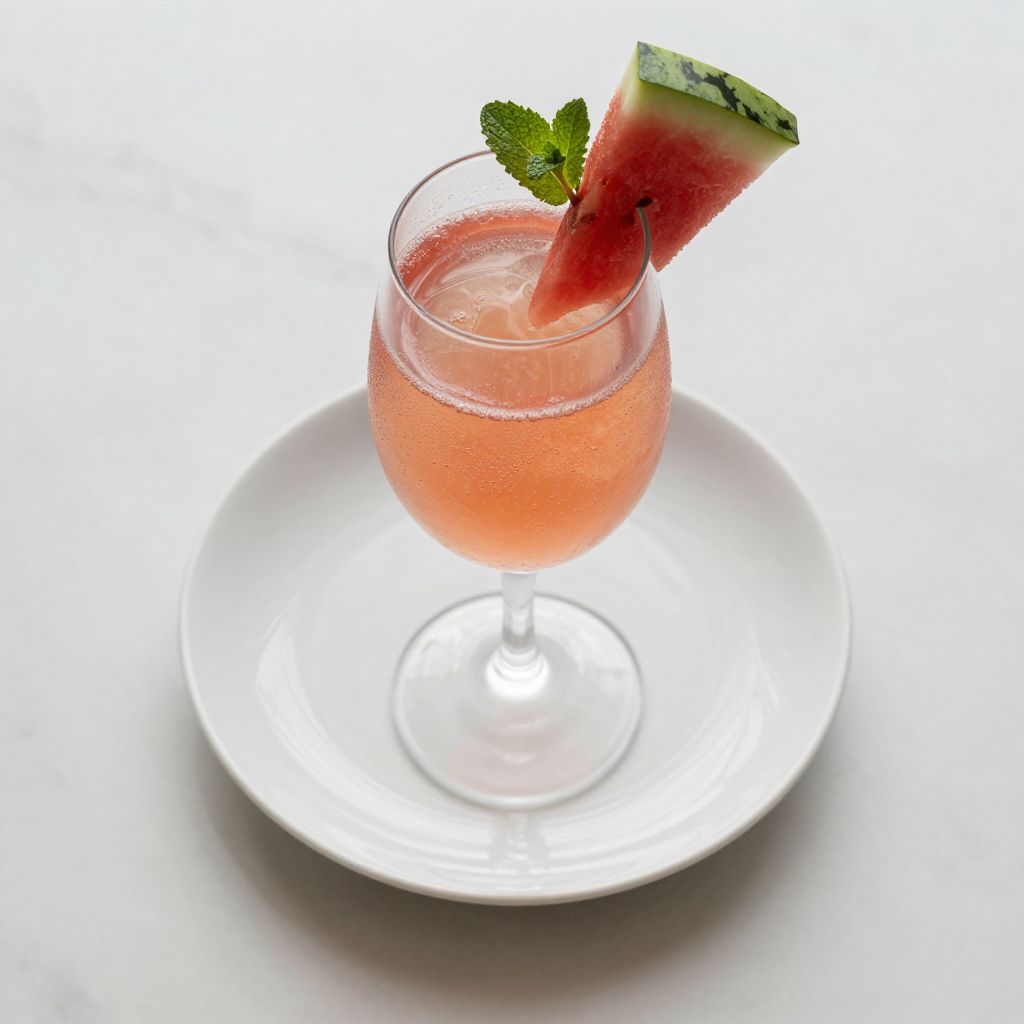
Homemade Watermelon Wine
Ingredients
Equipment
Method
- Cut and prepare the watermelon: remove rind, discard seeds, and extract juice using a juicer or blender, then strain to yield about 3 cups of juice.
- Sanitize all equipment by dissolving 1/4 teaspoon potassium metabisulfite in warm water, rinsing the carboy, airlock, bung, pot, spoon, and any other tools.
- Combine the juice and water: pour 3 cups of strained watermelon juice into the pot with 1 gallon of cooled water and stir in 3 pounds of sugar until dissolved.
- Add 1 teaspoon yeast nutrient and 1 teaspoon acid blend, stirring gently to balance pH and provide nutrients for the yeast.
- Check the temperature: ensure the mixture is between 65 and 75°F, then sprinkle the wine yeast packet on top, wait 5 minutes, and stir gently to distribute.
- Transfer the must to the sanitized carboy using a funnel, leaving about 2 inches of headspace, then insert the bung and airlock.
- Allow primary fermentation to proceed at 65–75°F in a dark place for 3–4 weeks until airlock bubbling slows significantly.
- Rack the wine by siphoning the clear liquid off the sediment into a clean carboy, taking care to leave the lees behind.
- Let secondary fermentation occur at 65–75°F for another 2–3 weeks until the wine clears and fermentation fully stops.
- Bottle the wine by siphoning into sanitized bottles, seal with corks or caps, and age for at least 1 month in a cool, dark place before serving.