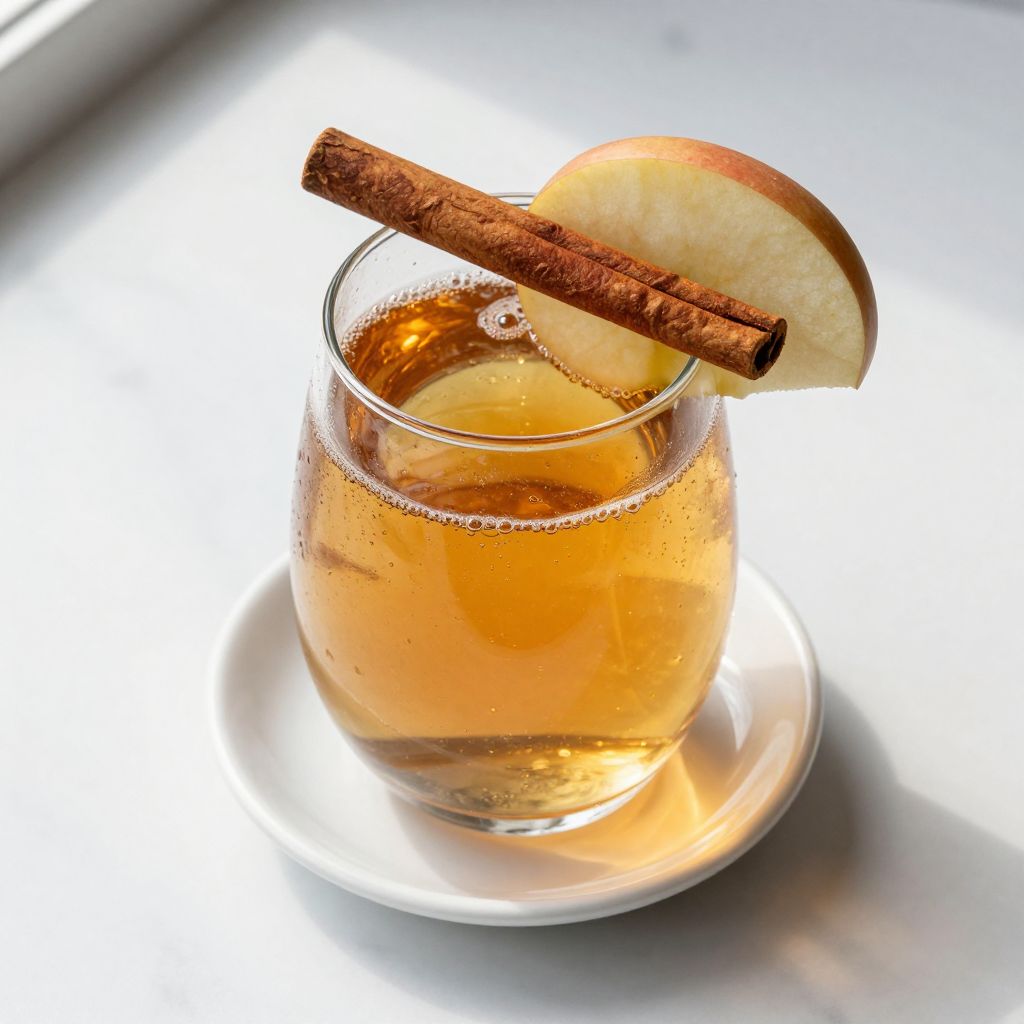
Ingredients
Equipment
Method
- Sanitize all equipment using sanitizing solution according to package instructions.
- Pour one gallon of apple cider into the carboy, leaving about one inch of headspace.
- Take an initial gravity reading with a hydrometer and record the value.
- Sprinkle the yeast (and yeast nutrient if using) onto the surface of the cider and let it hydrate for 10 minutes.
- Gently stir the cider for one minute to aerate and incorporate the yeast.
- Fit the rubber stopper and airlock, then ferment at 65 to 72°F for 21 to 30 days.
- Monitor fermentation by observing airlock bubbling and cider clarity over the fermentation period.
- After 2 to 3 weeks, check the final gravity with a hydrometer to ensure fermentation is complete.
- Optional: Rack the cider off the sediment into a secondary carboy to improve clarity.
- To bottle still cider, siphon into bottles leaving a half-inch headspace, cap, and refrigerate.
- To carbonate, add one quarter teaspoon of sugar solution to each 12-ounce bottle, cap, and condition at room temperature for two weeks.
Notes
Temperature control is your single most important variable; keep your cider between 65 and 72°F for the cleanest results.