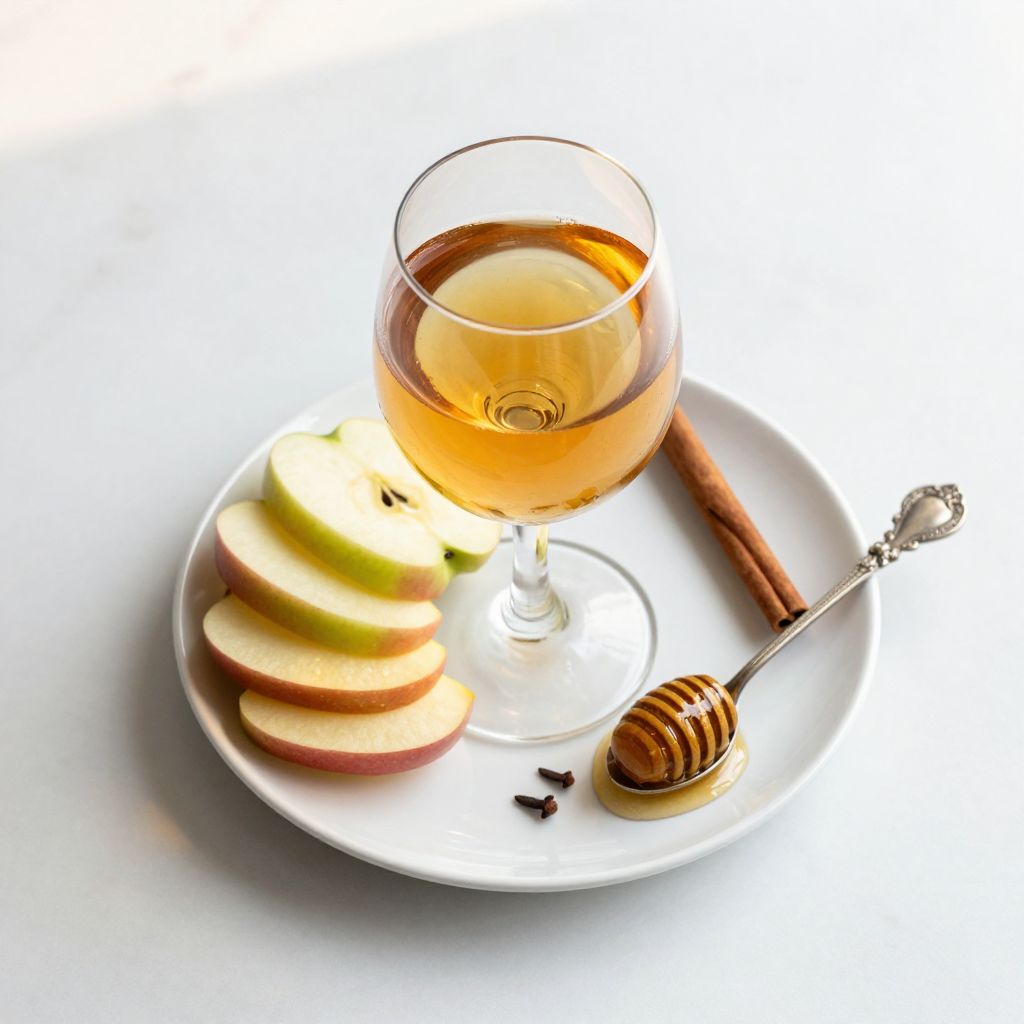
Ingredients
Equipment
Method
- Sanitize all equipment with a food-safe sanitizing solution according to package directions.
- Wash and quarter apples without peeling or coring to retain skins and seeds, then set aside.
- Place apples in a large pot, crush to release juice, add water, and transfer mixture to the sanitized fermentation vessel.
- Stir in 1/2 teaspoon pectic enzyme, cover loosely with a clean cloth, and let sit 12 to 24 hours at room temperature.
- Strain the mixture through cheesecloth or a fine-mesh strainer into a clean pot, pressing gently to extract liquid, then return liquid to the fermentation vessel.
- Warm a small amount of the apple liquid, dissolve the sugar and honey in it, then add back to the vessel along with acid blend, yeast nutrient, ground ginger, and whole cloves; stir thoroughly.
- Rehydrate the wine yeast in warm water for 15 minutes, then pour into the must and stir vigorously for about 1 minute.
- Cover the vessel loosely with a cloth for 24 to 48 hours, then fit the airlock; fermentation will begin as indicated by bubbling.
- Place the vessel in a cool, dark area (60–75°F) and allow primary fermentation for 6 to 8 weeks, monitoring airlock activity.
- Once bubbling slows (about one bubble every 30 seconds or less), siphon clear wine off the sediment into a clean, sanitized secondary carboy using rubber tubing.
- Fit an airlock to the secondary vessel and age for an additional 4 to 6 weeks in a cool, dark location.
- Siphon the finished wine into sterilized bottles, leaving about 1 inch of headspace, then seal with corks or caps to prevent oxidation.
Notes
Keep detailed notes on dates, ingredient amounts, and fermentation observations to refine your technique for future batches.