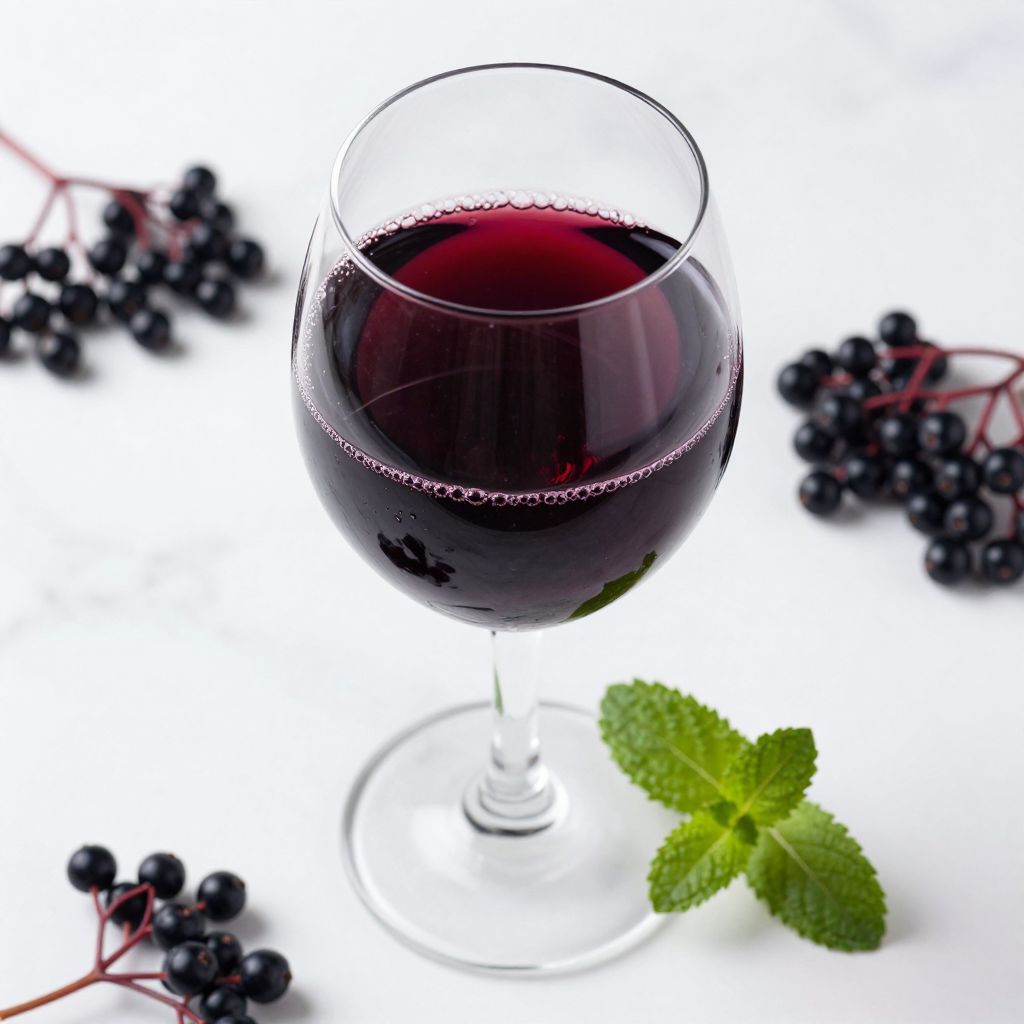
Ingredients
Equipment
Method
- Clean your carboy, bung, airlock, and all equipment with hot water and sanitizing solution to remove bacteria and wild yeasts.
- Remove all stems from elderberries and rinse under cold water. Crush the berries lightly with a wooden spoon or your hands to break their skins.
- Pour filtered water into a large pot and heat to about 70 degrees Celsius (160 degrees Fahrenheit). Stir in all sugar until completely dissolved, then remove from heat and let cool to room temperature.
- Place the crushed elderberries into your sanitized carboy, then carefully pour the cooled sugar water over them using a funnel. Add the pectic enzyme, acid blend, tannin powder if using, and yeast nutrient, stirring gently with a sanitized spoon to combine.
- Sprinkle the champagne yeast over the surface of your must and gently stir it in. Cover the carboy loosely with a cloth for 24 hours.
- After 24 hours, fit your rubber bung and airlock stopper into the mouth of the carboy, making sure it seals properly.
- Move your carboy to a cool, dark place with a steady temperature between 12 and 18 degrees Celsius (54 to 64 degrees Fahrenheit). Monitor for 3 to 6 weeks as fermentation slows and bubbling stops.
- Once fermentation has completely stopped and no bubbles pass through the airlock for several days, use a siphon to transfer your wine to a clean carboy, leaving behind the sediment and dead yeast cells at the bottom.
- Refit your airlock and let the wine age for another 2 to 4 months in that cool, dark location to clarify and develop complexity.
- After aging, rack your wine one final time into clean bottles, leaving behind any remaining sediment. Add 1/4 teaspoon of potassium metabisulfite dissolved in a small amount of wine, then cork or cap the bottles and store them upright in a cool location.
Notes
Keep your fermentation temperature as stable as possible; wild temperature swings stress the yeast and can create unpleasant flavors. Use berries at peak ripeness for the deepest color and flavor. Keep detailed notes on your fermentation dates, temperature, and any observations. Taste your wine as it ages and bottle it when it reaches the flavor profile you prefer. Store finished bottles on their side if they have cork closures to keep the cork moist.