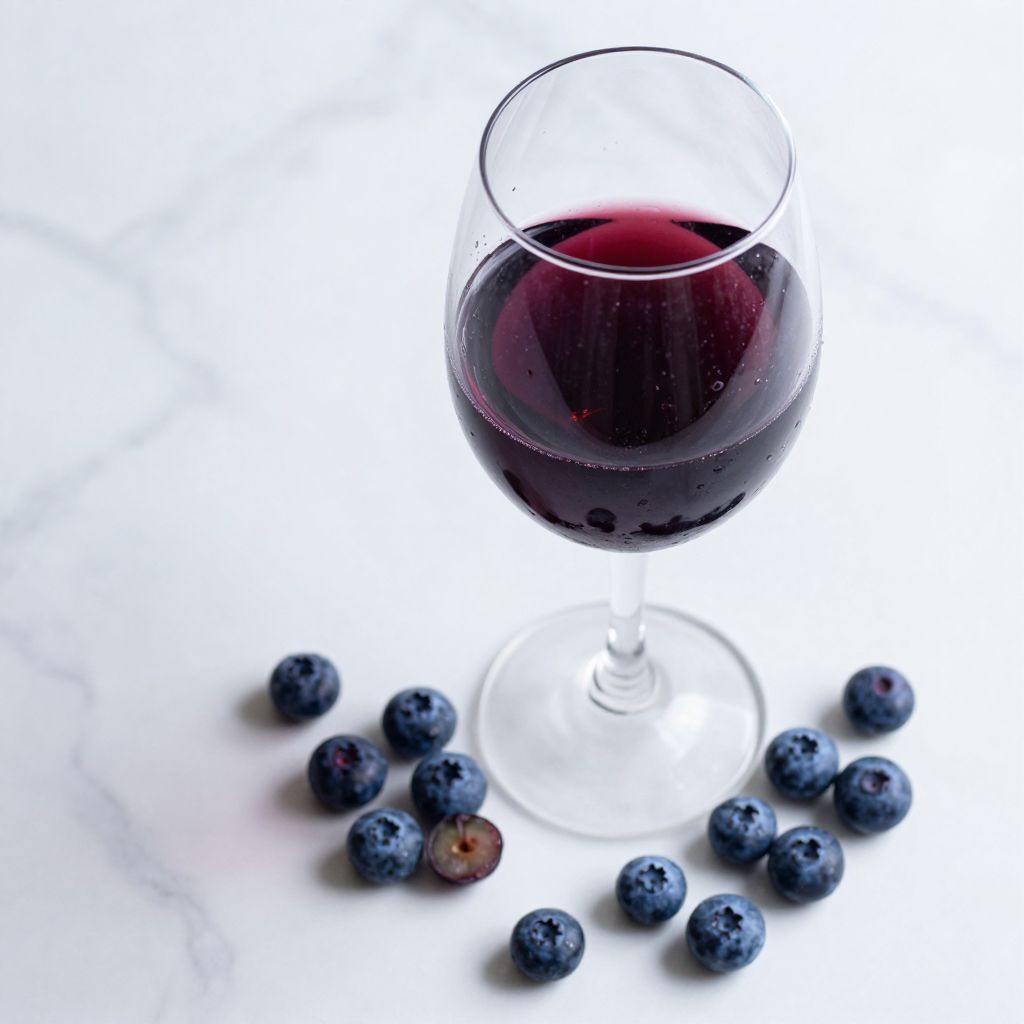
Ingredients
Equipment
Method
- Wash your carboy, airlock, stopper, and any other equipment with hot water and a bottle brush, then rinse thoroughly with hot water until no soap remains. If using potassium metabisulfite solution, mix one campden tablet with a cup of water and soak equipment for 15 minutes, then rinse again.
- Rinse 5 pounds of fresh blueberries under cool running water and pat them dry. Place them in a large pot and crush them by hand, with a potato masher, or by mashing with the back of a wooden spoon until most berries are broken open and releasing juice.
- Pour 1 gallon of filtered or distilled water into your large pot. Add 2.5 pounds of sugar and stir until the sugar dissolves completely over medium heat, about 5 minutes. Add the crushed blueberries to the sweetened water and stir well. Let the mixture cool to room temperature.
- Once the blueberry liquid has cooled to room temperature, add the tartaric acid or lemon juice and 1 teaspoon of yeast nutrient. Stir gently but thoroughly to distribute the acid and nutrient evenly throughout the must.
- Pour the blueberry mixture into your sanitized carboy using a funnel, leaving about 2 inches of headspace at the top. Place a piece of cheesecloth over the mouth to keep dust and insects out while you prepare the yeast.
- Pour about 1/4 cup of the blueberry liquid into a separate cup and let it cool to 70 to 75 degrees Fahrenheit. Sprinkle your wine yeast into this small amount of liquid and let it sit undisturbed for 10 to 15 minutes to rehydrate. After rehydrating, stir the yeast mixture gently and pour it into the carboy with the rest of the blueberry must. Stir the whole mixture slowly for about a minute to combine, then cover the carboy with the rubber stopper and airlock.
- Place your carboy in a cool, dark corner where the temperature stays between 60 and 75 degrees Fahrenheit, away from direct sunlight. Within 24 to 48 hours, you should see vigorous bubbling through the airlock. Monitor for 2-3 weeks as fermentation progresses.
- After 2 to 3 weeks when vigorous bubbling slows considerably and fruit solids settle to the bottom, use a clean siphon and tubing to carefully transfer the clearer wine into a fresh, sanitized carboy, leaving the settled fruit and pulp behind.
- Install a fresh airlock on the new carboy and continue fermentation in a cool, dark place for another 4 to 6 weeks. The fermentation will slow dramatically with just occasional bubbles.
- After 4 to 6 weeks of secondary fermentation, rack the wine one more time into a clean carboy, leaving the yeast sediment behind. At this point, you can add 1/2 teaspoon of potassium sorbate if you want to stop fermentation and create a slightly sweeter final wine.
- Cap your carboy with an airlock and let the wine age in cool darkness for at least 1 more month, ideally 2 or 3 months. During this time, the wine continues to clarify and mellow.
- When the wine is clear and you are satisfied with the flavor (usually 3 to 4 months after you started), rack the wine one final time into clean bottles, leaving any sediment in the carboy. Seal with corks or screw caps using a corking tool if needed. Store bottles upright (for screw caps) or on their side (for cork) in a cool, dark place.
Notes
The most common reason homemade blueberry wine fails is fermentation stopping prematurely due to cold temperatures or dead yeast, so keep your carboy consistently between 65 and 70 degrees Fahrenheit and always use fresh wine yeast. Age bottled wine for at least 2 months before drinking to let the harsh, yeasty flavors mellow and integrate. Store unopened bottles in a cool, dark place for 1 to 2 years.