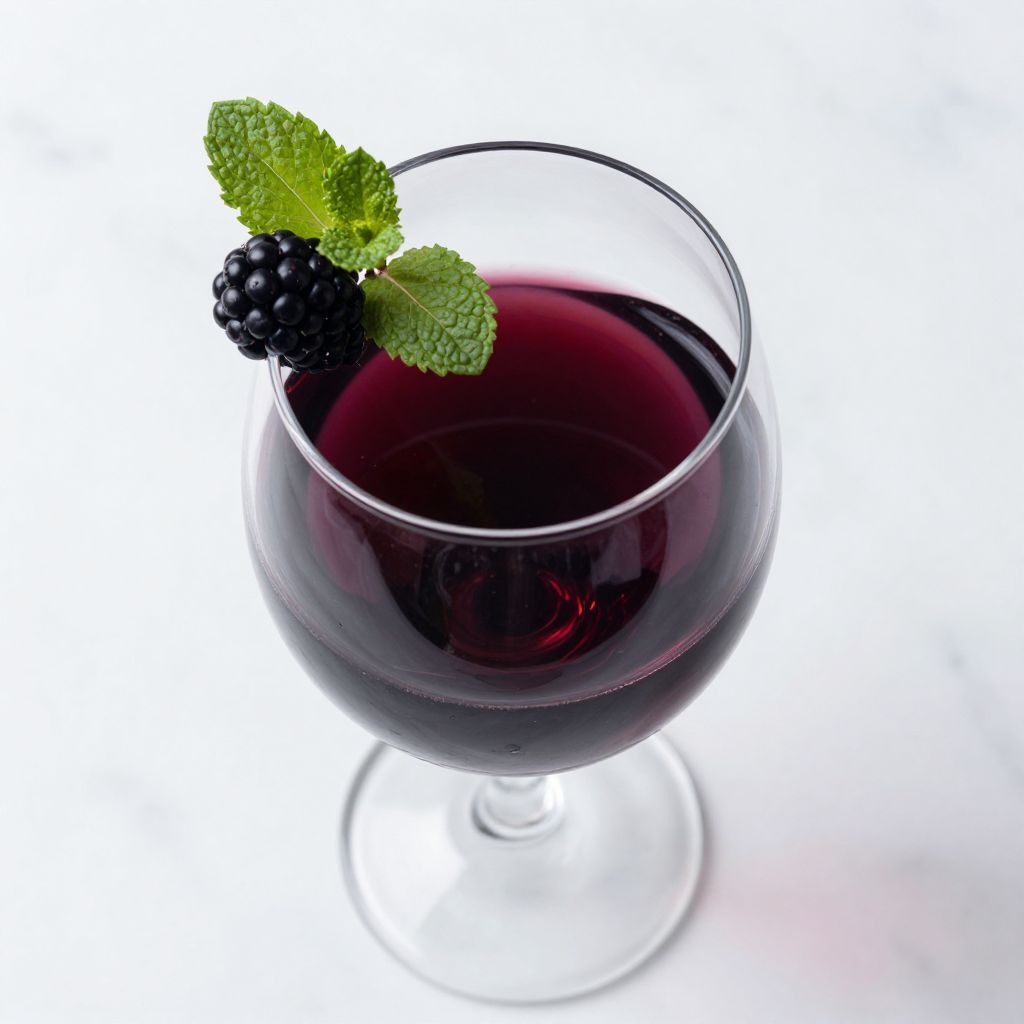
Ingredients
Equipment
Method
- Thoroughly clean all equipment with hot water and a bottle brush to remove any residue. After cleaning, rinse with a no-rinse sanitizer solution like Star San to kill bacteria and wild yeast.
- If using fresh blackberries, remove stems and leaves, then crush them gently in a clean bucket to break the skins and release juice. For frozen berries, thaw them completely at room temperature (about 24 hours), then crush lightly.
- Pour 1 gallon of filtered water into your large pot, then add 3 pounds of sugar while stirring until completely dissolved. Stir in the pectic enzyme and 1/4 teaspoon of potassium metabisulfite.
- Pour the sugar solution into your sanitized carboy, then add all the crushed blackberries along with their juice. Stir the mixture thoroughly to distribute the berries evenly, aiming for a full carboy with about 2 inches of headspace at the top.
- Use pH testing strips to measure acidity, aiming for a pH between 3.0 and 3.5. If your pH reads above 4.0, add 1 tablespoon of acid blend or lemon juice and retest after stirring.
- Sprinkle the wine yeast packet over 1/4 cup of warm water (around 100°F) and let it sit for 15 minutes until foamy. Add the yeast nutrient to the carboy, then pour in the activated yeast and stir gently but thoroughly.
- Fit the carboy with an airlock and bung to allow carbon dioxide to escape while preventing outside air from entering. Place the carboy in a cool, dark location with consistent temperature between 65°F and 72°F, away from direct sunlight.
- Monitor the airlock bubble vigorously for the first week, then gradually slow down over the next 2-3 weeks as sugars convert to alcohol. After all visible berry pulp settles to the bottom and bubbling slows to one bubble per minute (typically 3-4 weeks), your primary fermentation is complete.
- Using a clean siphon and racking cane, carefully transfer the clear wine into a second sanitized carboy, leaving the berry solids behind. This removes sediment and dead yeast, improving clarity and preventing off-flavors.
- If using potassium sorbate for additional stabilization, dissolve 1/2 teaspoon in a small amount of wine and stir into your carboy. Fit the secondary carboy with an airlock and allow it to age in a cool, dark place for at least 2-3 months while flavors develop and the wine continues to slowly clarify.
- After 1 month in secondary fermentation, if sediment has accumulated again, rack the wine a second time into a clean carboy. Many winemakers rack once more after another month for maximum clarity.
- Once the wine is clear and stable, siphon it into clean, sterilized wine bottles, filling each to about 1/2 inch below the cork. Cork immediately using a hand corker or bottle capper, then store bottles upright in a cool, dark place for at least 2 months before opening to allow flavors to marry.
Notes
Keep detailed notes on your fermentation dates, temperature readings, and observations so you can improve future batches and troubleshoot any issues before they become problems. Most homemade fruit wines peak between 1 and 2 years of bottle age. Serve chilled at around 55-60°F.