
There’s something magical about the moment you crack open a bottle of homemade mead and that first sip hits your tongue with the gentle sweetness of blueberries and the warmth of fermented honey. Blueberry mead sits at the intersection of ancient tradition and modern home fermentation, offering a smooth, fruit-forward drink that’s easier to make than you’d think.
This recipe is special because it transforms two simple ingredients into something you’d swear took professional skill to create. The beauty of blueberry mead lies in its balance: the natural acidity and flavor of blueberries cuts through the honey’s richness, creating a mead that’s neither cloying nor harsh.
What makes this approach different is the straightforward fermentation process that doesn’t require specialized equipment or years of experience. By the end, you’ll have a batch of elegant mead that rivals anything you’d find at a meadery, and you made it in your own kitchen.
Why You’ll Love This Recipe
Blueberry mead offers a refreshing departure from typical wines and beers, with a flavor profile that appeals to both seasoned fermentation enthusiasts and curious newcomers. This particular recipe rewards patience with a sophisticated, naturally balanced drink that improves with time.
- Simple ingredient list with just honey, blueberries, water, and yeast
- Hands-on time is minimal; fermentation does most of the work for you
- The deep, fruity character develops beautifully over three to six months
- Creates enough volume for sharing or building a small home cellar
- Naturally versatile for experimentation with different yeast strains and aging lengths
My Experience Making This Recipe
I first made blueberry mead on a whim after finding bulk blueberries at the farmer’s market, and I was genuinely shocked by how approachable the process felt. Within an hour, I had my carboy bubbling away happily, and three months later, I was serving something that tasted like I’d spent weeks perfecting it.
The sensory experience of opening your first jar is hard to describe without sounding romantic, but the aroma alone makes the wait worthwhile. The flavor complexity that develops is nothing short of impressive: you get the blueberry brightness upfront, followed by subtle honey notes and a finish that keeps you coming back for another sip.
My friends were absolutely skeptical until they tasted it, and now I get regular requests for bottles. The best part is that each batch teaches you something new about fermentation, and you genuinely look forward to checking on your carboy each week.
Recipe Overview
- Recipe Name: Blueberry Mead
- Servings: Makes approximately 1 gallon (5 servings of 6 ounces each)
- Prep Time: 1 hour
- Fermentation Time: 3 to 6 months
- Total Time: 13 to 26 weeks
- Course: Beverage
- Cuisine: Medieval inspired, modern fermentation
- Calories per Serving: Approximately 140 calories
Equipment You Will Need
- One 1-gallon glass carboy or fermentation vessel
- Airlock and bung to fit your carboy
- Large stainless steel pot (at least 2 gallons capacity)
- Wooden spoon or non-metal stirring rod
- Thermometer (preferably a fermentation thermometer)
- Hydrometer and testing jar (optional but helpful)
- Funnel with strainer attachment
- Cheesecloth or fine mesh strainer
- Siphon or auto-siphon with tubing for racking
- Clean glass bottles for storage
- Bottle caps or corks and capping equipment
- Sanitizer suitable for fermentation equipment
Ingredients for Blueberry Mead
- Raw honey: 3 pounds (approximately 1.4 kilograms), the foundation of your mead
- Fresh or frozen blueberries: 3 pounds (approximately 1.4 kilograms), for flavor and natural tannins
- Filtered water: 1 gallon, to dilute the honey to fermentable strength
- Mead yeast or wine yeast: 1 packet (such as Lalvin D-47 or Lalvin ICV-K1V), for reliable fermentation
- Yeast nutrient: 1/2 teaspoon, to support steady fermentation
- Acid blend (optional): 1/4 teaspoon, to balance sweetness and preserve the mead
Ingredient Notes and Substitutions
- Raw honey is preferred over pasteurized varieties because it contains natural yeasts and enzymes that support fermentation. If raw honey isn’t available, use high-quality unpasteurized honey, though the fermentation may take slightly longer to establish.
- Fresh blueberries deliver the most vibrant flavor, but frozen blueberries work equally well and are often more convenient. The freezing process breaks down cell walls, actually making frozen blueberries release their juice and color more readily during fermentation.
- Filtered water prevents chlorine and other chemicals from interfering with yeast activity. If you only have tap water, let it sit uncovered overnight to allow chlorine to evaporate, or use bottled water.
- Mead or wine yeast keeps fermentation steady and predictable compared to bread yeast or wild fermentation. Lalvin D-47 produces fruity esters that complement blueberry beautifully, while ICV-K1V creates a clean, dry finish.
- Acid blend brightens flavors and acts as a preservative, especially if your blueberries lack natural acidity. You can substitute with 1/4 teaspoon of citric acid or juice from half a lemon, though the blend offers more balanced acidity.
How to Make Blueberry Mead
Step 1: Sanitize Your Equipment
Thoroughly sanitize your carboy, airlock, bung, spoon, and any tools that will contact your mead with a no-rinse sanitizer solution. This step prevents unwanted bacteria and wild yeasts from competing with your cultured yeast and ruining your batch.
Step 2: Prepare Your Blueberries
If using fresh blueberries, rinse them gently and remove any stems or debris. If using frozen blueberries, you can thaw them partially or use them directly from the freezer; either way works equally well.
Step 3: Heat the Honey and Water
Pour your filtered water into the large pot and heat it to about 160 to 170 degrees Fahrenheit. Add your honey slowly while stirring gently, dissolving it completely without vigorous boiling, which can damage delicate honey compounds and drive off aromatics.
Step 4: Add the Blueberries
Once the honey dissolves, add all your blueberries to the pot and stir gently to combine. Let the mixture simmer at a gentle temperature around 160 degrees Fahrenheit for about 20 minutes, which softens the berries and extracts their juice and flavor without creating a harsh, cooked taste.
Step 5: Cool the Must
Remove the pot from heat and let the mixture cool to room temperature, which typically takes 2 to 3 hours. You can speed this process by placing the pot in a cool water bath, but patience here prevents shocking your yeast when you pitch it later.
Step 6: Strain and Transfer
Pour the cooled mixture through cheesecloth or a fine mesh strainer into your sanitized carboy, pressing gently on the solids to extract as much liquid as possible without forcing through pulp. Leave the carboy slightly underfull to allow for vigorous fermentation activity; you want about an inch of headspace.
Step 7: Pitch the Yeast
Check that your must has cooled to between 65 and 75 degrees Fahrenheit, then sprinkle your yeast packet directly over the surface and let it sit for 15 minutes. Gently stir in the yeast and add your yeast nutrient and optional acid blend, distributing them evenly throughout the liquid.
Step 8: Fit the Airlock
Insert your sanitized bung and airlock into the carboy’s opening, ensuring a tight seal. The airlock allows carbon dioxide gas produced during fermentation to escape while preventing outside air and contaminants from entering your vessel.
Step 9: Monitor Fermentation
Place your carboy in a cool, dark location where the temperature stays between 65 and 75 degrees Fahrenheit, ideally around 68 to 70 degrees. You should see airlock activity within 24 to 48 hours; bubbles flowing through the airlock indicate healthy yeast reproduction and sugar conversion.
Step 10: Primary Fermentation
Allow your mead to ferment for 4 to 6 weeks, during which you’ll watch the airlock activity gradually slow as fermentation progresses. The liquid will gradually clear as yeast settles to the bottom, and you may smell yeasty, slightly sulfurous aromas, which is completely normal during this phase.
Pro Tip: Resist the urge to taste or sample your mead before primary fermentation completes; immature mead tastes harsh and unpleasant, but those rough edges smooth out beautifully with aging.
Tips for the Best Blueberry Mead
- Use a fermentation temperature strip on the outside of your carboy to monitor conditions without opening it, which disturbs your yeast and risks contamination. Consistent temperatures between 68 and 72 degrees Fahrenheit produce the cleanest, fruitiest results.
- Invest in a hydrometer to track your fermentation progress by measuring specific gravity, the density of your liquid compared to water. Taking readings weekly helps you understand when primary fermentation truly ends and signals when it’s time to rack.
- Don’t worry about the white or brownish layer of sediment (called “lees”) collecting at the bottom of your carboy; this is normal yeast settlement. This layer actually protects your mead from oxidation during storage.
- Rack your mead (siphon it into a clean carboy) after primary fermentation finishes and before the yeast autolysizes, which happens when dead yeast cells break down and impart unpleasant flavors. Two to three rackings over several months produces the clearest, best-tasting final product.
- Taste your mead at the three-month mark and again at the six-month mark to understand how flavors develop. You’ll be amazed at the complexity that emerges from such simple ingredients.
Common Mistakes to Avoid
- Boiling your honey vigorously creates a caramelized, overly cooked flavor and drives off the delicate honey aromatics that make your mead special. Keep your heat moderate and aim for a gentle simmer rather than a rolling boil.
- Pitching yeast into must that’s still warm kills the yeast cells and prevents fermentation from starting properly. Always cool to room temperature before adding your yeast, even though it requires patience.
- Opening your carboy frequently to check progress introduces oxygen and risks contamination, disrupting your fermentation and potentially inviting spoilage organisms. Trust your airlock to show you what’s happening inside.
- Using non-sanitized equipment is the fastest way to introduce wild yeasts and bacteria that create off-flavors and ruin your batch. Sanitization is the single easiest way to guarantee success, so don’t skip this step.
- Bottling before fermentation fully completes traps carbon dioxide inside your bottles, which builds pressure and risks explosive bottle failure. Wait until airlock activity stops completely and your hydrometer shows a stable reading before transferring to storage.
Serving Suggestions
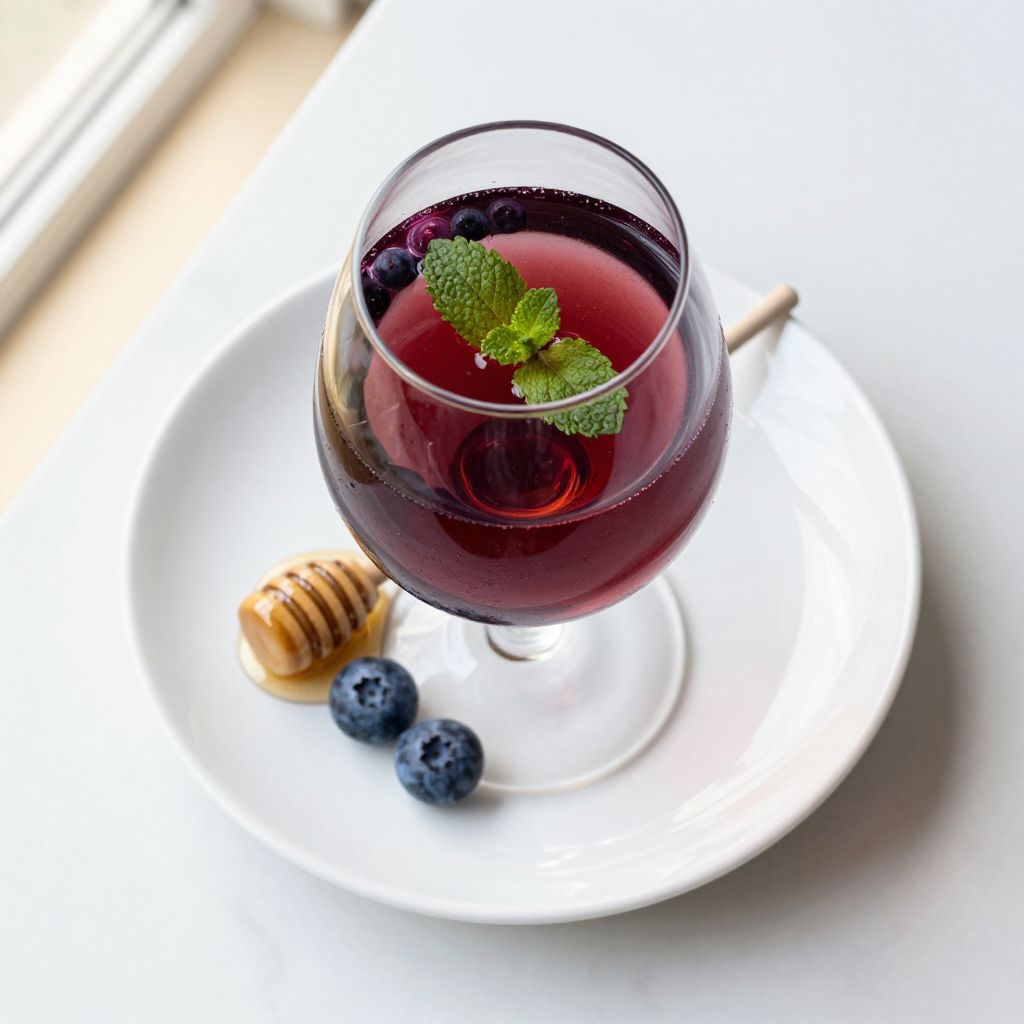
Blueberry mead drinks beautifully on its own, chilled or at room temperature depending on your preference, and its natural sweetness and fruit character make it approachable for nearly any occasion. The complexity also shines when paired thoughtfully with food or when incorporated into creative serving presentations.
- Serve chilled in a wine glass as an elegant aperitif before dinner, letting guests enjoy the aromas and flavors as they unfold
- Pair with soft cheeses like brie or goat cheese and fresh berries for a simple, sophisticated tasting board
- Mix lightly with sparkling water for a lower-alcohol spritzer on warm afternoons
- Warm gently and serve in small glasses after dinner as a dessert beverage alongside chocolate or fruit-based desserts
- Use as the base for creative cocktails, mixing with spirits like brandy or combining with fresh lemon juice for a mead-based punch
Variations to Try
- Mixed berry mead: Replace half the blueberries with blackberries or raspberries for increased complexity and tartness that creates more dimension in your finished mead. The different berry acids and tannins layer beautifully together.
- Spiced blueberry mead: Add 1/2 teaspoon of ground cinnamon, 2 to 3 whole cloves, and a small piece of star anise during the cooling phase for warm spice notes that complement the fruit. Strain these out before pitching your yeast, and taste carefully as you add them since spices can overwhelm quickly.
- Blueberry and honey spice mead: Increase your honey to 3.5 pounds and reduce blueberries to 2.5 pounds for a sweeter, more honey-forward mead that retains more residual sweetness. This variation pairs beautifully with dessert or cheese.
- Dry blueberry mead: Use Lalvin ICV-K1V yeast and allow fermentation to continue until fully dry (specific gravity below 0.990) for a wine-like, less sweet final product. This variation showcases the subtle blueberry and honey flavors without sweetness masking them.
- Blueberry and ginger mead: Add 1 to 2 ounces of fresh ginger slices during the heating phase for a spicy, warming undertone that cuts through richness. Remove the ginger before transferring to your carboy, and adjust to your taste preference as ginger intensity varies.
Dietary Adaptations
- Vegan and vegetarian: This recipe is naturally vegan and vegetarian since it uses only plant-based honey and fruit. Confirm your yeast is vegan-certified if you follow strict vegan guidelines, though most fermentation yeasts are.
- Gluten-free: Blueberry mead contains no gluten by nature and is safe for celiac and gluten-sensitive diets, provided your yeast packet and nutrient additives don’t contain gluten-containing fillers. Check labels on specialty additives if you have severe sensitivities.
- Low-carb and keto: Allowing your mead to ferment completely dry (zero residual sugar) makes it compatible with strict low-carb diets, though fermented mead still contains alcohol calories. Dry blueberry mead has approximately 0 to 1 gram of residual sugar per 6-ounce serving.
- Allergen-free: Most commercial yeasts are free of common allergens, but if you have sensitivities to yeast products themselves, fermented mead isn’t suitable. Always verify that your specific yeast strain doesn’t contain wheat, soy, or other allergens.
Storage and Reheating
Refrigerator
Store bottled blueberry mead in a cool, dark place like a wine fridge or dark cabinet rather than a standard refrigerator if you plan to age it further. If you’ve already bottled and want to chill for drinking, move bottles to the refrigerator 1 to 2 hours before serving.
- Properly bottled and capped mead keeps in cool storage for several years with no deterioration
- Once opened, consume within 2 to 4 weeks for best flavor, though mead is quite stable due to its alcohol content
Freezer
Mead doesn’t freeze solid easily due to its alcohol content, but you can store it in the freezer if space is limited. Keep bottles upright to prevent leakage, and allow several hours for thawing before opening to prevent sudden pressure changes.
- Freezer storage works for several months without affecting quality, though it doesn’t improve the mead like cool aging does
- Thaw gently at room temperature rather than in warmth to avoid sudden flavor changes
Reheating
Blueberry mead is typically served cold or at room temperature and doesn’t require reheating, though you can gently warm it for specialty serving applications. Heat slowly in a glass container over low heat or in a water bath rather than direct heat, which can damage flavors and aromas.
- Warm mead to approximately 120 to 140 degrees Fahrenheit for mulled or hot serving preparations
- Never allow mead to boil, which drives off volatile aromatics and creates harsh flavors
Nutrition Information
| Nutrient | Amount |
|---|---|
| Calories | 140 |
| Total Fat | 0g |
| Saturated Fat | 0g |
| Carbohydrates | 6g |
| Fiber | 0g |
| Sugar | 4g |
| Protein | 0g |
| Sodium | 10mg |
| Cholesterol | 0mg |
Nutrition values are approximate and assume complete fermentation of the honey into alcohol, leaving minimal residual sugar. Your actual nutrition profile may vary slightly based on how dry your final mead is and your yeast strain’s fermentation efficiency.
Frequently Asked Questions
Can I use bottled or canned blueberry juice instead of whole blueberries?
Bottled or canned blueberry juice lacks the tannins and complexity of whole berries, and most commercial juices are pasteurized, killing beneficial compounds that contribute to fermentation. Using whole or frozen blueberries produces noticeably superior flavor and clearer fermentation.
What if my fermentation stops before the airlock activity ends?
If your airlock bubbles stop but your hydrometer reading shows remaining sugar, your fermentation may have stalled due to temperature fluctuations or yeast stress. Slowly warm your carboy to 70 to 72 degrees Fahrenheit, stir gently to rouse the yeast, and wait another week to see if fermentation resumes.
How long can I leave my mead in the carboy before bottling?
You can leave mead in your carboy for several months after fermentation completes, and extended time actually improves clarity as more sediment settles. Most meads benefit from aging in the carboy for 4 to 6 months total before bottling, though 3 months is the minimum.
Why does my mead smell like sulfur or rotten eggs?
Sulfur smells during fermentation are completely normal and typically fade as fermentation progresses and your yeast finishes its work. This off-aroma should improve dramatically within 2 to 3 weeks; if it persists beyond a month, your batch may be infected and unsafe to consume.
Will my mead become drier or sweeter as it ages?
Properly fermented and bottled mead maintains its sweetness level indefinitely, as alcohol prevents any additional fermentation or sugar conversion. Aging improves flavor smoothness and complexity but doesn’t change your mead’s sweetness profile once fermentation completes.
Can I carbonate my blueberry mead like cider?
Yes, you can carbonate still mead by adding a small amount of sugar before capping (called “priming”), which allows residual yeast or new yeast to produce carbon dioxide. Add approximately 1/2 teaspoon of honey per 12-ounce bottle, cap tightly, and store at room temperature for 1 to 2 weeks, then refrigerate to stop carbonation.
Final Thoughts
Making blueberry mead transforms you from a passive drinker into an active creator, and there’s genuine satisfaction in serving something you crafted with your own hands. The three to six month wait feels long until you open that first bottle and taste the results of your patience and care.
Start your first batch this week and join the growing community of home mead makers who discover that fermentation isn’t intimidating but rather a forgiving, rewarding kitchen skill. Your future self will thank you when you’re sharing beautifully aged blueberry mead with people you care about.
Ready to expand your fermentation adventures? Check out a simple mead recipe for one gallon to explore other honey-based ferments, or try our blueberry wine recipe for a different take on blueberry fermentation that showcases the fruit in entirely new ways.
Blueberry Mead
Ingredients
Equipment
Method
- Sanitize all fermentation equipment including the carboy, airlock, bung, spoon, and funnel with a no-rinse sanitizer solution to prevent contamination.
- Rinse fresh blueberries and remove stems or use frozen blueberries directly as is without thawing.
- Heat 1 gallon of filtered water in a large pot to 160-170°F, then stir in raw honey until fully dissolved without boiling.
- Add blueberries to the honey water and maintain a gentle simmer at around 160°F for 20 minutes to extract juice and flavor.
- Remove the pot from heat and cool the mixture to room temperature (65-75°F) over 2-3 hours, using an ice bath to speed up cooling if needed.
- Strain the cooled must through cheesecloth or a fine mesh strainer into the sanitized carboy, leaving about 1 inch of headspace.
- Check that the liquid is between 65-75°F, then sprinkle yeast on top, wait 15 minutes, stir in yeast nutrient and acid blend evenly.
- Secure the bung and airlock on the carboy, filling the airlock with sanitizer solution or water per manufacturer instructions.
- Place the carboy in a dark environment at 68-70°F and watch for airlock activity within 24-48 hours indicating fermentation has begun.
- Allow primary fermentation to proceed for 4-6 weeks until bubbling slows and the mead clears, then rack as needed for clarity.