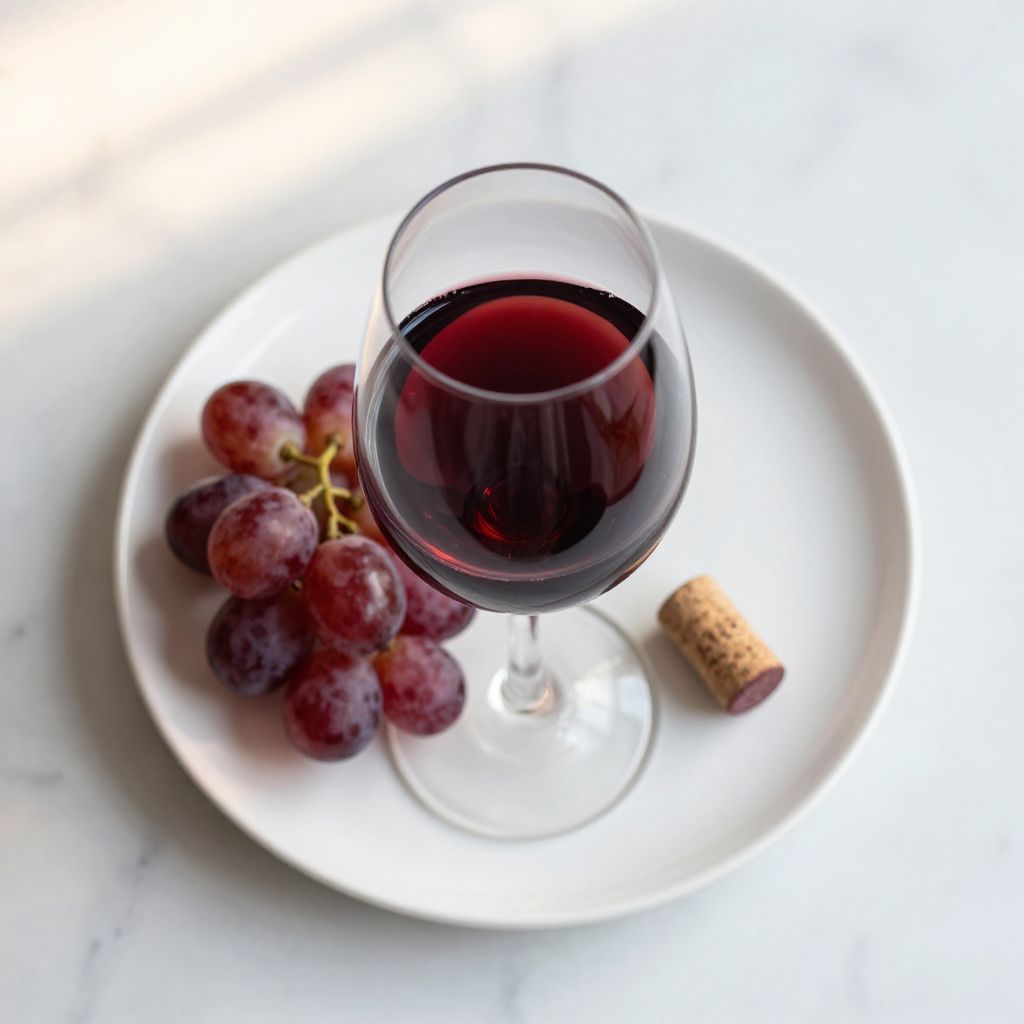
Ingredients
Equipment
Method
- Sanitize all equipment by soaking in sanitizer solution for at least 20 minutes, rinse with hot water, and air dry.
- Prepare the must: crush fresh grapes with stems and skins intact for red wine or pour juice into the pot for white wine.
- Measure specific gravity with a hydrometer by floating it in a sample of must and recording the reading at the meniscus.
- If gravity is below 1.085, dissolve additional sugar in warm water, stir into the must, and retest until target gravity is reached.
- Optional: add dissolved potassium metabisulfite and tartaric or citric acid, tasting and adjusting acidity as needed.
- Rehydrate wine yeast in warm (not hot) water for 10 minutes, then stir in yeast nutrient and pitch into the must.
- Transfer the must into the carboy through cheesecloth, leaving about 2 inches of headspace at the top.
- Install the airlock and store the carboy in a cool (60 to 75°F), dark place until active fermentation (bubbling) begins.
- After 30 days or when fermentation slows, siphon the clear wine into a clean carboy, leaving lees behind (first racking).
- Continue secondary fermentation for another 2 to 3 months at 60 to 75°F until hydrometer readings stabilize around 1.000 or lower.
- Perform a second racking at 3 months if significant sediment accumulates, then allow wine to clear fully.
- Once clear, siphon into bottles, filling to 1/2 inch below cork line, and seal with corks or screw caps.
- Age bottles on their side in a cool, dark place for at least 1 month before tasting, with 3 to 6 months improving complexity.
Notes
Fermentation and aging times may vary. Keep detailed notes and maintain consistent temperatures for best results.