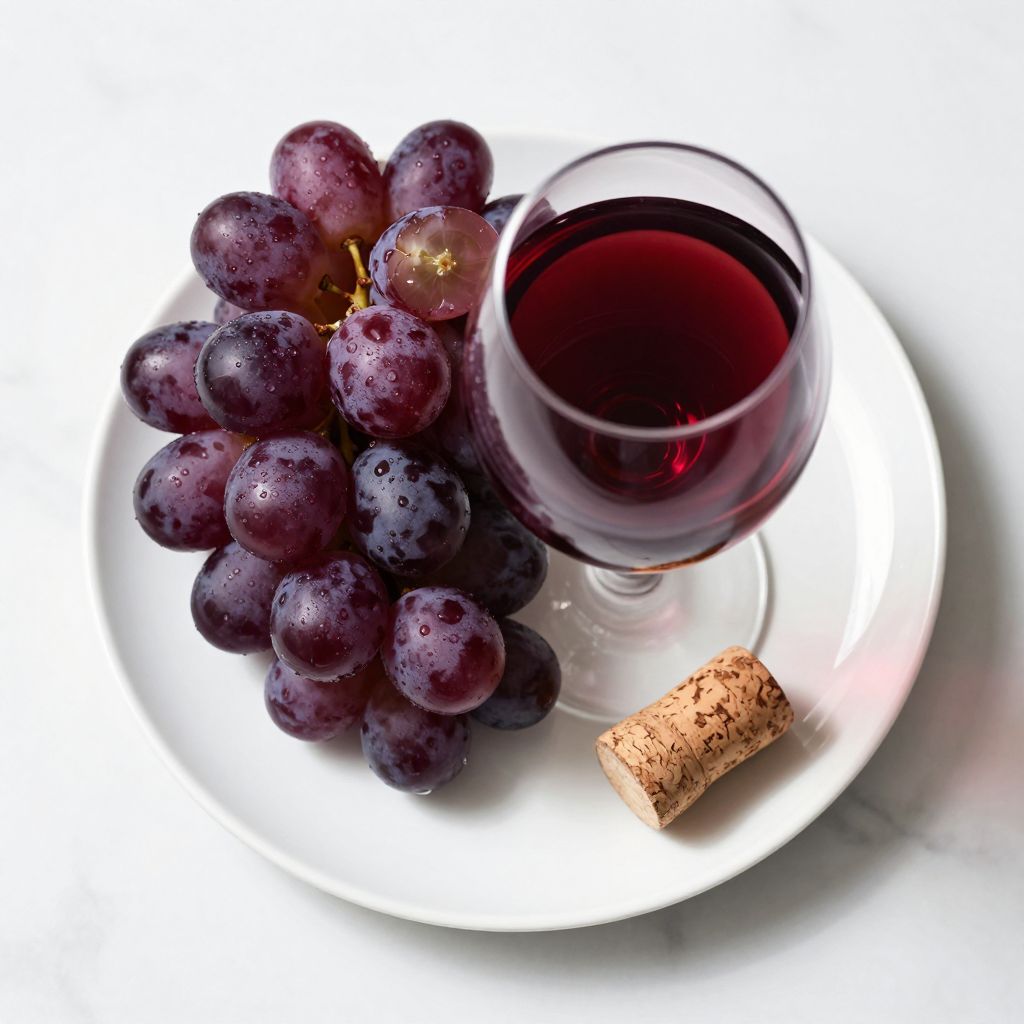
Ingredients
Equipment
Method
- Sanitize every piece of equipment with a food-grade sterilizer or sanitizing solution before starting.
- Rinse your grapes thoroughly, remove stems and leaves, and crush them by hand into the fermentation vessel, breaking the skins to release juice.
- Use a hydrometer to measure the specific gravity or Brix of the crushed grapes to determine sugar content.
- Add granulated sugar, acid blend, tannin powder, and yeast nutrient to the must and stir vigorously until fully dissolved.
- Rehydrate wine yeast in warm (not hot) water according to package directions, let sit for 10 minutes, then pour into the must and stir gently to combine.
- Cover the vessel with an airlock and ferment in a cool, dark location at 60–75°F (15–24°C) for 1 to 3 weeks during primary fermentation.
- After fermentation slows and sediment settles (1 to 3 weeks), siphon the wine into a clean secondary vessel leaving lees behind, attach an airlock, and continue fermenting for 2 to 4 months.
- When bubbles cease for several weeks, confirm dryness with a hydrometer, then dissolve potassium sorbate in a small amount of wine and stir gently to stabilize.
- Siphon the finished wine into sanitized bottles leaving about 1/2 inch of headspace, cork or cap each bottle, and store upright in a cool, dark place for at least two weeks before opening.
Notes
Serve chilled for lighter, fruitier flavors, or at room temperature to experience full body and complexity.