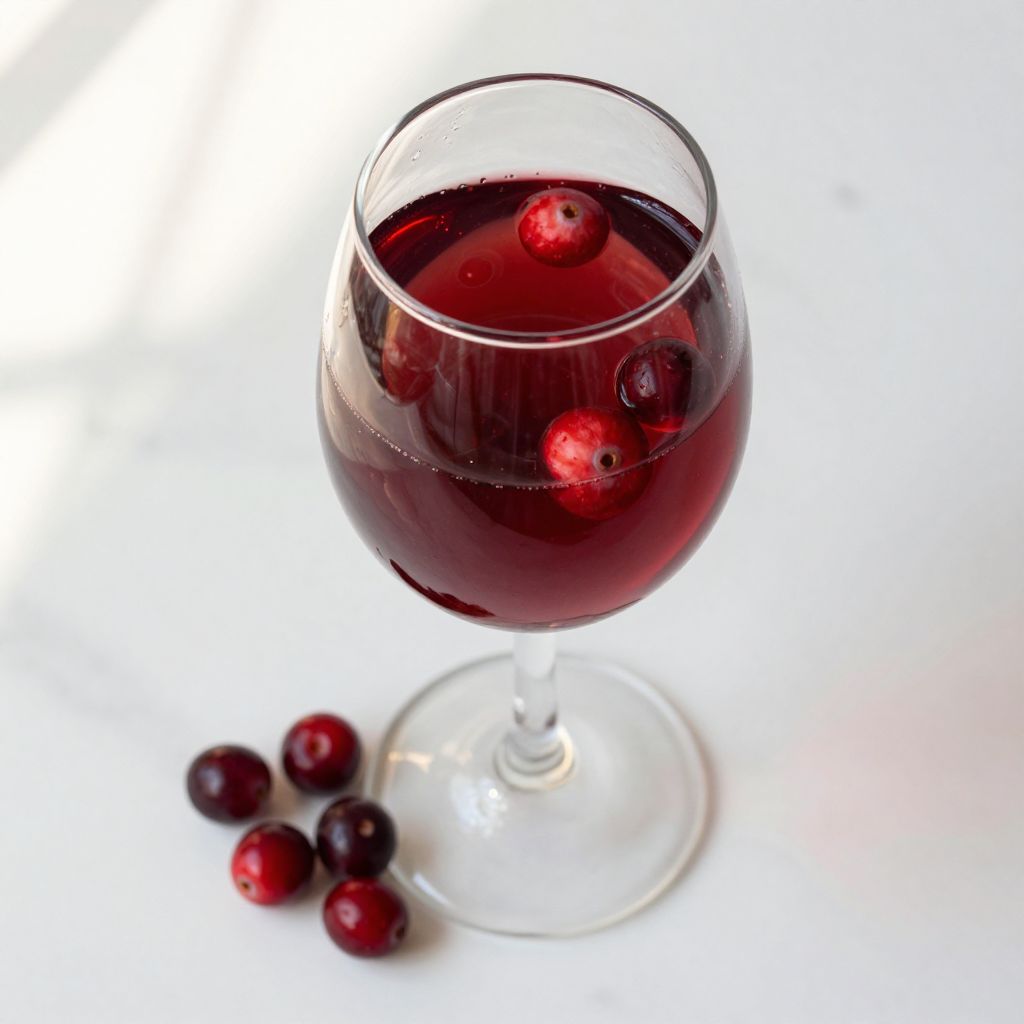
Ingredients
Equipment
Method
- Sanitize all equipment by soaking in sanitizer solution for at least 15 minutes.
- Rinse the cranberries under cool water and discard any stems or shriveled berries.
- If using frozen cranberries, thaw completely and crush with a wooden spoon to release juice.
- Heat 1 gallon of filtered water to 160°F in a large pot, add crushed cranberries, and maintain temperature for 30 minutes.
- Remove from heat and cool mixture to room temperature (about 2 hours).
- Strain the mixture through cheesecloth into the carboy, pressing fruit gently to extract liquid, and top up with water to 1 gallon if needed.
- Dissolve 1.25 pounds of sugar in the cranberry juice in the carboy, then add acid blend, wine tannins, and yeast nutrient, stirring gently to mix.
- Cool must to 65–75°F, then sprinkle wine yeast on the surface, let hydrate for 5 minutes, and stir gently to incorporate.
- Seal carboy with a rubber bung and airlock, ferment in a cool dark place at 65–70°F for 7–10 days until bubbling slows.
- Dissolve 0.75 pounds of sugar in warm water and add to fermenter after 7–10 days; repeat with final 0.5 pounds of sugar after another 7–10 days.
- After about 4 weeks, rack wine off sediment into a sanitized secondary carboy, reattach airlock, and continue secondary fermentation for 8–12 weeks.
- If wine remains hazy after secondary fermentation, add fining agent (isinglass or bentonite) according to package instructions and wait for clarity.
- When gravity readings stabilize (two readings within 0.002), siphon wine into sanitized bottles, leaving 1 inch headspace, and add 1/4 teaspoon potassium metabisulfite per gallon.
- Store bottles upright in a cool, dark place for at least 2 months before opening, aging up to 1 year for best flavor.
Notes
Store for at least 2 months before opening and age up to 1 year for best flavor.