
There’s something magical about that first sip of ice-cold pineapple lemonade on a hot afternoon, when the tropical sweetness hits your tongue followed by a bright citrus punch. This refreshing drink marries the summery comfort of classic lemonade with the exotic appeal of pineapple, creating a beverage that tastes like a vacation in a glass.
Pineapple lemonade is special because it requires just a handful of ingredients and comes together in minutes, yet tastes like you spent hours perfecting it. The beauty lies in its simplicity: fresh lemon juice, ripe pineapple, a touch of sweetness, and cold water create a perfectly balanced drink that works for backyard gatherings, weeknight dinners, or lazy Sunday mornings.
What makes this recipe stand out is how it captures both tartness and tropical sweetness without feeling heavy or overly sugary. You’ll love how adaptable it is too, whether you serve it over crushed ice, spike it for adult parties, or blend it into a frozen version for the kids. Let’s get you mixing up a batch that’ll have everyone asking for your secret.
Why You’ll Love This Recipe
This recipe checks every box for a perfect refreshment: it’s quick to make, tastes restaurant-quality, and works for any occasion from casual family meals to entertaining guests.
- Ready in under 10 minutes with zero cooking required
- Uses fresh whole ingredients with no artificial flavors or colors
- Naturally sweetened balance between tart lemon and sweet pineapple
- Easily scales up for crowds or down for a single serving
- Stores well in the fridge for up to five days
My Experience Making This Recipe
The first time I made pineapple lemonade, I was experimenting with ways to use up a surplus of pineapples from a farmers market haul. I started with a basic approach: fresh lemon juice, pineapple juice, and water, but it fell flat without enough personality.
That’s when I switched to using fresh pineapple chunks blended with the juice instead of straight juice from a carton. The difference was dramatic: the drink became silkier, more vibrant, and tasted genuinely homemade rather than like a boxed mix.
My kids drank an entire pitcher in one afternoon, and guests at a barbecue I hosted kept coming back for refills wondering what made it taste so good. Now I make it regularly during summer, and it’s become the drink people request by name when they visit.
Recipe Overview
- Recipe Name: Pineapple Lemonade
- Servings: 4 servings
- Prep Time: 10 minutes
- Cook Time: 0 minutes
- Total Time: 10 minutes
- Course: Beverage
- Cuisine: American
- Calories per Serving: 95
Equipment You Will Need
- Cutting board
- Sharp chef’s knife
- Blender or food processor
- Fine mesh strainer
- Large pitcher
- Wooden spoon for stirring
- Measuring cups and spoons
- Citrus juicer or manual juicer
- Glasses for serving
Ingredients for Pineapple Lemonade
- Fresh pineapple: 2 cups fresh pineapple chunks (from about one medium pineapple)
- Fresh lemon juice: 3/4 cup (about 5 to 6 medium lemons)
- Water: 4 cups cold water
- Sugar: 1/4 cup white granulated sugar
- Salt: 1/4 teaspoon fine sea salt
- Ice: 2 cups ice cubes for serving
Ingredient Notes and Substitutions
- Fresh pineapple: Fresh pineapple provides bright, natural sweetness and thick body to the drink that bottled juice cannot replicate. Substitute with one cup of high-quality pineapple juice if fresh fruit isn’t available, though the texture will be thinner.
- Fresh lemon juice: Real lemon juice brings authentic tartness and prevents the drink from becoming cloying. Bottled lemon juice works but tastes noticeably flat and less vibrant.
- Sugar: Granulated sugar dissolves quickly in cold liquid and sweetens without any aftertaste. Honey or agave nectar work well as substitutes, using the same amount, though they’ll add subtle flavor undertones.
- Water: Cold water keeps the drink refreshing and prevents dilution from melting ice. Coconut water adds tropical appeal but changes the flavor profile noticeably.
- Salt: A tiny pinch of salt rounds out flavors and makes both sweetness and tartness pop without tasting salty. Omit it if you prefer, though the drink will taste slightly flat.
How to Make Pineapple Lemonade
Step 1: Cut and Prepare Fresh Pineapple
Start by slicing your pineapple in half lengthwise, then cut each half into quarters to access the flesh easily. Slice off the tough outer skin and remove the core, which is fibrous and best left out of your drink.
Cut the remaining pineapple flesh into rough chunks, aiming for pieces about one to two inches in size so they blend smoothly. Fresh pineapple breaks down quickly in the blender, so don’t worry about cutting perfect pieces.
Step 2: Juice Your Fresh Lemons
Roll your lemons on the counter, pressing down firmly with your palm to break down the interior membranes and release more juice. This simple step extracts significantly more juice from each lemon than juicing them straight.
Cut each lemon in half and use a citrus juicer to extract every drop into a bowl, straining out seeds as you go. You need about 3/4 cup of juice, which typically comes from five to six medium lemons depending on their size and juiciness.
Step 3: Blend the Pineapple
Add your two cups of fresh pineapple chunks to your blender along with one cup of the cold water. Blend on high speed for about 60 seconds until the pineapple is completely smooth and the liquid turns creamy and pale yellow.
This step breaks down the pineapple’s fibers and creates a silky texture that straight pineapple juice cannot match. The resulting puree distributes throughout the drink rather than settling to the bottom.
Step 4: Strain the Pineapple Puree
Pour the blended pineapple mixture through a fine mesh strainer set over your large pitcher, pressing gently with the back of a spoon to extract as much liquid as possible. This removes the fibrous pulp while keeping all the flavor and smoothness in your drink.
You should get about 1.5 cups of smooth pineapple liquid from this step, though the exact amount depends on how juicy your pineapple was. Discard the dry pulp left in the strainer.
Step 5: Add the Fresh Lemon Juice
Pour your fresh lemon juice into the pitcher with the pineapple liquid, stirring well to combine. The bright yellow of the lemon juice will mingle with the pale pineapple, creating a beautiful golden hue.
Fresh lemon juice adds the necessary tartness that prevents the drink from tasting one-dimensional and too sweet. Don’t skip this step or substitute with bottled juice if you can help it.
Step 6: Add Sugar and Salt
Sprinkle the 1/4 cup of sugar and 1/4 teaspoon of salt directly into the pitcher. Stir for about one minute using a wooden spoon, making sure all the sugar dissolves completely into the liquid.
Sugar dissolves faster in slightly warm liquid, but since we’re using cold water, stirring for a full minute ensures no grittiness remains. The salt is barely noticeable but makes the sweet and tart flavors pop.
Step 7: Add Remaining Cold Water
Pour in the remaining three cups of cold water and stir well to combine all ingredients evenly. This final addition brings the concentrate to proper drinking strength and ensures the flavors are well balanced.
Taste at this point and adjust: if too sweet, add a splash more lemon juice; if too tart, add a tablespoon more sugar. You want a refreshing balance where neither sweetness nor tartness dominates.
Step 8: Chill and Serve
Fill your serving glasses with ice cubes and pour the pineapple lemonade over top. The cold ice chills the drink further and provides a pleasant dilution as it melts.
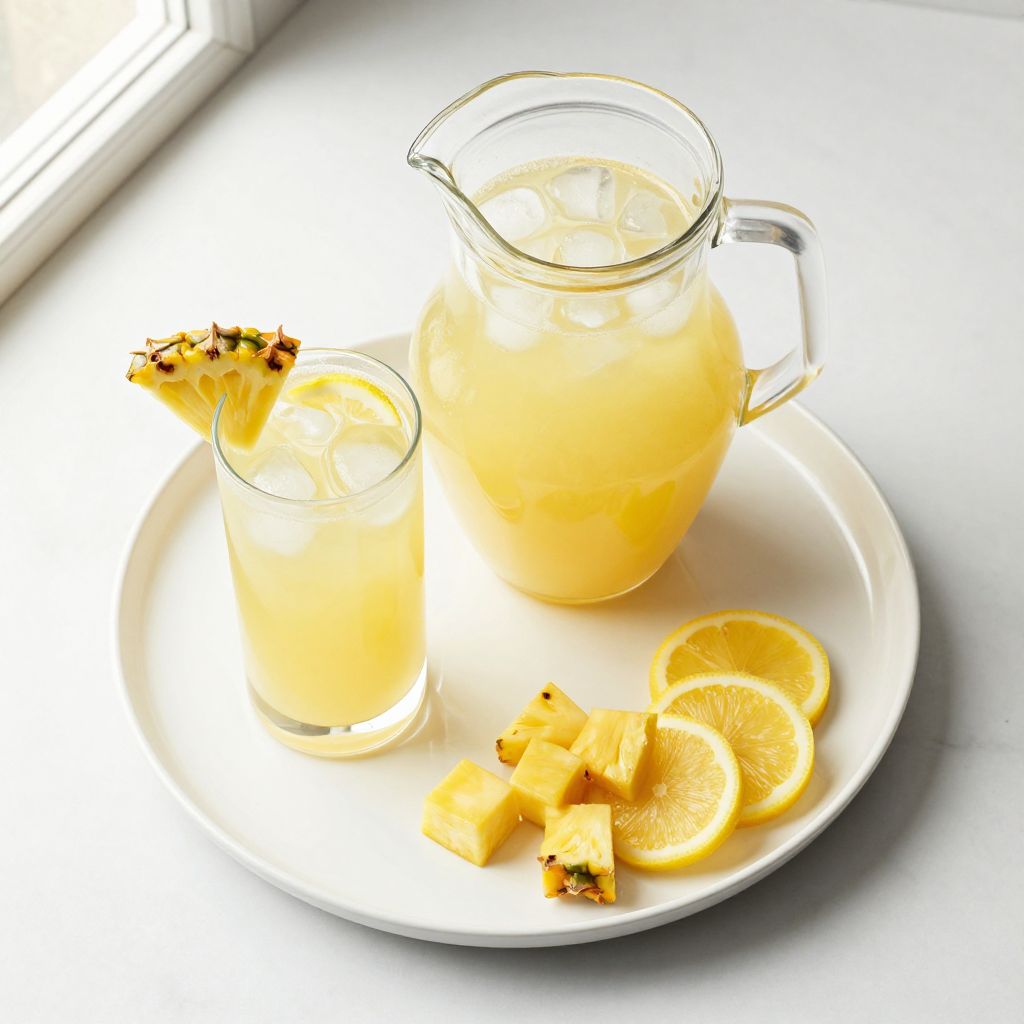
Serve immediately while the drink is coldest and most refreshing. Fresh pineapple pieces or lemon slices make attractive garnishes if you’re serving guests.
Pro Tip: Make a concentrate by halving all ingredient amounts, then store it in the fridge for up to five days and mix with cold water as needed for fresh-tasting drinks on demand.
Tips for the Best Pineapple Lemonade
- Choose a ripe pineapple with a sweet aroma and slight give when squeezed, as underripe fruit tastes bland and mealy. A golden hue on the skin indicates proper ripeness.
- Always juice lemons by hand rather than using bottled juice, which loses brightness and picks up metallic or stale flavors during storage. The fresh juice makes a massive difference in the final taste.
- Don’t skip straining the pineapple puree even though it takes an extra minute. The pulp creates a grainy texture that many people find unpleasant in a smooth beverage.
- Blend pineapple with water rather than attempting to juice fresh pineapple like you would a citrus fruit, which produces very little liquid and wastes the fruit. Blending breaks down the entire flesh and extracts maximum flavor.
- Serve over plenty of ice for maximum chill and refreshment. The melting ice slightly dilutes the drink as you sip, extending its refreshing quality.
- Taste and adjust seasoning after adding all water, as balance shifts when you dilute a concentrate. A squeeze of fresh lemon or a tablespoon of sugar makes a huge difference.
Common Mistakes to Avoid
- Using canned or bottled pineapple juice instead of fresh fruit loses the bright tropical flavor and creates a flat, overly sweet drink. Fresh pineapple is worth the small effort.
- Adding sugar before tasting leads to an overly sweet result that tastes more like dessert than refreshment. Always taste first and adjust gradually.
- Forgetting to strain the pineapple puree leaves a grainy, pulpy texture that feels unfinished and unpleasant. Smooth is the goal here.
- Using warm water instead of cold water results in faster sugar dissolving but a drink that never tastes as crisp and refreshing. Cold water is essential to the drinking experience.
- Making the drink and letting it sit at room temperature for hours reduces the brightness and liveliness of fresh lemon juice through oxidation. Serve within an hour of making for best flavor.
Serving Suggestions
Pineapple lemonade pairs beautifully with light meals and outdoor entertaining, complementing flavors without overwhelming the palate. Its refreshing nature makes it ideal for hot weather gatherings and casual dining.
- Serve alongside fresh grilled fish tacos or shrimp skewers for a tropical meal vibe
- Pair with light salads featuring citrus vinaigrettes or coconut-based dressings
- Offer at summer picnics with fried chicken and classic sides for a refreshing contrast
- Combine with appetizers like bruschetta, cheese boards, or fresh vegetable platters
- Serve at brunch alongside breakfast pastries, fruit, and light egg dishes
Variations to Try
- Frozen Pineapple Lemonade: Blend the finished drink with two cups of ice and serve as a slushy in tall glasses for a dessert-like treat that feels special without added sugar.
- Sparkling Pineapple Lemonade: Replace one cup of water with sparkling water or club soda added just before serving for a light, bubbly version that feels more sophisticated and elegant.
- Spiced Version: Add 1/4 teaspoon of ground ginger and a pinch of cayenne pepper to the finished drink for subtle heat and complexity that complements the tropical flavors beautifully.
- Herbal Infusion: Steep two or three fresh mint sprigs or a small handful of basil leaves in the finished drink for thirty minutes before serving, adding aromatic freshness and a garden-fresh quality.
- Coconut Pineapple Blend: Replace one cup of water with coconut milk for a creamy, richer version that tastes closer to a tropical resort beverage.
Dietary Adaptations
- Gluten-Free: This recipe is naturally gluten-free as written, containing no grains or processed ingredients that typically carry gluten.
- Dairy-Free: The recipe contains no dairy products, making it suitable for those avoiding milk or lactose.
- Vegan: All ingredients are plant-based and vegan-friendly, requiring no modifications.
- Low-Carb or Keto: Reduce sugar to one tablespoon and use a sugar substitute like erythritol or stevia to taste, reducing carbs from roughly 24 grams to under 5 grams per serving.
- Paleo: This recipe fits paleo guidelines when made with honey instead of sugar and served without added sweeteners.
Storage and Reheating
Refrigerator
Store finished pineapple lemonade in an airtight pitcher or covered jug in the refrigerator for up to five days. The flavors remain bright and fresh during this time, though the drink gradually becomes less vibrant.
- Keep the pitcher covered to prevent the drink from absorbing fridge odors
- Stir before serving if any settling occurs
- Serve over fresh ice each time for maximum chill
Freezer
You can freeze pineapple lemonade in ice cube trays for convenient single servings or in a freezer-safe container for batch freezing. The drink freezes solid within four hours and keeps for up to three months.
- Thaw in the refrigerator for several hours before serving
- Frozen cubes work well in smoothies or added to other beverages
- The texture becomes slightly icy when frozen, so expect a slushy consistency
Reheating
This cold beverage requires no reheating and should never be heated, as warmth damages the fresh flavors of lemon and pineapple. Simply serve chilled from the refrigerator.
- Remove from the fridge 15 minutes before serving if you prefer it less icy
- Add fresh ice right before drinking for optimal chill
- If using frozen concentrate, thaw fully and re-chill before serving
Nutrition Information
| Nutrient | Amount |
|---|---|
| Calories | 95 |
| Total Fat | 0.2g |
| Saturated Fat | 0g |
| Carbohydrates | 24g |
| Fiber | 0g |
| Sugar | 20g |
| Protein | 0.5g |
| Sodium | 65mg |
| Cholesterol | 0mg |
Nutritional values are estimates based on standard ingredient amounts and may vary depending on specific brands and preparation methods. Values assume four servings from the full recipe.
Frequently Asked Questions
Can I make pineapple lemonade without a blender?
Yes, you can substitute fresh pineapple juice if you have access to a juice bar or store that offers it, though homemade blended pineapple tastes superior. Alternatively, use one cup of quality canned pineapple juice, though the flavor won’t be quite as bright and fresh.
How far in advance can I make this drink?
You can make the full recipe up to five days ahead and store it in the refrigerator, though it tastes best within two to three days when flavors remain most vibrant. For best results, prepare the concentrate and dilute with fresh water just before serving.
Is this drink suitable for children?
Absolutely, pineapple lemonade is a healthy alternative to sugary sodas and juice boxes, offering natural sweetness from fruit. Reduce the sugar by one tablespoon if serving to young children concerned about sugar content.
Why does my drink taste too tart or too sweet?
Tartness and sweetness vary depending on the ripeness of your pineapple and juiciness of your lemons, so tasting and adjusting is essential. Add more sugar one tablespoon at a time for sweetness, or squeeze in more fresh lemon juice for tartness until you reach your preferred balance.
Can I add alcohol to make a cocktail version?
Yes, adding rum, vodka, or tequila works beautifully with pineapple lemonade, using one to two ounces per glass depending on strength preference. The tropical flavors pair especially well with light rum for a summery cocktail.
What if fresh pineapple is out of season or expensive?
High-quality frozen pineapple chunks work well and often taste fresher than out-of-season fresh fruit that’s been shipped long distances. Thaw the frozen pineapple first, then blend as directed, though the resulting drink may be slightly less thick.
How can I make this drink less sweet naturally?
Increase the lemon juice by a few tablespoons or add the zest of one lemon for more tartness without adding sugar. A tiny pinch of salt also helps balance sweetness without additional sourness.
Final Thoughts
Making homemade pineapple lemonade is one of those simple kitchen skills that yields impressive results with minimal effort. Once you taste this fresh version, store-bought lemonade mix will never satisfy you again.
Mix up a batch this week and enjoy the compliments from everyone who tries it. Whether you’re hosting a gathering or simply want a better-tasting beverage for everyday drinking, this recipe delivers tropical refreshment that tastes like summer in a glass.
If you loved this recipe, explore more refreshing beverages on our site. Try our easy lemonade recipe for kids for a simple variation, or check out our Chick-fil-A frosted lemonade recipe for a creamy frozen twist. Keep experimenting with different fruit combinations and serving styles to find your perfect cold drink for every occasion.
Pineapple Lemonade
Ingredients
Equipment
Method
- Cut and prepare the fresh pineapple by slicing off the skin and core, then cut into 1- to 2-inch chunks.
- Roll the lemons on the counter, cut in half, and juice by hand or with a citrus juicer, straining out the seeds to yield 3/4 cup juice.
- Combine the pineapple chunks with 1 cup of cold water in a blender and blend on high for about 60 seconds until smooth.
- Strain the pineapple puree through a fine mesh strainer into a large pitcher, pressing with a spoon to extract approximately 1.5 cups of liquid.
- Add the fresh lemon juice to the pitcher with the pineapple liquid and stir to combine.
- Sprinkle in the sugar and salt, then stir for about 1 minute until the sugar fully dissolves.
- Pour in the remaining 3 cups of cold water and stir well; taste and adjust sweetness or tartness as desired.
- Fill glasses with ice cubes and pour the pineapple lemonade over the ice; serve immediately.