
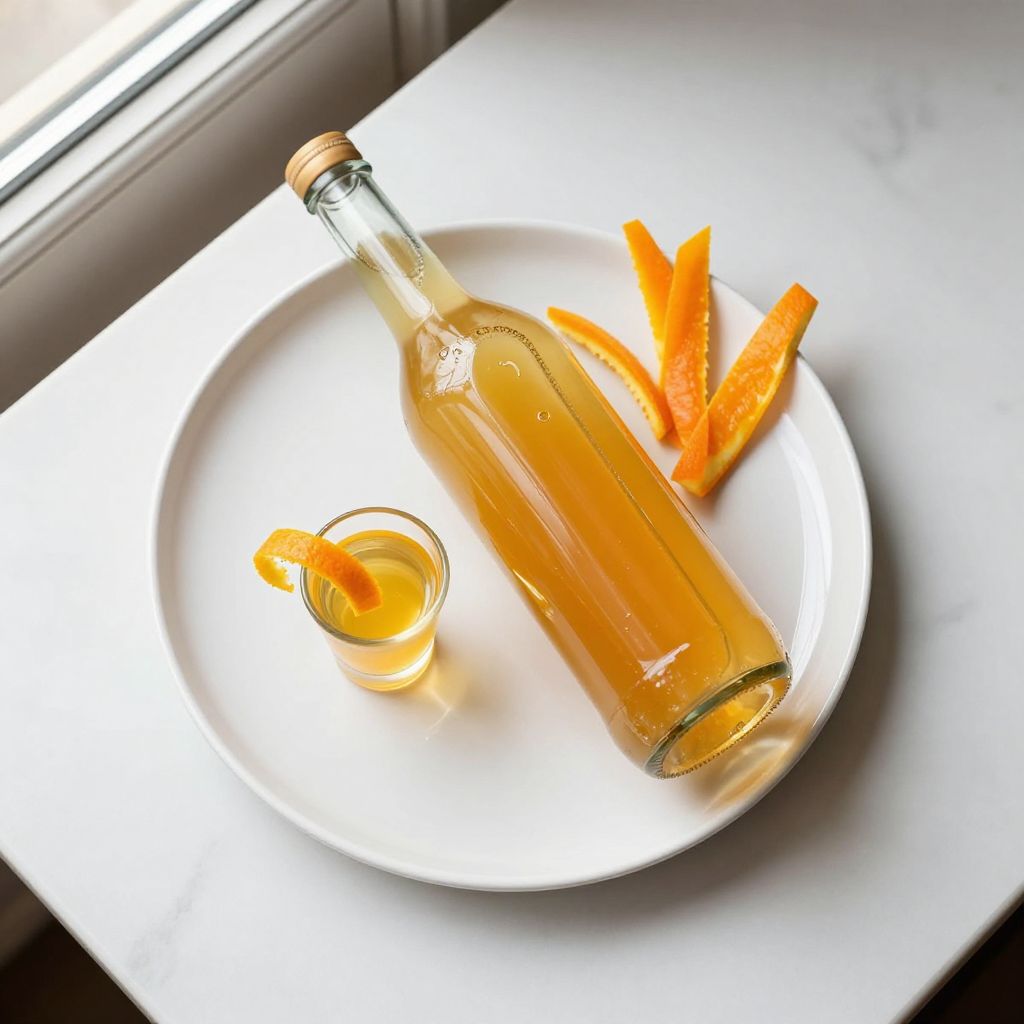
There’s something magical about the moment you crack open a bottle of orangecello that you’ve made yourself, the citrus aroma hitting you like a warm hug from an Italian nonno. This intensely flavored liqueur captures everything you love about fresh oranges and transforms it into a silky, sippable spirit that tastes nothing like store-bought versions.
Orangecello is ridiculously simple to make, requires minimal active time, and rewards your patience with a drink that impresses every single person who tastes it. The magic happens when high-proof alcohol infuses with orange zest over weeks, creating something complex and sophisticated from just a handful of ingredients.
Why You’ll Love This Recipe
Making your own orangecello feels like a personal victory, and the results taste like you spent hours in a professional distillery. It’s the kind of gift that makes people think you’ve lost your mind in the best possible way.
- Requires only four ingredients and zero cooking skills
- Perfect homemade gift that costs a fraction of what you’d pay retail
- Incredibly versatile: sip it straight, mix it into cocktails, or pour it over desserts
- The infusion process is genuinely satisfying and meditative
- Tastes exponentially better than commercial versions
My Experience Making This Recipe
I made my first batch of orangecello on a whim after tasting it at a small Italian restaurant, thinking there was no way I could replicate it at home. Six weeks later, I opened that bottle and felt like I’d cracked some ancient code.
The smell alone transported me back to that restaurant, but somehow better because I made it. Every batch I’ve made since has gotten better because I understand the variables: which oranges work best, how much zest really matters, and why patience is the secret ingredient nobody talks about.
My friends now expect bottles of this stuff every holiday season, which is either the best compliment or a sign I need new hobbies. Either way, I’m not complaining.
Recipe Overview
- Recipe Name: Orangecello
- Servings: 24 servings (one liqueur bottle)
- Prep Time: 30 minutes
- Infusion Time: 6 weeks
- Total Time: 6 weeks plus 1 week for settling
- Course: Digestif/Liqueur
- Cuisine: Italian
- Calories per Serving: 95
Equipment You Will Need
- One 750 ml glass bottle with a tight-fitting lid
- Vegetable peeler or microplane
- Fine mesh strainer
- Cheesecloth
- Measuring cups and spoons
- Cutting board and sharp knife
- Large glass jar for initial infusion
- Funnel
Ingredients for Orangecello
- 750 ml high-proof vodka (100 proof or higher, ideally 151 proof)
- 8 to 10 large organic oranges with thick skins
- 2 cups granulated sugar
- 2 cups filtered water
Ingredient Notes and Substitutions
- Vodka: The base spirit carries the orange flavor without competing, so high proof matters because it extracts oils more effectively. You can substitute with grain alcohol (151 proof) for an even stronger infusion, though it tastes harsher initially and needs longer to mellow.
- Oranges: Organic oranges have thicker, pesticide-free skins that infuse better than conventional ones. If you can’t find organic, scrub conventional oranges thoroughly under hot water, but expect slightly less intense flavor.
- Sugar: Granulated white sugar is traditional and allows the orange flavor to shine. You can use organic cane sugar with virtually identical results, though it won’t noticeably change the taste.
- Water: Filtered water prevents chlorine from affecting your final product. Tap water works in a pinch, but filtered tastes noticeably cleaner.
How to Make Orangecello
Step 1: Select and Prepare Your Oranges
Choose thick-skinned organic oranges like navel or Jaffa varieties that feel heavy for their size. This weight indicates juiciness and thicker oil-rich skin, which is exactly what you want for infusing.
Step 2: Remove the Orange Zest
Using a vegetable peeler or microplane, remove only the colored outer skin, avoiding the bitter white pith underneath. Work over a bowl and try to get long strips if using a peeler, as this makes the infusion cleaner and easier to strain later.
Step 3: Place Zest in Your Glass Jar
Transfer all the orange zest into a large, clean glass jar that holds at least two cups. Make sure the jar is completely dry inside, as any water dilutes your infusion.
Step 4: Pour the Vodka Over the Zest
Pour the entire 750 ml bottle of high-proof vodka over the orange zest in your jar. The zest will float initially, but that’s fine; just make sure all of it comes in contact with the liquid by stirring once or twice.
Step 5: Seal and Store for Infusion
Cover the jar tightly with a lid and store it in a cool, dark place away from direct sunlight for six weeks. Every few days, give the jar a gentle shake to redistribute the zest and keep everything evenly infused.
Step 6: Strain the Infused Vodka
After six weeks, set a fine mesh strainer over a large bowl and line it with cheesecloth. Carefully pour the infused vodka through the strainer, letting gravity do the work and taking care not to squeeze or press the zest.
Step 7: Prepare Your Simple Syrup
In a small saucepan, combine two cups of filtered water and two cups of granulated sugar over medium heat. Stir frequently until the sugar completely dissolves, which takes about five minutes, then remove from heat and let the syrup cool completely to room temperature.
Step 8: Combine Vodka and Syrup
Once your syrup has cooled, slowly pour it into the strained infused vodka while stirring constantly. This combination creates the final liqueur and distributes the sweetness evenly throughout.
Step 9: Bottle and Age
Using a funnel, carefully pour your finished orangecello into a clean 750 ml bottle with a tight-fitting lid. Store it in a cool, dark place for at least one week before drinking, though it improves significantly over two to three weeks as the flavors marry and mellow.
Pro Tip: Use a microplane rather than a vegetable peeler for finer zest that infuses more efficiently and strains more cleanly, cutting your overall infusion time and giving you a clearer final product.
Tips for the Best Orangecello
- Always use organic oranges because you’re infusing the skin directly into your drink, and pesticides have no place there. The flavor difference is noticeable and worth seeking out.
- Buy your vodka at a liquor store rather than a grocery store where selection is typically limited to mediocre brands. Spending three extra dollars gets you better vodka that doesn’t fight with the orange.
- Label your jar with the date you start your infusion so you know exactly when six weeks have passed. This prevents you from opening it too early out of curiosity, which happens more often than you’d think.
- Store your finished orangecello in the freezer rather than at room temperature, which keeps it bright and fresh tasting. It won’t freeze solid thanks to the alcohol content, and sipping it ice-cold is genuinely the best way to experience it.
- Taste your infusion at the four-week mark to decide if you want to pull the zest early or let it go the full six weeks. Some people prefer slightly lighter flavor at five weeks, while others want full intensity at eight weeks.
- Save those used orange peels after zesting and dry them in the oven at 200 degrees until completely crispy. They make excellent additions to tea or mulling spices.
Common Mistakes to Avoid
- Using conventional oranges instead of organic: Pesticides will infuse into your liqueur and create an off, chemical taste that ruins the whole batch. This is the single most common reason homemade orangecello disappoints.
- Including the white pith: That bitter, spongy layer under the zest will make your liqueur taste unpleasantly bitter and astringent. Spend the extra thirty seconds peeling carefully and you’ll be glad you did.
- Rushing the infusion time: Pulling the zest out after three weeks because you’re impatient leaves you with weak, watery-tasting liqueur. The six-week timeline exists for a reason: the oils need time to fully extract.
- Squeezing the zest during straining: Pressing on the cheesecloth forces out bitter compounds and particles that cloud your final product. Patience during straining determines clarity, so let gravity do the work.
- Storing at room temperature instead of cold: Room temperature speeds up oxidation and makes the flavor flatten and fade over weeks. Your freezer is literally the best place for this stuff.
Serving Suggestions
The magic of orangecello is its flexibility: it works equally well as a chilled digestif after dinner, mixed into cocktails, or even drizzled over vanilla ice cream or pound cake. Your friends will find ten different ways to use it the moment you hand them a bottle.
- Sip it straight from a chilled shot glass as an after-dinner digestif
- Mix it into prosecco for an instant aperitif that feels fancy but took zero effort
- Pour it over vanilla or mascarpone ice cream for an elegant, boozy dessert
- Mix two parts orangecello with one part fresh lemon juice for a potent citrus cocktail
- Add it to sparkling water with fresh orange slices for a lower-alcohol spritz
Variations to Try
- Blood Orangecello: Substitute blood oranges for regular oranges to get a deeper color and slightly more complex flavor with berry undertones. The infusion time remains the same, but the final product tastes more sophisticated.
- Mixed Citrus Liqueur: Use five oranges combined with three lemons and two grapefruits for a more complex citrus blend. Each citrus brings different flavor notes, creating something that tastes more interesting than straight orange.
- Honey Sweetened Version: Replace the sugar with honey or a combination of half honey and half sugar for a rounder, less sharp sweetness. Honey infuses less easily than sugar, so dissolve it in warm water first before adding to your vodka.
- Spiced Orangecello: Add a cinnamon stick, two star anise, and three whole cloves to your infusion jar for warm spice notes. These additions work best if you remove them after four weeks so they don’t overpower the orange.
Dietary Adaptations
- Vegan: This recipe is naturally vegan since it contains only plant-based ingredients and no animal byproducts. No substitutions needed.
- Lower Alcohol Version: Dilute your finished orangecello with equal parts simple syrup after the one-week aging period to reduce alcohol content from 40% to approximately 20%. The trade-off is a sweeter, less intense flavor profile.
- Sugar-Free Option: Substitute the sugar with monk fruit sweetener or erythritol at a one-to-one ratio to keep calories low. Some people find these sweeteners leave a slight aftertaste, so test a small batch first if you’re sensitive to them.
Storage and Reheating
Refrigerator
Store your finished orangecello in a sealed glass bottle in the refrigerator where it keeps fresh for up to two years. The cold temperature slows oxidation and keeps flavors bright.
- Keep the lid tightly sealed to prevent flavor loss
- Check occasionally that no crystals have formed on the bottom
- If crystallization occurs, warm gently in warm water until clear again
Freezer
Your freezer is the ideal storage location for orangecello because it won’t actually freeze thanks to the alcohol content. It keeps bright and fresh tasting for three years or longer.
- Use a standard glass bottle with a secure cap
- It will be slightly slushy when you pour it, which is the perfect serving consistency
Reheating
There’s no reheating involved with orangecello, but you might occasionally want to warm it slightly if it develops crystals. Simply place the sealed bottle in warm water for a few minutes until the crystals dissolve, then chill again.
Nutrition Information
| Nutrient | Amount |
|---|---|
| Calories | 95 |
| Total Fat | 0 g |
| Saturated Fat | 0 g |
| Carbohydrates | 8 g |
| Fiber | 0 g |
| Sugar | 8 g |
| Protein | 0 g |
| Sodium | 0 mg |
| Cholesterol | 0 mg |
These nutrition values assume one serving equals approximately 30 ml of finished orangecello. The majority of calories come from alcohol and residual sugar.
Frequently Asked Questions
Can I use regular, non-organic oranges?
You technically can, but shouldn’t because pesticides will infuse directly into your liqueur. The flavor suffers noticeably compared to organic versions, so spend the extra money.
How long will my finished orangecello last?
Stored properly in the freezer, it keeps for three years or longer without losing quality. In the refrigerator, it stays fresh for about two years, though you’ll notice subtle flavor changes over time.
Can I speed up the infusion process?
Pulling the zest out before six weeks results in weaker flavor, and heating the mixture ruins the delicate citrus oils. Patience is genuinely the only way to get the results you want.
Why did my orangecello turn cloudy?
This happens when you squeezed the zest during straining or if you didn’t strain through cheesecloth. Cloudiness doesn’t affect taste, but you can re-strain it through a coffee filter if clarity matters to you.
Can I use bottled orange juice instead of fresh oranges?
No, because you need the oils in the peel, which bottled juice completely lacks. The entire point of orangecello is capturing those essential oils that fresh zest provides.
What proof vodka do I actually need?
Anything 100 proof or higher works, but 151 proof extracts faster and more completely. Standard 80 proof vodka will work if that’s what you have, but expect to extend your infusion time to eight weeks.
Can I make this with lemons instead of oranges?
Yes, and it’s called lemoncello recipe, which is equally delicious. The process is identical, though lemon zest infuses slightly faster, so you might pull it after five weeks instead of six.
Final Thoughts
Making your own orangecello transforms you from someone who buys liqueurs to someone who creates them, and that shift in mindset is half the fun. The six-week wait teaches patience while building anticipation for something genuinely special.
Try this batch and you’ll understand why Italians have been making it for centuries. Next time someone asks what you want for your birthday, skip the generic gifts and request organic oranges instead.
Explore More Citrus Recipes
If you enjoyed making orangecello, you might also love exploring other citrus-based drinks and recipes that celebrate bright, fresh flavors.
Mix up an orangeade recipe for refreshing warm weather drinks, or explore that lemoncello recipe we mentioned for another Italian classic liqueur.
Orangecello
Ingredients
Equipment
Method
- Select 8 to 10 thick-skinned organic oranges and wash them thoroughly.
- Using a vegetable peeler or microplane, remove only the colored zest from the oranges, avoiding the white pith.
- Place all the orange zest in a large, dry glass jar that holds at least two cups.
- Pour 750 ml of high-proof vodka over the zest, stir gently to ensure contact, then seal the jar.
- Store the jar in a cool, dark place and shake gently every few days. Infuse for six weeks.
- After six weeks, line a fine mesh strainer with cheesecloth and strain the infused vodka into a large bowl without pressing the zest.
- In a small saucepan over medium heat, combine 2 cups filtered water and 2 cups granulated sugar. Stir until the sugar dissolves, about 5 minutes. Remove from heat and cool to room temperature.
- Slowly pour the cooled simple syrup into the strained infused vodka while stirring to combine.
- Using a funnel, bottle the orangecello in a clean 750 ml bottle, seal tightly, and let it age in a cool, dark place for at least one week before serving.