
Picture yourself at a chic rooftop bar in Paris, champagne flute in hand, as the golden hour light hits the city below. The French 76 is that drink, except it trades the gin of a classic 75 for cognac, making it richer, warmer, and undeniably more luxurious. This elegant cocktail pairs the sophistication of a fine spirit with bright citrus and a champagne sparkle that feels like celebration in a glass.
What makes this recipe worth mastering is how effortlessly it transitions from aperitif to after-dinner drink, and how few ingredients you need to nail something that tastes restaurant-quality. The balance between cognac’s depth and champagne’s effervescence creates a cocktail that feels both simple and impressive.
Why You’ll Love This Recipe
The French 76 delivers sophistication with zero fuss. You need just four ingredients and five minutes to create a drink that tastes like you spent years perfecting cocktails.
- Requires minimal ingredients but maximum flavor impact
- Looks elegant enough to impress guests without demanding bartender skills
- Cognac brings warmth and depth that gin simply cannot match
- Works beautifully for both casual gatherings and formal occasions
- Quick to make once you understand the technique
My Experience Making This Recipe
I first made a French 76 after a friend smuggled a bottle of decent cognac back from Bordeaux and insisted we do something special with it. I mixed the first drink skeptically, thinking it would taste like a watered-down martini, but the moment I took a sip, I understood why this cocktail has devoted followers.
The cognac rounds out the sharpness of the lemon with this honeyed warmth that champagne alone never achieves. My guests that evening kept asking what made this version taste different from the martini-style cocktails they usually order, and I loved explaining that the spirit choice changes everything.
Since then, I’ve made this drink dozens of times, and it consistently receives praise. The trick is using quality cognac and fresh lemon juice, not shortcuts.
Recipe Overview
- Recipe Name: French 76 Cocktail
- Servings: 1 cocktail
- Prep Time: 5 minutes
- Cook Time: 0 minutes
- Total Time: 5 minutes
- Course: Cocktail/Drink
- Cuisine: French
- Calories per Serving: 160 calories
Equipment You Will Need
- Cocktail shaker or mixing glass
- Bar spoon or long spoon for stirring
- Jigger or measuring spoon for accurate portions
- Strainer (fine mesh preferred)
- Champagne flute or coupe glass
- Citrus juicer or hand squeezer
- Vegetable peeler or channel knife for lemon twist
Ingredients for French 76
- 0.5 ounces cognac (approximately 15 milliliters, a quality VS or VSOP preferred)
- 0.5 ounces fresh lemon juice (from about half a fresh lemon)
- 0.25 ounces simple syrup (or 1 teaspoon sugar if using no syrup)
- 3 to 4 ounces champagne or prosecco (chilled, about 90 to 120 milliliters)
- Lemon twist for garnish (optional but highly recommended)
- Ice for chilling
Ingredient Notes and Substitutions
- Cognac: Cognac brings oak and dried fruit notes that create the drink’s signature warmth. If unavailable, a quality brandy works, though the flavor becomes slightly less complex.
- Fresh lemon juice: Fresh juice balances the spirit’s richness with bright acidity. Bottled juice tastes flat and metallic in comparison.
- Simple syrup: This rounds out the acidity and adds body. You can skip it entirely if your champagne is demi-sec (off-dry), or add extra if using dry champagne.
- Champagne: True champagne offers superior bubbles and complexity, but prosecco or cava work beautifully and cost less. Avoid cheap sparkling wine that tastes harsh.
- Lemon twist: The oils from the peel add aroma and subtle bitter-citrus notes that make the drink feel complete.
How to Make French 76
Step 1: Chill Your Glass
Place your champagne flute or coupe glass in the freezer for at least five minutes before you start mixing. A cold glass keeps the drink cold longer and prevents the champagne from losing its carbonation too quickly.
Step 2: Prepare Fresh Lemon Juice
Cut your lemon in half and juice it into a separate container, using a citrus juicer or hand squeezer. Fresh juice matters tremendously here; bottled juice tastes noticeably inferior and will make the drink taste dull and one-dimensional.
Step 3: Fill Your Shaker With Ice
Add ice to your cocktail shaker until it is about three-quarters full. More ice means better chilling, which is essential for a properly balanced cocktail.
Step 4: Combine Cognac, Lemon Juice, and Syrup
Pour 0.5 ounces of cognac into the shaker, followed by 0.5 ounces of fresh lemon juice and 0.25 ounces of simple syrup. These proportions create the correct balance between spirit, acidity, and sweetness.
Step 5: Shake With Intention
Close the shaker and shake vigorously for about 10 to 15 seconds until the exterior becomes frosty and cold. This step chills the ingredients thoroughly and slightly dilutes them with melted ice, which softens the cognac’s bite.
Step 6: Strain Into Your Chilled Glass
Using a fine strainer, pour the shaken mixture into your chilled glass, leaving room at the top for champagne. Straining removes ice chips and keeps the drink smooth and refined.
Step 7: Top With Champagne
Slowly pour 3 to 4 ounces of chilled champagne into the glass until it is nearly full. Pouring slowly preserves the bubbles and prevents the drink from overflowing.
Step 8: Garnish and Serve
Express the oils from a lemon twist over the drink by holding it skin-side down and twisting it, then drop the peel into the glass. Serve immediately while the drink is cold and the bubbles are still active.
Pro Tip: Keep your champagne in the freezer for 30 minutes before mixing, not in ice water, which dilutes it unnecessarily.
Tips for the Best French 76
- Always use freshly squeezed lemon juice. The difference between fresh and bottled is night and day, and this drink only has four ingredients, so each one matters.
- Shake the cocktail base vigorously until the shaker becomes frosty. This proper chilling and dilution transforms the drink from harsh to harmonious.
- Add the champagne last and slowly to preserve carbonation. If you add it before the spirit cools down, you lose those essential bubbles.
- Use a quality cognac in the VS or VSOP range. You do not need top-shelf, but cheap cognac tastes thin and one-note.
- Taste your simple syrup against your champagne. If your champagne is already sweet, reduce the syrup to 0.125 ounces or skip it entirely.
- Serve in a flute or coupe glass for the most elegant presentation. The shape also helps preserve carbonation better than wider glasses.
Common Mistakes to Avoid
- Using bottled lemon juice instead of fresh makes the drink taste flat and chemical-tasting. Fresh juice is non-negotiable in a drink with so few ingredients.
- Skipping the chill on your glass allows the drink to warm up quickly, which dilutes it and fades the bubbles faster than they should.
- Pouring champagne into a warm shaker or mixing glass will cause it to lose carbonation immediately. Always chill your glass and shake the base separately first.
- Oversweetening with simple syrup throws off the balance and makes the drink cloying. Start with 0.25 ounces and add more only if needed.
- Using cheap or low-quality champagne creates a harsh, vinegary background note that undermines the whole drink. A mid-range option tastes noticeably better.
Serving Suggestions
The French 76 shines as an aperitif before dinner, or as a celebratory drink at any gathering where you want to feel fancy. Serve it before oysters, light seafood, or soft cheeses for a pairing that feels effortlessly sophisticated.
- Pair with fresh oysters and a squeeze of lemon for an elegant start to dinner
- Serve alongside smoked salmon, capers, and thin toast for a brunch moment
- Use as a cocktail hour drink at weddings, anniversaries, or milestone celebrations
- Offer before a light salad or seafood course rather than heavy appetizers
- Enjoy on its own as a pre-dinner aperitif with a small piece of dark chocolate nearby
Variations to Try
- French 76 with Chambord: Add 0.25 ounces of Chambord (black raspberry liqueur) to the shaker before chilling. This adds berry notes and a beautiful ruby hue without overwhelming the drink’s elegance.
- Cognac Sidecar Style: Increase cognac to 0.75 ounces and reduce champagne to 2 ounces, then add 0.25 ounces of orange liqueur. This creates a richer, more spirit-forward drink that tastes like a sophisticated sidecar.
- French 76 with Elderflower: Replace simple syrup with 0.25 ounces of elderflower cordial. The floral notes complement champagne beautifully and add complexity.
- Spiced Cognac Version: Add 2 to 3 drops of Angostura bitters to the shaker for warmth and depth. The spice rounds out the citrus and softens the champagne’s brightness.
- French 76 with Pear: Substitute pear nectar for half the simple syrup and use a pear-infused cognac if available. This creates a sweeter, fruit-forward variation perfect for dessert service.
Dietary Adaptations
- Gluten-Free: All ingredients in a standard French 76 are naturally gluten-free, though you should verify your specific cognac and champagne brands, which nearly always are.
- Dairy-Free: This cocktail contains no dairy products and requires no adaptation.
- Vegan: Most cognacs and champagnes are vegan, but some use animal-based fining agents. Seek out vegan-certified versions of both spirits if this matters to you.
- Low-Carb/Keto: Skip the simple syrup entirely or use a liquid sugar substitute like erythritol in equal measure. The cognac and champagne have minimal carbs, so the syrup is the only ingredient to adjust.
Storage and Reheating
Refrigerator
Store leftover champagne, cognac, and lemon juice in separate containers in the refrigerator. Champagne loses carbonation within 24 hours once opened, even with a stopper.
- Lemon juice keeps for up to 3 days in a covered container
- Opened champagne stays drinkable for up to 2 days with a proper champagne stopper
- Cognac, being spirits, lasts indefinitely in a sealed bottle
Freezer
Do not freeze mixed cocktails, as this separates the ingredients and ruins the texture. You can freeze champagne in ice cube trays for future cocktails, though this dilutes them slightly as the ice melts.
- Freeze champagne in trays for use in future cocktails or as a chilling element
- Store unopened champagne bottles upright in the freezer for emergency chilling only
Reheating
This is a cold cocktail and should never be reheated. Always serve fresh and cold immediately after mixing.
- Mix each French 76 fresh to order for the best flavor and carbonation
- Chill your ingredients and glassware beforehand to avoid needing to reheat anything
Nutrition Information
| Nutrient | Amount |
|---|---|
| Calories | 160 |
| Total Fat | 0 grams |
| Saturated Fat | 0 grams |
| Carbohydrates | 3 grams |
| Fiber | 0 grams |
| Sugar | 2 grams |
| Protein | 0 grams |
| Sodium | 2 milligrams |
| Cholesterol | 0 milligrams |
These values are approximate and based on standard ingredients. Nutritional content varies slightly depending on your specific brands of cognac, champagne, and simple syrup.
Frequently Asked Questions
Can I Make French 76 Without a Cocktail Shaker?
Yes, you can stir the cognac, lemon juice, and simple syrup together in a mixing glass with ice for about 30 seconds until cold. The result tastes slightly different because stirring chills more gently than shaking, creating a silkier mouthfeel, which some people actually prefer.
What If I Do Not Have Fresh Lemon Juice?
Fresh lemon juice is truly worth finding, as bottled juice creates a noticeably inferior drink in a cocktail with so few ingredients. If you must use bottled, reduce the amount slightly since bottled versions taste more acidic and concentrated.
How Far in Advance Can I Prepare the Cognac and Lemon Base?
You can mix the cognac, lemon juice, and simple syrup in a pitcher up to 2 hours before serving, then shake with ice and top with champagne when ready. Do not add champagne until the moment you serve, or the bubbles will escape.
Why Did My Drink Taste Flat or Overly Strong?
Flat drinks usually mean the champagne lost carbonation from being too warm or poured into a warm glass. Overly strong drinks mean you used too little champagne or skipped the simple syrup entirely.
Can I Use Prosecco Instead of Champagne?
Absolutely. Prosecco tastes slightly fruitier and less complex than champagne, but creates a delicious French 76 at a lower price point. Cava works beautifully as well and sits somewhere between prosecco and champagne in flavor profile.
What Cognac Brand Do You Recommend?
Hennessy VS, Courvoisier VS, and Remy Martin VSOP all deliver excellent flavor without requiring you to spend a small fortune. Any of these creates a drink that tastes refined and balanced.
Final Thoughts
The French 76 proves that luxury does not require complexity. With just four ingredients and five minutes of your time, you create a cocktail that feels like a special occasion in a glass.
Make this drink next time you want to impress someone or simply treat yourself to something elegant. Once you master the basic recipe, you have a foundation for endless variations and the confidence to order cognac cocktails anywhere with authority.
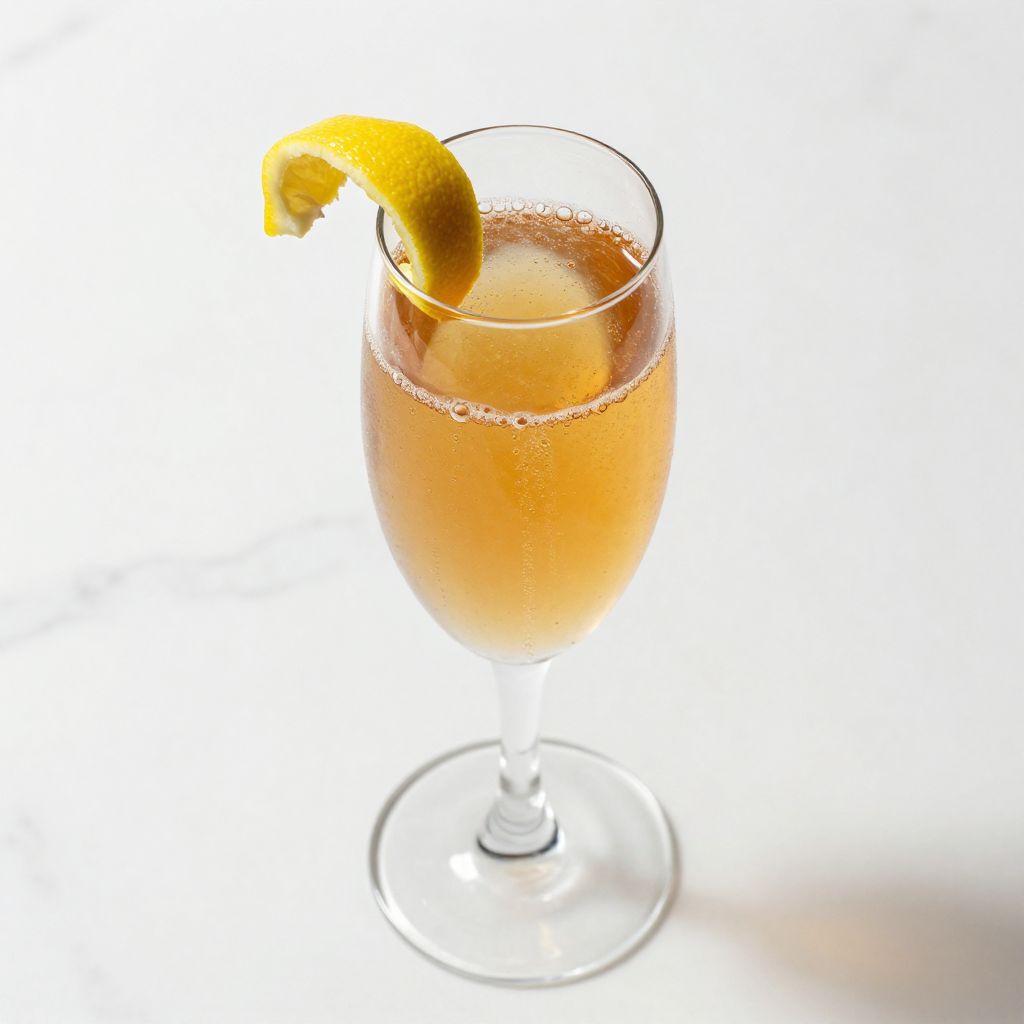
French 76 Cocktail
Ingredients
Equipment
Method
- Place your champagne flute or coupe glass in the freezer for at least 5 minutes before you start mixing to keep the drink cold and preserve carbonation.
- Cut a lemon in half and juice it into a separate container using a citrus juicer or hand squeezer to get fresh lemon juice.
- Fill your cocktail shaker about three-quarters full with ice for proper chilling.
- Pour 0.5 ounces of cognac, 0.5 ounces of fresh lemon juice, and 0.25 ounces of simple syrup into the shaker.
- Close the shaker and shake vigorously for 10 to 15 seconds until the exterior becomes frosty and cold.
- Using a fine strainer, pour the shaken mixture into your chilled glass, leaving room at the top for champagne.
- Slowly pour 3.5 ounces of chilled champagne into the glass until nearly full, pouring slowly to preserve bubbles.
- Express the oils from a lemon twist over the drink by holding it skin-side down and twisting it, then drop the peel into the glass. Serve immediately.