
Imagine the crisp sweetness of fresh apples meeting the floral complexity of honey, all transformed into a fizzy, amber-hued beverage that tastes like autumn in a glass. Cyser is a cider-mead hybrid that sits in the perfect middle ground between these two fermented favorites, offering you the best of both worlds without the fuss of managing two separate fermentation projects.
This recipe is special because it requires just a handful of ingredients and basic equipment, yet delivers a sophisticated drink that feels like you’ve been crafting it in a medieval apiary. The resulting cyser has a balanced sweetness, natural carbonation, and a complexity that keeps you reaching for another sip.
Why You’ll Love This Recipe
Cyser strikes that rare balance between approachable and impressive, making it perfect for anyone curious about fermented beverages but intimidated by complex recipes.
- Requires only apple juice, honey, and yeast for a complete fermentation
- Takes 4 to 6 weeks from start to finished drink, faster than traditional mead
- Naturally carbonates during secondary fermentation without additional equipment
- Stores well for months and improves with age, giving you a reason to make it regularly
- Versatile enough to experiment with spices, different honey varietals, and apple juice types
My Experience Making This Recipe
The first time I made cyser, I was skeptical that such simple ingredients could produce something genuinely delicious. Within two weeks, the airlock was bubbling away, and the aroma coming from the carboy smelled like a blend of orchard and honey that made me check on it multiple times daily.
When I bottled it for the first time, I was amazed at how quickly carbonation developed. My friends thought I’d purchased a craft beverage from a specialty retailer, not something I’d made on my kitchen counter.
The best part? Each batch taught me something new about fermentation and flavor balance, without the pressure of managing a 5-gallon mead batch that takes a year to mature.
Recipe Overview
- Recipe Name: Cyser
- Servings: Makes approximately 1 gallon (sixteen 8-ounce servings)
- Prep Time: 20 minutes
- Fermentation Time: 4 to 6 weeks
- Total Time: 28 to 42 days
- Course: Beverage
- Cuisine: Medieval
- Calories per Serving: Approximately 120
Equipment You Will Need
- 1-gallon glass carboy or fermentation vessel
- Airlock and rubber bung that fits your carboy
- Large stainless steel pot (at least 2 gallons)
- Hydrometer and test jar
- Long-handled spoon or stirring rod
- Thermometer
- Fine mesh strainer or cheesecloth
- Funnel
- Sanitizing solution (like Star San or diluted bleach)
- Glass bottles with caps for bottling and storage
- Bottle capper or swing-top bottles
Ingredients for Cyser
- Apple juice: 1/2 gallon (64 ounces) of unsweetened, unpasteurized or pasteurized apple juice
- Honey: 3 pounds of raw or pasteurized honey
- Water: 1/2 gallon (64 ounces) of filtered or distilled water
- Wine yeast: 1 packet of wine yeast or mead yeast, such as Lalvin D-47 or Red Star Premier Cuvee
- Yeast nutrient: 1 teaspoon of yeast nutrient powder
- Acid blend (optional): 1/4 teaspoon to balance the sweetness
- Tannin powder (optional): 1/8 teaspoon for structure and dryness
Ingredient Notes and Substitutions
- Apple juice: Unsweetened juice provides the fruit character without overwhelming the honey flavors; you can use fresh-pressed cider for deeper flavor, but avoid juice with preservatives like potassium sorbate, which inhibits yeast activity.
- Honey: Raw honey adds subtle floral notes and enzymes that develop during fermentation; clover honey works well, but try wildflower or orange blossom for complexity and you’ll notice more aromatic character.
- Water: Filtered or distilled water prevents unwanted minerals and chlorine from affecting fermentation; tap water works if you let it sit for 24 hours to allow chlorine to evaporate.
- Wine yeast: D-47 produces a clean, dry profile with subtle fruit esters; switch to Red Star Premier Cuvee if you want a slightly fruitier result with good temperature tolerance.
- Yeast nutrient: This feeds the yeast and ensures complete fermentation; omit it only if you’re experienced with fermentation and confident your juice has enough nutrients.
How to Make Cyser
Step 1: Sanitize All Equipment
Before fermentation begins, sanitize your carboy, airlock, bung, strainer, funnel, and any other equipment that touches your cyser. Mix your sanitizing solution according to package directions and soak all items for at least 10 minutes, then rinse thoroughly with water to remove residue.
This step prevents unwanted bacteria and wild yeast from colonizing your batch and producing off-flavors or vinegar.
Step 2: Heat and Cool the Honey and Water
Pour the water into your pot and bring it to 160 degrees Fahrenheit, then stir in the honey until completely dissolved. Avoid boiling, which can strip honey of its delicate flavor compounds and damage heat-sensitive enzymes.
Once the honey dissolves, remove the pot from heat and let it cool to room temperature (65 to 75 degrees Fahrenheit), which typically takes 2 to 3 hours. You can speed this by placing the pot in a sink filled with ice water.
Step 3: Combine Juice and Honey Mixture
Pour the cooled honey and water mixture into your sanitized carboy using the funnel. Then add the apple juice, mixing gently but thoroughly by swirling the carboy (don’t shake vigorously, as excess oxygen introduced later in fermentation can create unwanted flavors).
This combination creates your “must,” the foundation for fermentation, with a balanced ratio of fermentable sugars from both the honey and apple juice.
Step 4: Check the Gravity and Add Nutrients
Use your hydrometer and test jar to measure the original gravity of your cyser, which tells you the sugar content and helps predict final alcohol content. A typical cyser starts around 1.070 to 1.080 gravity, resulting in a drink with 9 to 12 percent alcohol by volume.
Sprinkle the yeast nutrient (and acid blend or tannin powder if using) over the surface of your must and stir gently to distribute. These additions support vigorous fermentation and improve the final flavor profile.
Step 5: Prepare and Pitch the Yeast
Rehydrate your yeast by mixing it with 1/4 cup of room-temperature water and letting it sit for 15 minutes. This awakens dormant yeast cells and improves their survival rate when introduced to your must.
Pour the rehydrated yeast into your carboy, cover the opening loosely with a cloth, and let it sit undisturbed for 24 hours at room temperature. This lag phase allows the yeast to acclimate before you seal the carboy.
Step 6: Seal and Monitor Fermentation
After 24 hours, insert your sanitized airlock and bung into the carboy opening, ensuring the airlock is filled halfway with water. The airlock allows carbon dioxide to escape while preventing outside air and contaminants from entering.
Place your carboy in a dark corner at 65 to 75 degrees Fahrenheit and wait for visible fermentation. You’ll see bubbling in the airlock within 24 to 48 hours, signaling active yeast metabolism.
Step 7: Rack to Secondary Fermentation
After 3 to 4 weeks, when the airlock slows to one bubble every 30 seconds or more, it’s time to rack the cyser to a secondary vessel. Using a sanitized siphon, carefully transfer the liquid to a clean carboy, leaving the sediment and dead yeast cells (called trub) behind.
This racking clarifies your cyser and separates it from flavors that develop as yeast dies and breaks down. Top up the secondary carboy with additional apple juice or water if needed to minimize headspace, then reattach the airlock.
Step 8: Finish Fermentation and Bottle
Allow the cyser to rest in secondary for another 1 to 2 weeks until fermentation is completely finished (no bubbles in the airlock for at least one week and gravity has stabilized). Check gravity with your hydrometer to confirm fermentation completion.
Bottle the finished cyser into sanitized glass bottles, leaving minimal headspace (about one inch). If you prefer carbonation, add 1/4 teaspoon of honey or a small pinch of dextrose per 12-ounce bottle before capping, which provides food for residual yeast to create fizz over 1 to 2 weeks at room temperature.
Pro Tip: Patience is your greatest tool with cyser; resisting the urge to check on fermentation constantly reduces contamination risk and allows yeast to work undisturbed, resulting in cleaner flavors and faster completion.
Tips for the Best Cyser
- Use room-temperature apple juice and honey rather than cold ingredients, which slow yeast activation and can stress the culture during fermentation.
- Keep your carboy away from direct sunlight, which can degrade color and create off-flavors; a dark cupboard or closet is ideal.
- Maintain fermentation temperature between 65 and 75 degrees Fahrenheit; cooler ferments finish slowly, while warmer ones risk producing unwanted esters and stuck fermentation.
- Taste your cyser after bottling to decide if you prefer it dry or slightly sweet; you can backsweeten with honey before bottling if desired.
- Keep detailed notes on honey type, apple juice brand, yeast strain, and fermentation dates so you can replicate successful batches and troubleshoot problems.
- Age bottled cyser for at least one month before drinking to allow flavors to meld and carbonation to fully develop.
Common Mistakes to Avoid
- Boiling the honey too long destroys delicate floral notes and can caramelize sugars, resulting in a flat or overly boozy-tasting final product.
- Using pasteurized juice with potassium sorbate prevents yeast from fermenting properly, leaving your batch stuck with residual sugar and no alcohol development.
- Pitching yeast into warm must above 80 degrees Fahrenheit kills yeast cells and causes lag or stuck fermentation, wasting your ingredients.
- Opening the carboy too frequently during fermentation introduces oxygen and contamination, spoiling months of careful work and creating vinegar-like flavors.
- Skipping the secondary fermentation or racking step leaves too much sediment in contact with the liquid, creating off-flavors as dead yeast breaks down.
Serving Suggestions
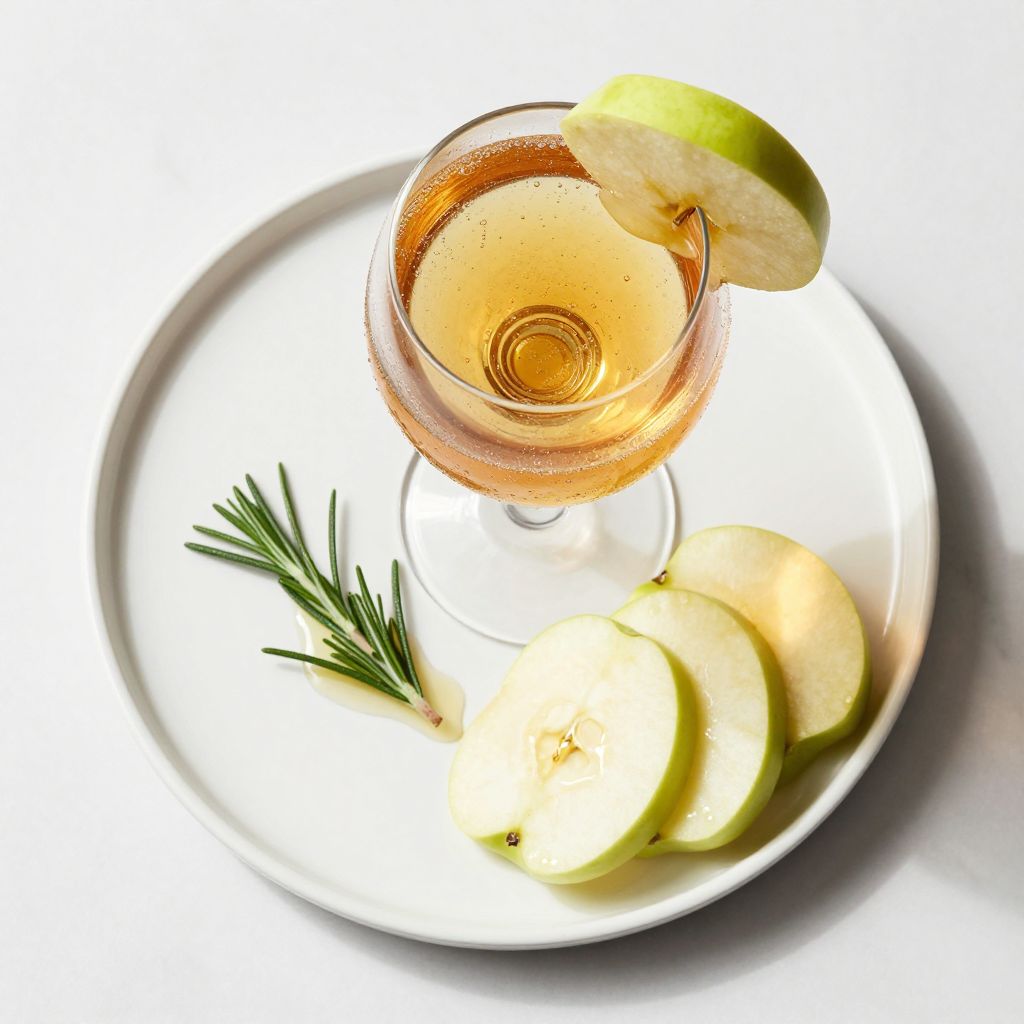
Serve your finished cyser chilled in wine glasses, where its golden color and subtle carbonation shine. The apple and honey flavors pair beautifully with a wide range of foods and occasions.
- Pair with sharp cheddar, aged gouda, and charcuterie for a medieval-inspired cheese board
- Serve alongside roasted pork or duck dishes to complement the apple and honey undertones
- Mix into cocktails by combining cyser with spiced rum or bourbon for a sophisticated fall drink
- Enjoy as an appertif before dinner or as a refreshing dessert beverage after a meal
- Serve at room temperature in smaller quantities to appreciate subtle flavor nuances without alcohol numbing your palate
Variations to Try
- Spiced Cyser: Add one cinnamon stick, three whole cloves, and a small piece of ginger root to the secondary fermentation for warm spice notes that deepen the apple and honey character.
- Dry Cyser: Use Lalvin EC-1118 yeast instead of D-47, which ferments more completely and leaves minimal residual sweetness, creating a wine-like beverage with pronounced apple acidity.
- Hopped Cyser: Add 0.5 ounces of noble hops (like Hallertau or Saaz) during secondary fermentation to introduce subtle herbal complexity and a slight bitter finish.
- Floral Cyser: Replace regular honey with orange blossom or lavender honey to add aromatic dimensions that complement the apple juice beautifully.
- High-Alcohol Cyser: Increase honey to 4 pounds and add 1/2 gallon more apple juice to create a dessert-style cyser with 12 to 14 percent alcohol and more pronounced sweetness.
Dietary Adaptations
- Vegan: All ingredients are naturally vegan; simply confirm your yeast nutrient contains no animal-derived components, as some formulations use fish or shellfish products.
- Gluten-Free: Cyser is naturally gluten-free as long as you use certified gluten-free yeast and apple juice without additives, making it safe for celiac diets.
- Low-Carb/Keto: Cyser can fit a keto diet if fermented completely dry, but check gravity readings to confirm residual sugar is minimal; expect 0 to 5 grams of net carbs per serving in a dry cyser.
- Diabetic-Friendly: Ferment to complete dryness using a vigorous yeast strain to minimize residual sugars, resulting in a drink with minimal impact on blood glucose.
Storage and Reheating
Refrigerator
Store bottled cyser in the refrigerator at 35 to 50 degrees Fahrenheit, where it keeps for up to one year without significant quality loss. Cold temperatures slow any residual fermentation and preserve carbonation.
- Keep bottles upright to minimize surface area contact between liquid and cap
- Check bottles monthly for leaks or signs of over-carbonation, which can cause bursting
- Return bottles to room temperature 30 minutes before serving to allow flavor compounds to become more volatile and aromatic
Freezer
Cyser is not recommended for freezing, as alcohol content makes it difficult to freeze solid and thawing can cause separation of flavors and oxidation. The carbonation will also dissipate completely.
- If you must freeze, decant into glass containers leaving extra headspace for expansion
- Expect quality degradation after thawing
Reheating
Cyser is best served chilled and requires no reheating. If you wish to use it in hot applications like mulled beverages, warm gently over low heat without boiling, which can evaporate alcohol and carbonation.
- Heat to 120 to 140 degrees Fahrenheit maximum to preserve delicate flavors
- Stir gently to avoid creating excess foam
Nutrition Information
| Nutrient | Amount |
|---|---|
| Calories | 120 |
| Total Fat | 0g |
| Saturated Fat | 0g |
| Carbohydrates | 8g |
| Fiber | 0g |
| Sugar | 6g |
| Protein | 0g |
| Sodium | 5mg |
| Cholesterol | 0mg |
Nutritional values are approximate and based on a dry cyser with minimal residual sugar. Sweetness level and aging time affect final carbohydrate and calorie content, so values may vary by individual batch.
Frequently Asked Questions
Can I use store-bought apple cider instead of apple juice?
Yes, you can use store-bought apple cider, but check the label for preservatives like potassium sorbate, which inhibit yeast. Fresh, unfiltered cider creates the most complex flavor profile and deepest color.
How do I know when fermentation is completely finished?
Fermentation is complete when the airlock shows no bubbles for at least one week and your hydrometer reading stabilizes over several days without changing. A stable gravity reading indicates all fermentable sugars have been converted to alcohol.
Can I make cyser without yeast nutrient?
Nutrient is optional but recommended, as apple juice and honey together may lack sufficient nitrogen and minerals for optimal yeast health. Without nutrient, fermentation may stall or produce sulfur-like aromas, so adding it gives you the best chance of success.
Why does my cyser taste vinegary or off?
Vinegar flavors indicate acetobacter contamination from exposure to air or non-sanitized equipment. This is unfortunately irreversible, so your batch is best discarded and your equipment thoroughly re-examined and sanitized for the next attempt.
What yeast strain produces the sweetest cyser?
Lalvin K1-V116 produces a slightly sweeter result by fermenting to around 1.010 gravity, leaving more residual sugar than other strains. If you prefer dry cyser, EC-1118 ferments more aggressively and leaves minimal residual sweetness.
How long can I age bottled cyser?
Properly bottled and stored cyser improves for one to two years and can remain drinkable for five years or longer if kept cool and dark. The flavors gradually mellow and integrate, creating a more refined final product over time.
Final Thoughts
Making cyser rewards you with a unique fermented beverage that bridges the gap between cider and mead, offering approachable fermentation with impressive results. The process teaches you fundamentals of yeast biology and flavor development without the intimidation factor of traditional mead-making.
Your first batch might not be perfect, but that’s the beauty of fermentation: each attempt teaches you something new and brings you closer to your ideal flavor profile. Start with this foundational recipe, taste your results, then experiment with variations until you create a cyser that feels like your own culinary achievement.
If you’re looking to expand your fermented beverage skills, explore mead recipe in 1-gallon batches for traditional honey wine production or try homemade wine recipes to master grape-based fermentation techniques. Each style builds on the knowledge you gain from cyser-making, creating a rich foundation for all your future fermentation adventures.
Cyser
Ingredients
Equipment
Method
- Sanitize all equipment by soaking in sanitizing solution for at least 10 minutes, then rinse thoroughly.
- Heat 64 ounces of filtered water in a large pot to 160°F, then stir in 3 pounds of raw honey until fully dissolved, about 10 minutes.
- Remove from heat and cool honey mixture to room temperature (65–75°F), which takes about 2–3 hours.
- Pour the cooled honey-water mixture into your sanitized 1-gallon carboy using a funnel, then add 64 ounces of apple juice and mix gently by swirling.
- Measure original gravity with a hydrometer; expect 1.070 to 1.080.
- Sprinkle 1 teaspoon yeast nutrient, 1/4 teaspoon acid blend, and 1/8 teaspoon tannin powder (if using) over the must and stir gently.
- Rehydrate yeast in 1/4 cup room-temperature water for 15 minutes, then pitch into the carboy.
- Cover the carboy loosely with a cloth and let sit for 24 hours at room temperature to acclimate the yeast.
- After 24 hours, fit the airlock and bung, fill the airlock halfway with water, and place the carboy in a dark place at 65–75°F.
- Allow primary fermentation for 3–4 weeks until airlock bubbles slow to one every 30 seconds.
- Rack to a secondary vessel, leaving sediment behind, top up if necessary, and reattach the airlock for another 1–2 weeks.
- Confirm fermentation is complete with stable hydrometer readings over several days.
- Bottle into sanitized bottles with minimal headspace. For carbonation, add 1/4 teaspoon honey per 12-ounce bottle before capping and condition for 1–2 weeks.