
There’s something magical about watching golden bananas transform into a smooth, slightly sweet wine that tastes nothing like you’d expect. I discovered banana wine by accident at a friend’s dinner party, and after one sip, I was hooked and determined to learn how to make it myself.
Banana wine is a delightful homemade fermentation project that produces a surprisingly sophisticated drink with floral and fruity notes. This recipe is special because it’s straightforward enough for beginners yet rewarding enough to keep serious fermentation enthusiasts entertained.
The beauty of banana wine lies in its smooth texture and subtle complexity that develops over time. Unlike store-bought wines, you control every variable, from sweetness level to fermentation time, making each batch uniquely yours.
Why You’ll Love This Recipe
Banana wine hits that sweet spot between being approachable and genuinely impressive when you serve it to friends. Here’s what makes it worth your time and effort:
- Uses inexpensive, readily available bananas you can grab at any grocery store
- Produces a naturally smooth wine with mild alcohol content around 10-12 percent
- Fermentation happens quietly in a corner, requiring minimal daily attention
- Ready to enjoy within 3-4 months, though it improves with age
- Makes an impressive homemade gift that sparks conversation and curiosity
My Experience Making This Recipe
My first batch sat in my kitchen for weeks while I obsessively checked it, worried I’d ruined everything. Then one morning, I tasted it and realized I’d created something genuinely delicious that tasted like a cross between a light white wine and stone fruit.
The sensory experience is half the fun: watching the yeast bubble away during active fermentation, the aroma shifting from fruity to increasingly wine-like, and finally that first clear pour after racking. My friends were skeptical until they tasted it, and now three of them have started their own batches.
What surprised me most was how stable and forgiving the process is compared to beer brewing. Once you get the initial steps right, nature does the heavy lifting, and you simply let time work its magic.
Recipe Overview
- Recipe Name: Homemade Banana Wine
- Servings: Approximately 24 servings (from a 1-gallon batch)
- Prep Time: 30 minutes
- Fermentation Time: 12-16 weeks
- Total Time: 3-4 months
- Course: Beverage
- Cuisine: Homemade
- Alcohol Content: 10-12 percent ABV
- Calories per Serving: Approximately 120 calories
Equipment You Will Need
- 1-gallon glass carboy or fermentation jar
- Airlock and carboy cap
- Large stainless steel pot (at least 2 gallons)
- Long stirring spoon or fermentation paddle
- Hydrometer to measure specific gravity
- Thermometer
- Funnel
- Siphon hose and racking cane
- Fine mesh strainer or cheesecloth
- Sanitizing solution (Star San or similar)
- Bottles and caps for storage
- Measuring cups and spoons
Ingredients for Banana Wine
- Ripe bananas: 3 pounds (approximately 8-10 medium bananas)
- Sugar: 2 pounds (white granulated sugar)
- Water: 1 gallon (filtered or distilled water)
- Acid blend: 1.5 teaspoons (citric acid, malic acid, tartaric acid mixture)
- Yeast nutrient: 1 teaspoon
- Tannin powder: 1/4 teaspoon (optional but recommended)
- Wine yeast: 1 packet of Champagne yeast or Lalvin EC-1118
- Pectic enzyme: 1/2 teaspoon (helps break down fruit solids)
- Potassium sorbate: 1/2 teaspoon (optional, stops fermentation if desired)
Ingredient Notes and Substitutions
- Ripe bananas: Ripe bananas provide fermentable sugars and flavor; use bananas with brown spots for maximum sweetness. If you must use greener bananas, add an extra 0.5 pounds of sugar to compensate.
- Sugar: White granulated sugar ferments cleanly and predictably. Brown sugar or honey adds different flavor profiles but can muddy the final product.
- Acid blend: These acids balance the banana’s sweetness and lower pH for safety. Fresh lemon juice (about 3 tablespoons) works in a pinch but adds its own flavor.
- Wine yeast: Champagne yeast ferments reliably and handles temperature swings well. Bread yeast produces off-flavors and won’t give you the wine character you want.
- Tannin powder: Tannins add structure and depth to the finished wine; you can skip it, but the wine may taste flat and one-dimensional.
How to Make Banana Wine
Step 1: Sanitize Your Equipment
Start by sanitizing your entire setup with your chosen sanitizing solution, following the product’s instructions closely. This step prevents wild bacteria and mold from hijacking your fermentation and ruining your batch.
Step 2: Prepare the Bananas
Peel your bananas and chop them into small pieces, removing any bruised or dark spots that could introduce off-flavors. Don’t worry about achieving uniform size; smaller pieces simply break down faster and give you cleaner juice.
Step 3: Heat the Water and Create Your Base
Pour your gallon of water into the large pot and bring it to a simmer (around 160 to 170 degrees Fahrenheit), then add the chopped bananas and let them soften for about 15 minutes. This gentle heating extracts juice and flavor from the fruit while killing any unwanted microbes.
Step 4: Add Sugar and Dissolve
Stir in your 2 pounds of sugar until completely dissolved, then add the acid blend, tannin powder, and pectic enzyme. These ingredients are the backbone of your wine: sugar feeds the yeast, acid balances flavor and creates a hostile environment for unwanted bacteria, and pectic enzyme breaks down fruit cell walls for better juice extraction.
Step 5: Cool the Must to Room Temperature
Remove the pot from heat and let the mixture cool to about 70 degrees Fahrenheit, stirring occasionally to speed the process. You must cool the must because hot liquid will kill your yeast, wasting your effort and ingredients.
Step 6: Strain and Transfer to Your Carboy
Pour the cooled liquid through fine mesh strainer or cheesecloth into your sanitized carboy, pressing gently on the solids to extract every drop of juice. Leave the banana pulp behind; it’s done its job and will only create cloudiness if left in your wine.
Step 7: Pitch Your Yeast and Add Nutrient
Sprinkle your yeast nutrient into the carboy, then rehydrate your wine yeast according to packet directions before adding it to the mixture. Yeast nutrient gives your yeast the minerals and nitrogen it needs to thrive, resulting in faster, cleaner fermentation.
Step 8: Install Airlock and Begin Fermentation
Fit the carboy with your airlock and cap, then place it in a spot that stays between 65 and 75 degrees Fahrenheit, away from direct sunlight. You should see bubbles rising through the airlock within 24 to 48 hours if fermentation is underway.
Step 9: Monitor and Rack After Primary Fermentation
Let the wine ferment for 2 to 3 weeks until the bubbling slows dramatically and the liquid clarifies; this signals that most of the sugar has been consumed. Using a sanitized siphon, carefully rack the clear wine into a fresh carboy, leaving the sediment (called “lees”) behind to prevent off-flavors.
Step 10: Secondary Fermentation and Clearing
Reinstall the airlock and let the wine sit undisturbed for another 4 to 6 weeks until it stops bubbling and becomes crystal clear. During this phase, the yeast is still working, polishing flavors and clarifying the wine naturally.
Pro Tip: Temperature stability is your secret weapon for excellent banana wine; wild swings above 75 degrees or below 65 degrees stress the yeast and invite contamination, so find your coolest, darkest corner.
Tips for the Best Banana Wine
- Use bananas with brown spots and fragrant aroma; they have higher sugar content and better flavor than pale yellow bananas. Skip any fruit that smells fermented or alcoholic before you start.
- Take a hydrometer reading before adding yeast so you know your starting gravity and can predict final alcohol content. This knowledge helps you understand if fermentation is progressing normally.
- Keep fermentation temperatures stable between 65 and 72 degrees Fahrenheit; temperature swings stress the yeast and create unpleasant flavors. A basement, closet, or wine fridge works perfectly.
- Minimize exposure to air during racking by working slowly and using gravity flow rather than forcing liquid through siphons. Oxidation darkens your wine and creates flat, sherry-like flavors you don’t want.
- Taste your wine after racking to adjust sweetness before bottling; add a small amount of dissolved sugar if you prefer a sweeter final product. This is your only chance to tweak the flavor, so sip and decide.
- Age your finished wine for at least 2 to 3 months in bottles before opening to let flavors meld and soften. The difference between a fresh bottle and one aged 6 months is night and day.
Common Mistakes to Avoid
- Using underripe or pale yellow bananas adds little flavor and fermentable sugar, resulting in thin, watery wine. Wait for brown spots; they’re nature’s signal that the fruit is sweet and flavorful.
- Pitching yeast into warm liquid above 75 degrees kills the cells before fermentation starts, leaving you with stuck fermentation and a batch of banana juice instead of wine. Always cool your must first.
- Leaving the banana pulp in the carboy during fermentation creates off-flavors, cloudiness, and potential contamination. Strain thoroughly before installing the airlock.
- Opening the carboy repeatedly to “check on things” exposes your wine to air and bacteria, risking oxidation and spoilage. Trust the process and let it sit undisturbed.
- Bottling too early before fermentation finishes traps carbon dioxide in the bottles, creating unwanted fizz and potential bottle bombs. Wait until bubbling stops completely and the wine sits still for at least 2 weeks.
Serving Suggestions
Banana wine shines when served well chilled in a white wine glass, allowing its delicate floral aromatics to shine. The smooth character and moderate sweetness make it perfect for casual afternoons and elegant dinner parties alike.
- Pair with mild cheeses like brie or gouda to complement the wine’s subtle fruitiness
- Serve alongside desserts, especially those with vanilla, caramel, or tropical fruit flavors
- Try it chilled as an aperitif before a light meal or as a refreshing afternoon sipper
- Enjoy with spiced dishes like Thai cuisine or mild curries where the wine’s sweetness balances heat
- Serve at brunch mixed with sparkling water as a sophisticated, low-alcohol spritzer
Variations to Try
- Spiced Banana Wine: Add 1 cinnamon stick and 3-4 whole cloves during the heating phase for warm spice notes. The spices integrate beautifully with banana’s natural sweetness and create a more complex profile.
- Banana-Honey Wine: Replace 1 pound of the sugar with raw honey for a richer, more complex sweetness and smoother mouthfeel. Honey ferments slightly differently than sugar and adds subtle floral undertones.
- Banana-Raisin Wine: Add 0.5 pounds of chopped raisins during heating to boost tannins and add dried fruit complexity. This version ages beautifully and develops deeper flavors over 6-12 months.
- Tropical Banana Wine: Add 1 pound of chopped pineapple or mango along with the bananas for a brighter, more tropical character. The additional fruit acids also help balance the banana’s mild flavor.
- Dry Banana Wine: Let fermentation continue for an extra week or two until all sugar converts to alcohol for a bone-dry, crisp final product. This version pairs beautifully with seafood and lighter fare.
Dietary Adaptations
- Gluten-Free: Wine is naturally gluten-free; all ingredients in this recipe contain no gluten. The only consideration is choosing certified gluten-free yeast if you have severe sensitivity, though most wine yeasts are already gluten-free.
- Dairy-Free: This recipe contains no dairy ingredients and is completely dairy-free as written. Even if you age on oak or add fining agents, standard wine production remains dairy-free.
- Vegan: Banana wine is vegan in its basic form; however, some winemakers use egg white or isinglass for fining. To keep it vegan, skip fining entirely or use pea protein alternatives.
- Low-Sugar: Use wine yeast without adding any additional sugar, allowing fermentation to consume the bananas’ natural sugars completely. The trade-off is a drier, less fruity wine with higher alcohol content around 12-14 percent.
Storage and Reheating
Refrigerator
Store finished banana wine in corked bottles in a cool, dark area of your refrigerator at around 45 degrees Fahrenheit. Properly stored bottles last 2 to 3 years without significant quality loss.
- Keep bottles lying on their side if using cork to keep the cork moist and prevent air seepage
- Store upright if using screw caps to minimize contact between wine and the cap
- Avoid storing near strong-smelling foods that can permeate the bottle
Freezer
Freezing banana wine is not recommended because the expansion can burst the bottle and the ice crystals that form damage the wine’s structure. If you need to preserve it long-term, keep it cool in a dark cabinet instead.
Reheating
Banana wine is served chilled and does not require reheating, but you can prepare hot mulled banana wine by gently warming it with cinnamon, cloves, and honey. Never boil finished wine as heat destroys its delicate aromatics and alcohol content.
Nutrition Information
| Nutrient | Amount |
|---|---|
| Calories | 120 |
| Total Fat | 0g |
| Saturated Fat | 0g |
| Carbohydrates | 8g |
| Fiber | 0g |
| Sugar | 6g |
| Protein | 0g |
| Sodium | 5mg |
| Cholesterol | 0mg |
Banana wine contains trace amounts of potassium and B vitamins from the original fruit, though fermentation and filtering remove most micronutrients. The nutrition information assumes a standard 5-ounce serving and accounts for residual sugar remaining after fermentation.
Frequently Asked Questions
Can I use frozen bananas for this recipe?
Yes, frozen bananas work perfectly and actually offer an advantage: freezing breaks down cell walls, making juice extraction easier. Thaw them completely before using and proceed with the recipe as written.
What if my wine stops bubbling after only one week?
Early stoppage usually means fermentation happened quickly because of ideal temperature or high sugar content, which is fine. Check the taste; if it’s still very sweet, gentle agitation or re-pitching with fresh yeast may help, but if it tastes appropriately dry, your fermentation is simply complete.
How long does banana wine keep after opening?
An opened bottle lasts 3 to 5 days if stored in the refrigerator with the cork replaced. After this window, oxidation begins noticeably degrading the flavor and aroma.
Why is my wine cloudy instead of clear?
Cloudiness usually means yeast or bacteria remain in suspension; give it more time to settle naturally or carefully rack it again into a fresh carboy. If it remains cloudy after two additional rackings, you may have a stuck fermentation or contamination requiring investigation.
Can I add more sugar to make it sweeter after fermentation?
Yes, you can dissolve additional sugar in a small amount of wine, then stir it back into your batch before bottling. Add potassium sorbate at the same time to prevent the yeast from re-fermenting your added sugar.
Is banana wine safe to drink if it smells vinegary?
A vinegary smell indicates acetobacter infection, which makes the wine unsafe and unpleasant to drink. This happens when wine is exposed to too much air; discard the batch and ensure all equipment is properly sanitized before your next attempt.
Final Thoughts
Making banana wine transformed the way I think about fermentation and homemade beverages: what seemed intimidating became meditative and rewarding. There’s genuine satisfaction in opening a bottle you created from simple bananas and sugar months earlier.
Try this recipe and discover that successful fermentation is more forgiving than you expect; follow the steps carefully, be patient, and you’ll produce wine worth sharing with friends. The 3-month wait feels impossibly long until you take that first sip and understand exactly why.
If you love this homemade fermentation project, explore more creative fermentation possibilities with our complete homemade wine recipe collection. For a delicious way to use bananas in beverages, you’ll also enjoy our banana bread latte recipe for a quick, tasty alternative.
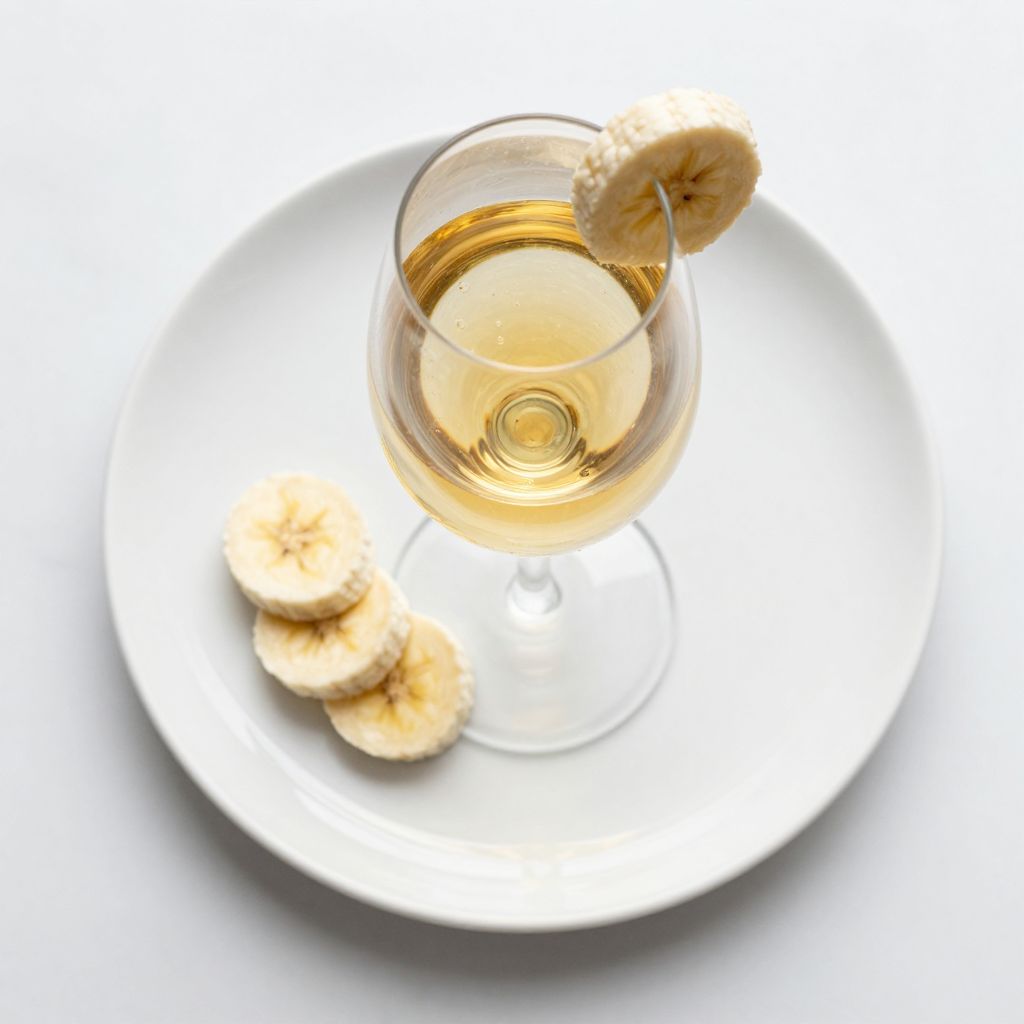
Homemade Banana Wine
Ingredients
Equipment
Method
- Sanitize all equipment with your chosen sanitizing solution according to manufacturer instructions.
- Peel bananas and chop into small pieces, discarding any bruised or dark spots.
- Pour water into the pot and heat to a simmer at 160-170°F, then add banana pieces and simmer for 15 minutes.
- Stir in the sugar until fully dissolved, then add acid blend, tannin powder, and pectic enzyme.
- Remove pot from heat and cool the mixture to 70°F, stirring occasionally.
- Strain the cooled mixture through a fine mesh strainer or cheesecloth into the sanitized carboy, pressing solids to extract juice.
- Sprinkle yeast nutrient into the carboy, then rehydrate the yeast according to packet directions and add it to the must.
- Fit the carboy with an airlock and cap, then ferment in a 65-75°F environment for 2-3 weeks until bubbling slows.
- Use a sanitized siphon to rack the clear wine off the sediment into a fresh carboy, reinstall the airlock, and ferment another 4-6 weeks.
- After fermentation stops and wine is clear, add potassium sorbate if using, bottle the wine, and age for at least 3 months before serving.