
Imagine a refreshing drink that dances on your tongue with a zing of ginger and a hint of sweetness. That’s what making ginger kombucha at home feels like — a delightful experience that brings your kitchen alive with tangy aromas and vibrant flavors.
This recipe is a delightful twist on the classic kombucha, combining the probiotic goodness of fermented tea with the spicy kick of ginger. It’s not only a fun process but also offers a fizzy, healthful beverage that feels like a treat.
Let’s dive into the ingredients and steps to whip up this deliciously fizzy drink!
Why You’ll Love This Recipe
This ginger kombucha is truly special for several reasons.
- Refreshing and tangy with a spicy kick.
- Rich in probiotics, perfect for gut health.
- Customizable with flavors based on your preference.
- A fun project to share with family or friends.
My Experience Making This Recipe
Making ginger kombucha has become a ritual for me. The first time I brewed it, I was amazed at how my kitchen transformed into a mini fermentation lab.
As the weeks went by, I experimented with different ginger levels and flavors, discovering new tastes with each batch. Friends often ask for a taste, and their eyes light up as they sip the fizzy brew.
Recipe Overview
- Recipe Name: Ginger Kombucha
- Servings: About 8 servings
- Prep Time: 15 minutes
- Fermentation Time: 7 to 14 days
- Total Time: 7 to 14 days
- Course: Beverage
- Cuisine: Fermented
- Calories per Serving: Approximately 30 calories
Equipment You Will Need
- 1-gallon glass jar
- Cheesecloth or coffee filter
- Rubber band or string
- Measuring cups and spoons
- Wooden or plastic spoon
- Bottles for storing (preferably glass)
Ingredients for Ginger Kombucha
- 8 cups of filtered water
- 1 cup of granulated sugar
- 2 tablespoons of loose black tea or 4-5 tea bags
- 1 cup of starter kombucha (from a previous batch or store-bought)
- 1 SCOBY (Symbiotic Culture Of Bacteria and Yeast)
- 1 tablespoon of freshly grated ginger
Ingredient Notes and Substitutions
- Filtered water: Used to prevent any chlorine taste that can affect fermentation. You can use bottled spring water as an alternative.
- Granulated sugar: It feeds the SCOBY during fermentation. You can substitute with organic cane sugar or coconut sugar.
- Black tea: Provides the base flavor. Green tea can also work, but avoid flavored teas.
- Starter kombucha: Kickstarts fermentation. If unavailable, you can use a store-bought kombucha that contains live cultures.
- SCOBY: Essential for fermentation. You can grow your own or source one from a friend or local kombucha brewer.
How to Make Ginger Kombucha
Step 1: Prepare the Tea
Boil 8 cups of water in a pot. Add the black tea and sugar, stirring until dissolved to create a sweetened tea base.
Step 2: Cool the Tea
Remove the pot from heat and let the tea cool to room temperature. Cooling is crucial to avoid harming the SCOBY.
Step 3: Combine Ingredients
Once cooled, pour the tea into a clean 1-gallon glass jar. Add the starter kombucha and gently slide in the SCOBY.
Step 4: Cover the Jar
Lay a cheesecloth or coffee filter over the top and secure it with a rubber band. This keeps dust out while allowing the mixture to breathe.
Step 5: Ferment
Place the jar in a warm, dark area for 7 to 14 days. Taste it periodically to find your preferred level of fermentation.
Step 6: Prepare for Bottling
When it’s ready, remove the SCOBY and set it aside. Pour the kombucha through a fine mesh strainer to remove any sediment.
Step 7: Add Ginger
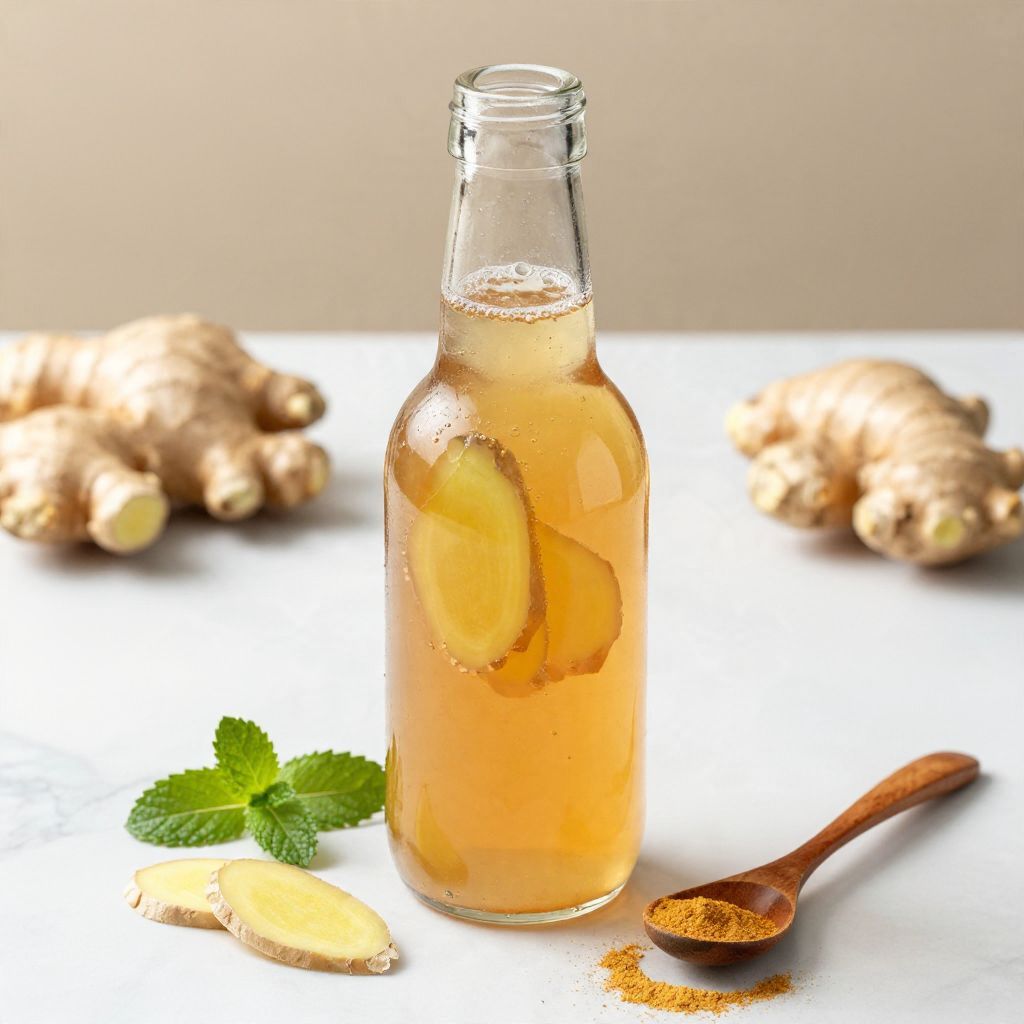
Stir in the freshly grated ginger into the strained kombucha. This will infuse more flavor during the second fermentation.
Step 8: Bottle and Second Ferment
Transfer the kombucha to bottles, leaving some space at the top. Seal tightly and let them sit at room temperature for 3 to 7 days to carbonate.
Pro Tip: Always taste your kombucha before bottling to ensure it has the right balance of sweetness and tang.
Tips for the Best Ginger Kombucha
- Use high-quality tea for better flavor; cheap tea can lead to dull taste.
- Ferment in a warm spot; cooler temperatures slow down fermentation.
- Experiment with ginger levels; more ginger means a spicier drink.
- Keep everything clean; sanitation prevents unwanted bacteria.
- Monitor the carbonation; open a bottle every couple of days to check.
Common Mistakes to Avoid
- Skipping the cooling step can harm the SCOBY. Always let the tea cool first.
- Using metal containers can be harmful; stick to glass or plastic.
- Fermenting for too long can lead to overly sour kombucha.
- Leaving out the SCOBY means no fermentation will occur.
Serving Suggestions
This ginger kombucha is delicious on its own but can pair nicely with various dishes.
- Spicy Asian dishes for a refreshing contrast.
- Light salads to cleanse the palate.
- Sweet desserts for a fizzy finish.
- As a mixer in cocktails for a unique twist.
Variations to Try
- Add citrus like lemon or lime for a bright tang.
- Infuse with berries for a fruity flavor.
- Try herbs like mint for an aromatic touch.
- Mix in spices like cinnamon for a warm twist.
Dietary Adaptations
- Gluten-Free: This recipe is naturally gluten-free.
- Dairy-Free: Kombucha is dairy-free, making it suitable for various diets.
- Vegan: All ingredients are plant-based, perfect for vegans.
- Low-Carb/Keto: Kombucha contains some sugar, but it’s minimal per serving.
Storage and Reheating
Refrigerator
Store your kombucha in the fridge to slow down fermentation and preserve flavor.
- Keep in sealed bottles for up to a month.
- Open bottles should be consumed within a week for best taste.
Freezer
It’s not recommended to freeze kombucha as it affects the texture and flavor.
- Instead, keep it refrigerated for freshness.
Reheating
Do not reheat kombucha; it’s best enjoyed cold and fizzy.
- Simply chill in the fridge before serving.
Nutrition Information
| Nutrient | Amount |
|---|---|
| Calories | 30 |
| Total Fat | 0g |
| Saturated Fat | 0g |
| Carbohydrates | 8g |
| Fiber | 0g |
| Sugar | 7g |
| Protein | 0g |
| Sodium | 0mg |
| Cholesterol | 0mg |
This nutrition information is approximate and can vary based on ingredients and preparation.
Frequently Asked Questions
Can I use green tea instead of black tea?
Yes, green tea can work well, but it may alter the flavor profile slightly.
How long can I store kombucha?
You can store kombucha in the refrigerator for up to a month for the best taste.
Can I make kombucha without a SCOBY?
Unfortunately, you need a SCOBY for fermentation; it’s essential for the process.
What if my kombucha tastes too sour?
If it tastes sour, it may have fermented too long; try reducing fermentation time next batch.
Can I make flavored kombucha?
Absolutely! Adding fruits or herbs during the second fermentation gives delightful flavors.
Final Thoughts
Making your own ginger kombucha is not just a fun project; it’s a rewarding way to enjoy a healthful beverage. The process engages your senses and offers a unique taste that store-bought versions can’t match.
So, gather your supplies and give this recipe a try — you won’t be disappointed. For more ginger ideas, check out this ginger bug recipe or explore refreshing flavors with this ginger bug soda recipe.
Ingredients
Equipment
Method
- Boil 8 cups of water in a pot.
- Add the black tea and sugar, stirring until dissolved.
- Remove the pot from heat and let the tea cool to room temperature.
- Once cooled, pour the tea into a clean 1-gallon glass jar.
- Add the starter kombucha and gently slide in the SCOBY.
- Lay a cheesecloth or coffee filter over the top and secure it with a rubber band.
- Place the jar in a warm, dark area for 7 to 14 days.
- Taste periodically to find your preferred level of fermentation.
- When ready, remove the SCOBY and set it aside.
- Pour the kombucha through a fine mesh strainer to remove any sediment.
- Stir in the freshly grated ginger into the strained kombucha.
- Transfer the kombucha to bottles, leaving some space at the top.
- Seal tightly and let them sit at room temperature for 3 to 7 days to carbonate.