
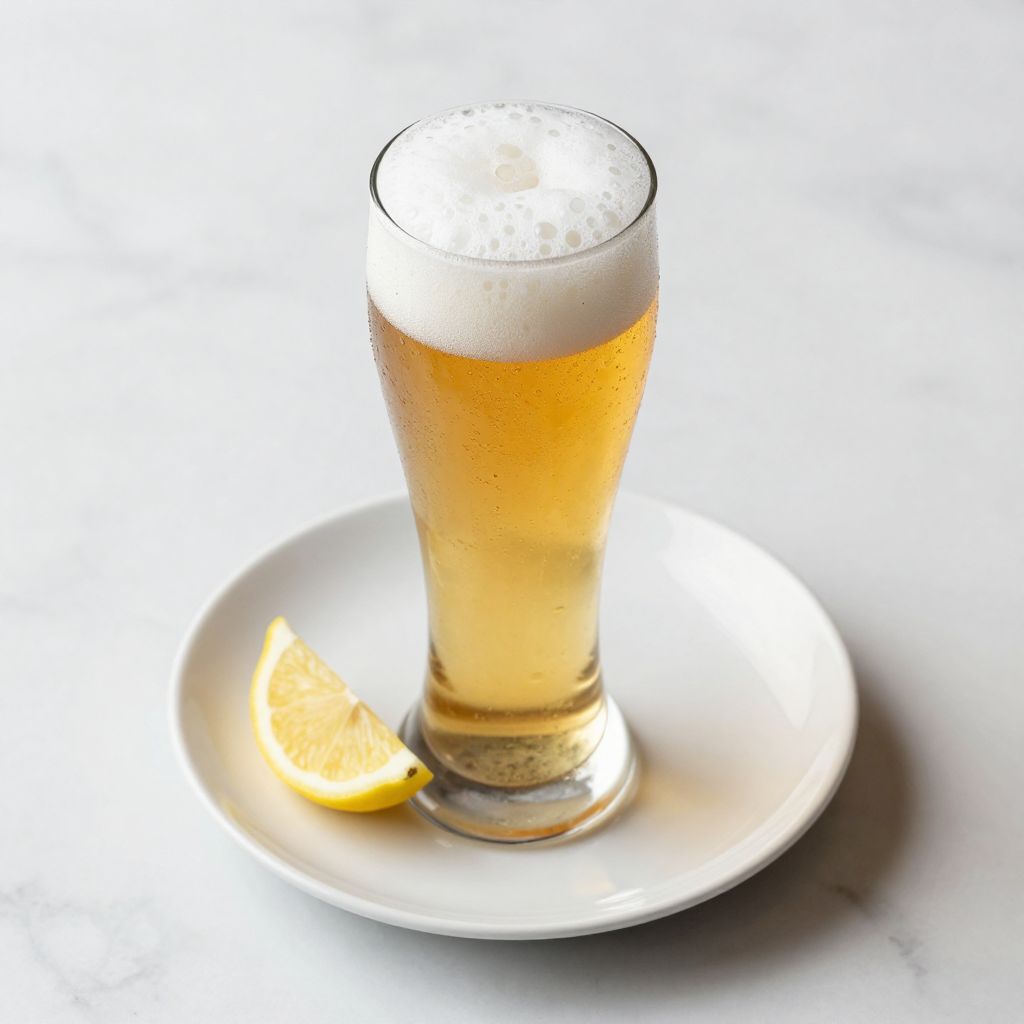
There’s something magical about that first sip of a crisp Kolsch on a warm afternoon, when the beer seems to glow golden in the sunlight and delivers a clean, refreshing bite that makes you want another.
Kolsch is a German ale that tastes like a lager but brews like an ale, making it one of the most approachable and rewarding beers to craft at home.
This recipe captures that perfect balance of subtle fruit notes, crisp finish, and smooth drinkability that has made Kolsch a favorite among brewers for centuries.
Whether you’re a seasoned homebrewer or stepping into the hobby for the first time, this guide walks you through every step to create a beer that rivals commercial versions.
Why You’ll Love This Recipe
Kolsch checks all the boxes for a beer that’s genuinely fun to make and even better to drink.
- Clean, crisp flavor with subtle fruity esters and virtually no bitterness
- Shorter fermentation timeline compared to many ales, ready to enjoy in 3 to 4 weeks
- Forgiving recipe that tolerates minor variations in temperature and technique
- Incredibly food-friendly and perfect for warm weather drinking
- Impressive enough to share with friends while remaining simple to execute
My Experience Making This Recipe
I first brewed Kolsch on a whim after a trip to Cologne, Germany, where I sat in a traditional brewery and watched the bartender carry six glasses at once with the ease of someone who’d done it ten thousand times.
The beer stuck with me, so I researched the style and realized it was totally achievable in my home kitchen with basic equipment.
My first batch fermented at a cooler temperature than typical ales, and the result was noticeably cleaner and crisper than my previous attempts at other styles, with just a whisper of those signature fruity notes.
Friends consistently asked what beer it was, surprised to learn I’d brewed it myself, and that reaction alone made the process feel worthwhile.
Recipe Overview
- Recipe Name: Kolsch
- Servings: 48 (12-ounce servings)
- Prep Time: 30 minutes
- Brew Time: 60 minutes
- Fermentation Time: 21 to 28 days
- Total Time: 4 to 5 weeks
- Course: Beverage
- Cuisine: German
- Calories per Serving: 145
Equipment You Will Need
- 5 to 10 gallon stainless steel brew kettle
- Large mesh strainer or brew basket
- Brewing thermometer
- Long-handled brew spoon or paddle
- Immersion wort chiller or ice bath setup
- 6.5 to 7 gallon glass or plastic carboy fermentation vessel
- Airlock and rubber stopper that fits your carboy
- Hydrometer and test tube
- Auto-siphon and tubing for bottling
- Bottle capper and crown caps
- Sanitizing solution
- Large funnel
- Muslin grain bag
- Bottle brush
Ingredients for Kolsch
Grains and Malt
- Pale Ale Malt: 5 pounds
- Vienna Malt: 1.5 pounds
- Pilsner Malt: 1 pound
- Carapils Malt: 0.5 pounds
Hops
- Hallertau Hops: 0.75 ounces (60 minutes)
- Hallertau Hops: 0.5 ounces (5 minutes)
Yeast and Extras
- Kolsch Yeast: one vial liquid yeast or one pack dry yeast
- Soft Water: 6 gallons
- Priming Sugar: 0.75 cups (for bottling)
Ingredient Notes and Substitutions
- Pale Ale Malt: The foundation grain that provides fermentable sugars and the backbone of the beer’s body. If unavailable, substitute with Pilsner Malt in equal amounts, though the flavor will shift slightly lighter and crisper.
- Vienna Malt: Adds subtle bread and grain sweetness along with golden color. You can replace it with additional Pale Ale Malt, but the beer will lack some complexity and depth.
- Hallertau Hops: Classic noble hops that deliver a gentle, herbal bitterness and floral aroma without overpowering the beer. Noble Saaz or Tettnang hops work as a substitute and maintain the delicate character.
- Kolsch Yeast: A warm-fermenting ale yeast that produces minimal esters when kept around 65 to 68 degrees Fahrenheit. If you cannot source it, a clean, crisp ale yeast like California Ale works, though fermentation should happen at the cooler end of the yeast’s range.
- Priming Sugar: Corn sugar carbonates the beer during bottle conditioning. You can substitute with dextrose or dry malt extract in equal amounts for consistent results.
How to Make Kolsch
Step 1: Mash Your Grains
Crush all grains using a grain mill set to a coarse setting, aiming to break the husks without powdering the kernels into flour.
Heat 2.5 gallons of soft water to 154 degrees Fahrenheit, then add the crushed grains slowly while stirring to distribute them evenly and prevent clumping.
The mash should feel like wet sand at roughly 150 to 152 degrees Fahrenheit, creating an environment where enzymes in the grain convert starches into fermentable sugars over the next 60 minutes.
Step 2: Rest the Mash
Hold the mash at 150 to 152 degrees Fahrenheit for exactly 60 minutes, stirring every 15 minutes to maintain consistent temperature throughout.
This rest period, called saccharification, allows the natural enzymes in the malt to break down complex starches into simple sugars that yeast can ferment, creating alcohol and carbonation.
Step 3: Sparge the Grains
Slowly pour 1.5 gallons of water heated to 170 degrees Fahrenheit over the grains while collecting the liquid that drains from the bottom of your mash tun or kettle.
This sparging process rinses additional fermentable sugars from the grain, maximizing efficiency and yield without extracting harsh tannins that would muddy the beer’s clean character.
Step 4: Boil the Wort
Pour the collected liquid (called wort) into your brew kettle and bring it to a rolling boil over high heat.
Once boiling steadily, add the first addition of Hallertau hops (0.75 ounces) and start your 60-minute timer, noting that boiling sterilizes the wort and allows hops to release their bittering compounds evenly.
Step 5: Add Final Hops
With exactly 5 minutes remaining on the boil timer, add the second portion of Hallertau hops (0.5 ounces).
These late-addition hops contribute aroma rather than bitterness, and the short boil time preserves their delicate floral and herbal notes that define the Kolsch’s signature profile.
Step 6: Chill the Wort
When the 60-minute boil finishes, immediately begin cooling the wort to 68 degrees Fahrenheit using an immersion chiller or an ice bath, working as quickly as possible.
Rapid cooling stops enzymatic reactions and prevents unwanted flavors from developing, while reaching the proper temperature ensures your yeast will activate promptly and ferment cleanly.
Step 7: Transfer and Pitch Yeast
Siphon or carefully pour the cooled wort into your sanitized fermentation vessel, then measure the original gravity using a hydrometer to confirm you’re in the expected range of 1.045 to 1.050.
Pitch your prepared yeast (either rehydrated dry yeast or liquid yeast that has been brought to room temperature) into the wort, swirl gently to distribute it, and fit the airlock into place.
The yeast begins consuming sugars within hours, producing alcohol and carbon dioxide, which bubbles visibly through the airlock as fermentation progresses.
Step 8: Monitor Fermentation
For the first 48 hours, check the airlock frequently to confirm vigorous bubbling, indicating healthy yeast activity.
Keep the fermentation vessel in a cool location between 65 and 68 degrees Fahrenheit, as warmer temperatures can produce unwanted fruity esters, while cooler temperatures slow fermentation unnecessarily and muddy the beer’s clean finish.
Step 9: Complete Fermentation and Bottling
Allow fermentation to proceed for 7 to 10 days until visible activity slows dramatically, then take a final gravity reading with your hydrometer.
Once the gravity stabilizes and reads roughly 1.010 to 1.012, sanitize your bottles and caps, then siphon the beer into bottles, leaving about an inch of headspace.
Add 0.75 cups of priming sugar (dissolved in minimal boiled water and cooled) to the wort before bottling, then cap each bottle firmly with your bottle capper.
Store bottles upright at room temperature for 10 to 14 days while the remaining yeast consumes the priming sugar and produces carbonation, creating the beer’s natural fizz and texture.
Pro Tip: Keep your fermentation temperature stable at 65 to 68 degrees Fahrenheit throughout the process; swings beyond this range produce off-flavors that ruin the beer’s clean, crisp character.
Tips for the Best Kolsch
- Use soft water or water with minimal mineral content, as Kolsch’s delicate flavor profile shines brightest when nothing competes with the malt and hops. If your tap water is hard, consider using filtered or distilled water.
- Invest in a good thermometer and monitor fermentation temperature obsessively during the first week, when yeast is most active and most sensitive to temperature shifts. Even 5 degrees too warm produces fruity esters that bury the beer’s intended clean finish.
- Don’t skip the immersion chiller or ice bath step; forcing the wort to cool rapidly prevents contamination and off-flavors from developing, setting the foundation for a crisp final product.
- Taste the beer at the 2-week mark after bottling to assess carbonation level, then store remaining bottles upright in a cool, dark place to slow oxidation and preserve freshness for up to 6 months.
- Always sanitize every piece of equipment that contacts the cooled wort or beer after fermentation begins, using a no-rinse sanitizer to eliminate bacteria and wild yeast that could spoil the entire batch.
- Rehydrate dry yeast in distilled water at 104 degrees Fahrenheit for 30 minutes before pitching, allowing cells to absorb water and awaken, which produces a faster fermentation start and cleaner flavors than dry-pitching.
Common Mistakes to Avoid
- Fermenting too warm: Temperatures above 70 degrees Fahrenheit push yeast to produce excessive esters, creating a fruity or banana-like character that obliterates Kolsch’s clean profile and wastes all your effort.
- Over-sparging: Pouring too much water over the grain or extending the sparge beyond 15 minutes extracts tannins and astringency, making the beer taste dry and harsh instead of smooth and approachable.
- Using old or improperly stored yeast: Expired or warm-stored yeast produces sluggish fermentation and off-flavors; purchase fresh yeast and store it in the refrigerator to ensure viability and clean fermentation.
- Skipping the chill: Failing to cool the wort rapidly after boiling allows unwanted flavors to develop and increases infection risk, so never skip this critical step no matter how tempting it seems.
- Under-carbonating: Bottle conditioning requires at least 2 weeks at room temperature to fully carbonate; bottling in a cold environment or rushing the process results in flat beer that tastes lifeless.
Serving Suggestions
Kolsch shines when served ice-cold in a clean glass that allows you to see its golden color and appreciate its clarity.
The beer’s crisp, refreshing character makes it perfect for warm weather gatherings, casual meals, and social occasions where guests appreciate something approachable and sessionable.
- Pair with light appetizers like seafood, fresh ceviche, or grilled shrimp for a complementary match that highlights the beer’s subtle fruit notes
- Serve alongside grilled chicken or white fish, where the beer’s lack of heaviness allows delicate flavors to stand out
- Enjoy with soft cheeses like goat cheese or mild cheddar, which benefit from the beer’s crisp acidity and clean finish
- Use as an aperitif before meals rather than as a dessert beer, capitalizing on its dryness and refreshing character
- Bring to picnics and outdoor gatherings where its drinkability and food-friendliness shine brightest
Variations to Try
- Hopped Kolsch: Increase Hallertau hops to 1 ounce at 60 minutes and add a half-ounce of Saaz at 15 minutes for a beer with more hop character and complexity, though this shifts it slightly toward a Pale Ale profile.
- Malty Kolsch: Replace 0.5 pounds of Pale Ale Malt with Munich Malt for deeper grain flavors and a slightly fuller body that appeals to drinkers who prefer less delicate beer.
- Single-Hop Kolsch: Experiment with different noble hop varieties like Tettnang or Hallertau Tradition in place of standard Hallertau to discover how subtle changes in hop selection alter the beer’s aromatic character.
- Higher Gravity Kolsch: Increase total grain by 1 pound and adjust your sparge water accordingly to create a richer, more substantial beer around 1.055 original gravity that ages better and pairs with heavier foods.
- Fruit-Forward Kolsch: Add one pound of fresh fruit (such as apricots or peaches) to the secondary fermentation vessel after primary fermentation completes to introduce subtle fruity layers that complement the beer’s clean backbone.
Dietary Adaptations
- Gluten-free: Replace all malt with gluten-free alternatives like sorghum malt or specialty gluten-free brewing malts, though the flavor profile shifts noticeably and the result feels thinner; expect some experimentation to nail the recipe.
- Lower alcohol: Reduce the grain bill by 1 pound and adjust all grains proportionally to create a lower-gravity version around 1.038 original gravity that ferments to roughly 3.8 percent ABV, producing a more sessionable beer.
- Vegan: Kolsch is naturally vegan, containing only grains, hops, yeast, and water with no animal products, making it perfect for plant-based drinkers without any adjustments needed.
- Low-carb: Standard Kolsch contains roughly 3 to 5 grams of carbohydrates per 12-ounce serving and cannot be meaningfully reduced further without compromising the recipe’s balance and flavor profile.
Storage and Reheating
Refrigerator
Store bottles upright in the refrigerator at 38 to 45 degrees Fahrenheit for up to 6 months, away from direct light which degrades the beer’s flavor.
- Keep bottles sealed with caps to maintain carbonation and prevent oxidation
- Check bottles periodically for leaks or signs of contamination like cloudiness or off-odors
- Consume within 4 months for peak freshness and flavor
Freezer
Freezing is not recommended for beer, as frozen and thawed bottles risk exploding or becoming overcarbonated when the ice melts.
- If you must store for longer than 6 months, keep bottles in a dark closet at cellar temperature (50 to 55 degrees Fahrenheit) rather than frozen
Serving
Chill bottles in the refrigerator for at least 4 hours before serving, then pour slowly into a clean glass to preserve head and carbonation.
- Never store opened bottles; consume immediately after opening for optimal carbonation and flavor
- Rinse glasses with cold water before pouring to eliminate dust or residue that affects taste
Nutrition Information
| Nutrient | Amount |
|---|---|
| Calories | 145 |
| Total Fat | 0 grams |
| Saturated Fat | 0 grams |
| Carbohydrates | 5 grams |
| Fiber | 0 grams |
| Sugar | 1 gram |
| Protein | 1.5 grams |
| Sodium | 15 milligrams |
| Cholesterol | 0 milligrams |
Nutritional values are approximate and based on a 12-ounce serving of finished beer with roughly 4.5 percent alcohol content; values vary slightly depending on exact fermentation outcome and carbonation level.
Frequently Asked Questions
Can I use a temperature-controlled chamber for fermentation?
Yes, a temperature-controlled cooler or chamber is ideal for maintaining the 65 to 68 degree Fahrenheit range that Kolsch fermentation demands without daily monitoring.
This investment pays off immediately by producing consistently clean beer free from temperature-related off-flavors.
What if my original gravity is higher or lower than expected?
If your OG reads 1.048 instead of 1.050, the beer still ferments and tastes excellent; minor variations of plus or minus 2 points don’t materially harm the final product.
If the reading falls outside the 1.040 to 1.055 range, recalculate your grain bill or sparge water volume for your next batch.
How do I know when fermentation is truly complete?
Take gravity readings on days 7, 8, and 9 of fermentation; when two consecutive readings are identical, fermentation has stopped and the beer is ready for bottling.
This eliminates the risk of over-carbonation from residual sugar still being consumed by yeast at bottling time.
Can I use the same yeast from my first batch to brew a second?
Yes, you can harvest yeast from the bottom of the fermentation vessel after bottling, wash it with sterile water, and store it in the refrigerator for up to 2 months for reuse.
This saves money and maintains consistency, though the yeast loses some viability with each generation, so eventually purchase fresh yeast again.
Why does my Kolsch taste fruity instead of crisp?
Fruity flavors indicate fermentation happened at temperatures above 68 degrees Fahrenheit, pushing yeast to produce esters instead of clean alcohol.
For your next batch, invest in a temperature control method like a fermentation chamber or wrap the carboy in wet towels with a fan to keep it cool.
Can I drink the beer at 2 weeks if I’m impatient?
You can taste it at 2 weeks, but the carbonation will be minimal and the flavor slightly flat, lacking the fizz and snappy character that makes Kolsch enjoyable.
Bottle conditioning takes 10 to 14 days minimum to build proper carbonation, so patience is rewarded significantly here.
Final Thoughts
Brewing your own Kolsch transforms you from a passive beer drinker into someone who understands and appreciates the craft behind every sip.
The process feels manageable, the recipe forgives small mistakes, and the final beer impresses everyone who tastes it.
Start this batch today, and in just a month you’ll be serving homemade Kolsch to friends, watching their surprised expressions when you reveal where the beer came from.
That combination of clean flavors, refreshing crispness, and personal pride makes this recipe worth the small effort it demands.
If you enjoyed this recipe, explore more beverage options at Mostly Cocktails or try the best chocolate milkshake recipe for a different kind of homemade indulgence.
Kolsch
Ingredients
Equipment
Method
- Crush all grains using a grain mill set to a coarse setting.
- Heat 2.5 gallons of soft water to 154°F and mash in grains, holding at 150–152°F for 60 minutes, stirring every 15 minutes.
- Sparge grains with 1.5 gallons of water at 170°F to rinse additional sugars.
- Bring collected wort to a rolling boil, add 0.75 ounces Hallertau hops, and boil for 60 minutes.
- With 5 minutes remaining, add 0.5 ounces Hallertau hops to the boil.
- Cool the wort rapidly to 68°F using an immersion chiller or ice bath.
- Transfer cooled wort to the sanitized fermentation vessel, measure original gravity, and pitch yeast.
- Ferment at 65–68°F for 7 to 10 days, monitoring airlock activity.
- After fermentation slows and final gravity reaches 1.010–1.012, bottle with 0.75 cups priming sugar, cap, and condition at room temperature for 10 to 14 days.