
There’s something magical about sipping a cold glass of vibrant green juice first thing in the morning, and a kale tonic delivers exactly that kind of wake-up call your body craves.
This recipe combines nutrient-dense kale with bright citrus, ginger, and apple to create a refreshing elixir that tastes nothing like punishment and everything like a delicious health boost. The beauty of a kale tonic lies in its simplicity and versatility, making it perfect for busy mornings or when you want to reset after indulgent meals.
Whether you’re a juice enthusiast or just dipping your toes into fresh wellness drinks, this recipe proves that healthy doesn’t have to mean complicated. Ready to blend your way to brighter energy? Let’s get started.
Why You’ll Love This Recipe
A kale tonic tastes refreshing and energizing without any of the bitterness you might fear from raw kale.
- Packed with vitamins A, C, and K plus iron and calcium for real nutritional power
- Takes just 10 minutes from fridge to glass
- Naturally sweet from apple and ginger with a zingy citrus finish
- Works perfectly as a morning jump-start or afternoon pick-me-up
- Costs far less than store-bought cold-pressed juices
My Experience Making This Recipe
The first time I made a kale tonic at home, I was skeptical that something so green could actually taste good. I’d had bitter green juices before, and honestly, they tasted like I was drinking liquefied lawn clippings.
That changed the moment I added fresh ginger and a whole apple into the mix. The transformation was immediate; the apple brought natural sweetness, the ginger added warmth and spice, and suddenly the kale faded into the background as just another player in a genuinely delicious drink.
My kitchen filled with the most incredible aroma while juicing, and my family actually asked for a sip instead of running away in horror. Now I make this tonic at least three times a week, and it’s become my go-to way to sneak nutrients into my morning routine without feeling like I’m choking down something medicinal.
Recipe Overview
- Recipe Name: Kale Tonic
- Servings: 2 servings
- Prep Time: 5 minutes
- Cook Time: 0 minutes
- Total Time: 5 minutes
- Course: Beverage
- Cuisine: Health/Wellness
- Calories per Serving: 95 calories
Equipment You Will Need
- Cold-press juicer or high-powered blender
- Cutting board
- Sharp knife
- Fine mesh strainer (if using a blender)
- Measuring cups
- Tall glass or serving pitcher
- Spoon for stirring
Ingredients for Kale Tonic
- 2 cups fresh curly kale, roughly chopped and packed
- 1 green apple, cored and quartered
- 1 lemon, peeled and halved
- 1-inch piece of fresh ginger, peeled and sliced
- 1/2 cup fresh spinach, optional but recommended
- 1/2 cup filtered water
- Ice cubes, for serving
- Pinch of sea salt, optional
Ingredient Notes and Substitutions
- Curly Kale: Curly kale holds its structure through juicing and offers a milder flavor than lacinato. If you can’t find it, lacinato kale works well but will taste slightly earthier and more assertive.
- Green Apple: Green apples like Granny Smith provide tartness and balance that sweetens the drink naturally. Honeycrisp apples are sweeter and work if you prefer less tartness, though the tonic may taste less refreshing.
- Fresh Lemon: Lemon brightens the whole drink and prevents oxidation, keeping your juice fresher longer. Lime offers a tropical twist if you want to swap it, though you’ll lose some of the classic brightness.
- Fresh Ginger: Ginger adds warmth, aids digestion, and masks any vegetal notes in the kale. Ginger powder works in a pinch at 1/4 teaspoon, but fresh delivers way more punch and flavor complexity.
- Spinach: Spinach adds nutrients without changing the taste much since it’s milder than kale. You can omit it entirely if your juicer struggles with leafy greens, though your nutrient count drops slightly.
How to Make Kale Tonic
Step 1: Wash and Prep Your Produce
Rinse your kale, spinach, lemon, and apple under cool running water to remove any dirt or residue. Pat the kale and spinach dry with a clean kitchen towel since excess water dilutes your juice and wastes nutrients.
Step 2: Chop the Kale and Spinach
Roughly chop your kale into manageable pieces about 2 inches long and gather your spinach leaves together. Breaking them into smaller pieces helps your juicer process them more efficiently and prevents jamming.
Step 3: Prep the Apple
Cut your green apple in half, then quarters, and remove the core using a sharp knife or small melon baller. Keeping the skin on adds fiber and nutrients, though you can peel it if you prefer a sweeter, smoother juice.
Step 4: Prepare the Lemon
Cut your lemon in half and remove the seeds with the tip of your knife. Peeling the lemon skin is optional; the white pith tastes bitter, so remove it if you prefer milder citrus flavor.
Step 5: Slice the Ginger
Slice your peeled ginger into thin coins or batons about 1/4 inch thick. This size feeds through most juicers smoothly and ensures your ginger flavor distributes evenly throughout the tonic.
Step 6: Feed Into Your Juicer
Start by running the softer greens through your juicer first, alternating them with the harder fruits to keep things flowing smoothly. This layering technique prevents juicer clogging and maximizes juice extraction from leafy greens.
Step 7: Juice Everything Together
Feed your kale, spinach, apple, lemon, and ginger into your juicer according to the machine’s instructions. If using a blender instead of a juicer, add the water and blend everything on high speed for 45 seconds, then strain through a fine mesh sieve.
Step 8: Add Water and Season
Pour your freshly extracted juice into a pitcher and add the filtered water to reach your desired consistency. Taste the tonic and add a tiny pinch of sea salt if it tastes too vegetal; salt brightens flavors without making the drink taste salty.
Step 9: Serve Immediately with Ice
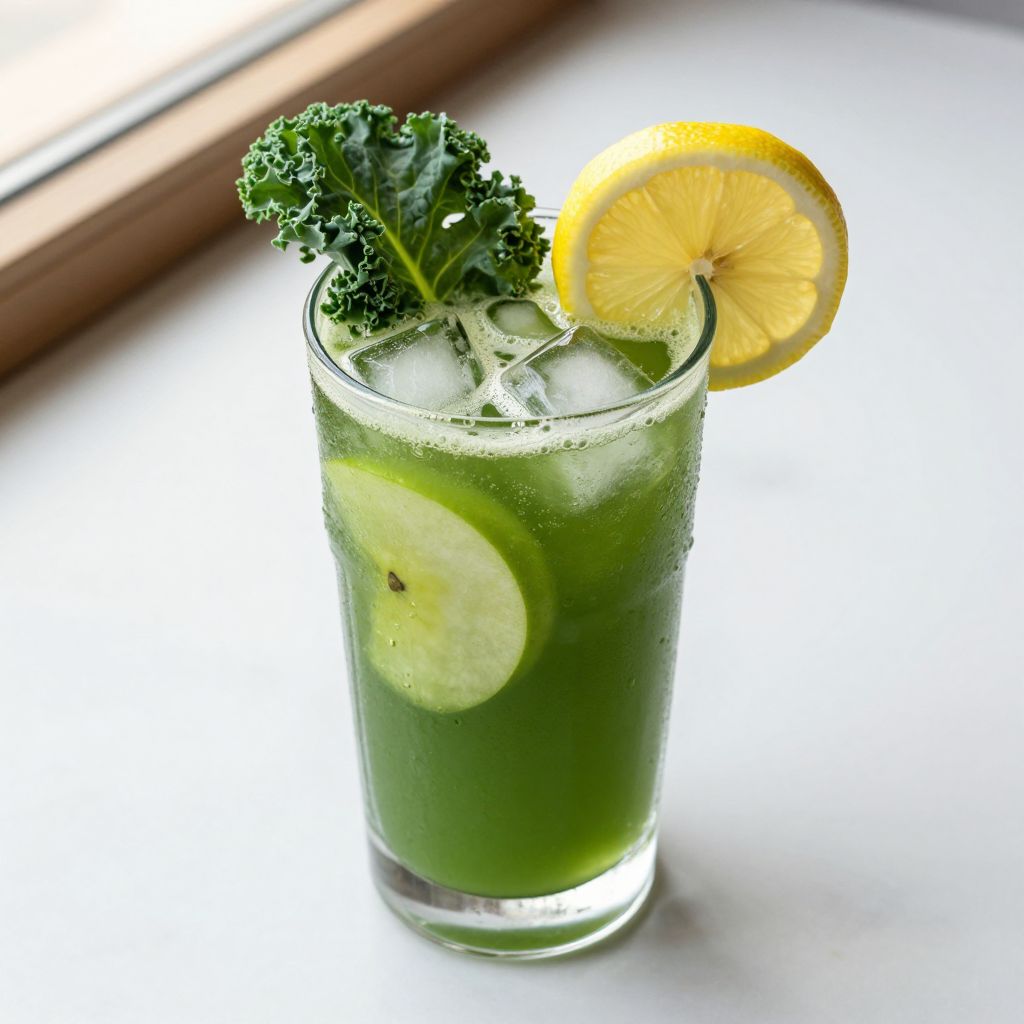
Pour your kale tonic into tall glasses filled with ice cubes and serve right away for maximum freshness and nutrition. Fresh juice loses nutrients quickly, so drink it within 15 minutes of making for peak flavor and health benefits.
Pro Tip: Make your kale tonic the night before and store it in an airtight glass bottle in the coldest part of your fridge; it stays fresh for up to 24 hours and saves you precious minutes in the morning rush.
Tips for the Best Kale Tonic
- Use the coldest ingredients possible by keeping your produce in the fridge; cold juice feels more refreshing and tastes crisper than room-temperature juice.
- Juice your tonic in the morning or no more than a few hours before drinking to preserve vitamin content and prevent oxidation from turning your juice brown.
- If your juice tastes too strong or vegetal, add a splash more lemon or a tiny bit more apple instead of reaching for added sweeteners.
- Invest in a quality cold-press juicer if you plan to juice regularly; they extract significantly more juice and nutrients than centrifugal models and handle greens beautifully.
- Reverse the order of ingredients if your juicer has trouble with leafy greens, starting with harder fruits and finishing with the soft greens.
- Don’t peel the apple unless you have a sensitive stomach; the skin contains most of the fiber and some of the nutrients.
Common Mistakes to Avoid
- Using wilted or old kale that has lost its crispness results in a dull, bitter-tasting tonic with reduced nutrient density. Always choose bright green, crispy kale with no yellowing or brown spots.
- Forgetting to remove apple seeds before juicing introduces cyanide precursors that taste bitter and aren’t worth the minimal risk. Always core your apples thoroughly.
- Making too much juice at once leads to oxidation and nutrient loss; fresh juice is best consumed within 15 minutes. Make smaller batches more frequently for better flavor and nutrition.
- Using bottled lemon juice instead of fresh juice results in a flat, chemical-tasting drink that lacks the brightness of fresh citrus. Fresh lemon makes a noticeable difference in taste.
- Skipping the ginger because you think it’s optional misses out on the ingredient that transforms this from bland green juice into a genuinely tasty wellness drink.
Serving Suggestions
A kale tonic works beautifully as a standalone morning drink, but it also pairs wonderfully with breakfast foods that complement its bright, fresh flavors. Serve it chilled in a tall glass with plenty of ice for maximum refreshment and visual appeal.
- Pair with a buttered whole grain toast topped with almond butter and banana for a balanced breakfast
- Serve alongside a veggie-loaded breakfast scramble or omelet for a nutrition-packed morning
- Combine with a bowl of Greek yogurt and granola for a lighter, protein-rich breakfast option
- Offer as a refreshing palate cleanser between courses at brunch
- Enjoy as a pre-workout drink about 30 minutes before exercise for a natural energy boost
Variations to Try
- Tropical Kale Tonic: Swap the apple for fresh pineapple and the lemon for lime to create a tropical version that tastes like a health-conscious vacation in a glass. The sweetness of pineapple balances the kale beautifully.
- Spicy Ginger Tonic: Double the ginger and add a small pinch of cayenne pepper for a warming, metabolism-boosting drink that feels energizing. This variation works especially well in fall and winter.
- Sweet Green Tonic: Add a whole pear and reduce the ginger to 1/2 inch for a naturally sweeter version that appeals to those who find kale juice too vegetal. Pear brings delicate sweetness without overpowering other flavors.
- Cucumber Mint Tonic: Include 1/2 cucumber and a handful of fresh mint leaves for a lighter, more refreshing variation perfect for hot summer days. This version tastes almost like spa water and feels incredibly hydrating.
- Carrot Orange Tonic: Replace the apple with 2 medium carrots and the lemon with fresh orange juice for a sweeter, more indulgent version loaded with beta-carotene. This variation appeals to people who find straight kale juice intimidating.
Dietary Adaptations
- Gluten-Free: This recipe is naturally gluten-free as written, making it perfect for anyone avoiding gluten; no adjustments needed.
- Dairy-Free: This recipe contains no dairy and serves as a refreshing option for anyone following a dairy-free lifestyle; no changes required.
- Vegan and Vegetarian: Fresh juice is completely plant-based and works beautifully for vegan and vegetarian diets; no modifications necessary.
- Low-Carb and Keto: Skip the apple entirely and replace the water with unsweetened almond milk to create a low-carb version under 5 grams of net carbs; this increases fat content slightly but keeps it keto-friendly.
Storage and Reheating
Refrigerator
Fresh-pressed kale tonic keeps in an airtight glass bottle for up to 24 hours in the coldest part of your refrigerator. Store it in a glass container rather than plastic, which can absorb colors and odors.
- Transfer to a glass bottle or pitcher immediately after juicing
- Keep at the back of the fridge where it’s coldest
- Cover tightly to prevent oxidation and browning
- Shake gently before serving as ingredients may separate
Freezer
You can freeze kale tonic in ice cube trays for up to 3 months, though this works better as a smoothie base than as a drink on its own. Frozen juice cubes become slightly watery when thawed.
- Pour juice into ice cube trays immediately after making
- Freeze for 4 hours until solid, then pop into freezer bags
- Use frozen cubes blended into smoothies rather than thawed alone
- Label bags with the date for easy tracking
Reheating
Don’t heat fresh juice as high temperatures destroy nutrients and enzymes that make fresh juice beneficial. Consume chilled or at room temperature only.
- Remove from fridge 5 minutes before serving for better flavor if preferred at room temperature
- Shake well to recombine ingredients that may have settled
- Never microwave or heat the tonic
Nutrition Information
| Nutrient | Amount |
|---|---|
| Calories | 95 |
| Total Fat | 0.8g |
| Saturated Fat | 0.1g |
| Carbohydrates | 22g |
| Fiber | 1.5g |
| Sugar | 12g |
| Protein | 1.2g |
| Sodium | 45mg |
| Cholesterol | 0mg |
Nutrition values are approximate and based on standard USDA data for the ingredients listed. Actual nutritional content varies slightly depending on produce size and juicing method.
Frequently Asked Questions
Can I Use a Regular Blender Instead of a Juicer?
Yes, absolutely. Blend all ingredients on high speed for 45 seconds, then strain the mixture through a fine mesh sieve or cheesecloth to remove the pulp. The resulting juice will be slightly thicker with more fiber, which is actually beneficial for digestion.
How Long Does Fresh Kale Tonic Last?
Fresh-pressed juice keeps in the fridge for up to 24 hours in an airtight glass container. After 24 hours, nutrients degrade and the juice may start to oxidize and brown slightly.
Is There a Way to Make This Ahead for the Week?
You can make juice shots every few days rather than a full week at once, or freeze juice cubes and blend them into smoothies instead of storing liquid juice. Cold-pressed juice from a commercial juicer lasts longer than home-juiced versions.
What Should I Do With the Pulp Left Over From Juicing?
Don’t toss that pulp! Add it to soups, smoothie bowls, baked goods, or vegetable broths for extra nutrition and zero waste. The pulp contains fiber that your juice extraction removed.
Can I Add Protein Powder or Supplements to My Kale Tonic?
Sure, but mix protein powder into your juice after making it rather than running it through the juicer, which can damage the protein and clog the machine. Stir well since powder doesn’t always dissolve smoothly in juice.
Does Juicing Kale Destroy Its Nutrients?
Juicing does remove some fiber and may slightly degrade heat-sensitive vitamins, but it makes the remaining nutrients more bioavailable and easier for your body to absorb. You’re trading fiber for easier nutrient absorption, which is still a solid health trade.
What’s the Best Time of Day to Drink Kale Tonic?
Morning on an empty stomach allows maximum nutrient absorption, though you can enjoy it anytime during the day. Some people find the ginger energizing, while others prefer it as an afternoon pick-me-up.
Final Thoughts
Making your own kale tonic at home transforms a simple bunch of greens into a genuine wellness ritual that tastes delicious and costs a fraction of store-bought versions. Once you master this basic recipe, you’ll find yourself experimenting with different fruit and vegetable combinations that suit your taste.
This isn’t about punishing your body with something green and grim; it’s about giving yourself a genuine health boost that tastes like something you actually want to drink. Mix up a batch this week and taste the difference fresh, homemade juice makes.
Explore More Wellness Recipes
Ready to expand your fresh juice game beyond basic kale tonics?
Check out our First Watch kale tonic recipe for a restaurant-inspired version with extra flair, or dive into our kale juice recipe for more variations and advanced juicing techniques. Each recipe brings its own unique approach to getting more greens into your morning routine.
Kale Tonic
Ingredients
Equipment
Method
- Rinse your kale, spinach, lemon, and apple under cool running water to remove any dirt, then pat the greens dry with a clean towel.
- Roughly chop the kale into 2-inch pieces and gather the spinach leaves.
- Cut the green apple into quarters and remove the core, keeping the skin on for extra fiber.
- Cut the lemon in half, remove any seeds, and optionally peel to remove the bitter white pith.
- Slice the peeled ginger into 1/4-inch thick coins or batons for easy juicing.
- Start by running the softer greens through your juicer, alternating with the apple, lemon, and ginger to prevent clogging.
- If using a blender, combine kale, spinach, apple, lemon, ginger, and water; blend on high speed for 45 seconds, then strain through a fine mesh sieve.
- Pour the extracted juice into a pitcher, add filtered water to reach desired consistency, and stir in a pinch of sea salt if needed.
- Serve the kale tonic immediately over ice for maximum freshness and nutrition.