
There’s something almost magical about the moment hot water meets whole cloves, releasing that warm, slightly sweet, and deeply comforting aroma that fills your kitchen. Clove tea has been a trusted remedy and cozy beverage for centuries, and once you taste it, you’ll understand why so many cultures have embraced it as both a healing drink and a simple pleasure.
This recipe is special because it requires just a handful of ingredients and minimal effort, yet delivers maximum comfort and flavor. Whether you’re fighting off a cold, soothing an upset stomach, or simply craving something warm and aromatic, clove tea delivers on every level.
Why You’ll Love This Recipe
Clove tea is a no-fuss beverage that tastes like you spent hours planning it, even though you spent just minutes brewing it. The health benefits are real, the flavor is bold and satisfying, and it costs almost nothing to make.
- Naturally caffeine-free, so you can enjoy it any time of day without disrupting sleep
- Packed with antioxidants and compounds that support digestion and immune health
- Requires only whole cloves and water, with optional additions for warmth and sweetness
- Ready in under 15 minutes from start to sip
- Works beautifully as a palate cleanser after meals or as a wind-down drink before bed
My Experience Making This Recipe
The first time I made clove tea was on a rainy afternoon when I discovered a small jar of whole cloves in the back of my spice cabinet. I boiled water, tossed in about a teaspoon, and waited to see what would happen.
What happened was pure revelation. The aroma that rose from my mug was warm and inviting, nothing like the harsh clove powder I’d used in baking before. One sip and I was hooked.
I’ve since made it dozens of times, sometimes plain when I want clarity, sometimes with a touch of honey and cinnamon when I need comfort. My guests always ask what that incredible smell is, and I love watching their faces light up when they taste it for the first time.
Recipe Overview
- Recipe Name: Clove Tea
- Servings: 1 cup (easily multiplied)
- Prep Time: 2 minutes
- Cook Time: 10 minutes
- Total Time: 12 minutes
- Course: Beverage
- Cuisine: Traditional/International
- Calories per Serving: 2
Equipment You Will Need
- Kettle or pot for boiling water
- Mug or teacup
- Strainer or fine-mesh sieve
- Spoon for stirring
- Measuring spoon
Ingredients for Clove Tea
- Whole cloves: 4 to 6 pieces (or 1/2 teaspoon if using ground)
- Water: 1 cup (8 ounces), filtered or tap
- Honey: 1/2 to 1 teaspoon (optional, for sweetness)
- Fresh lemon juice: 1/2 teaspoon (optional, for brightness)
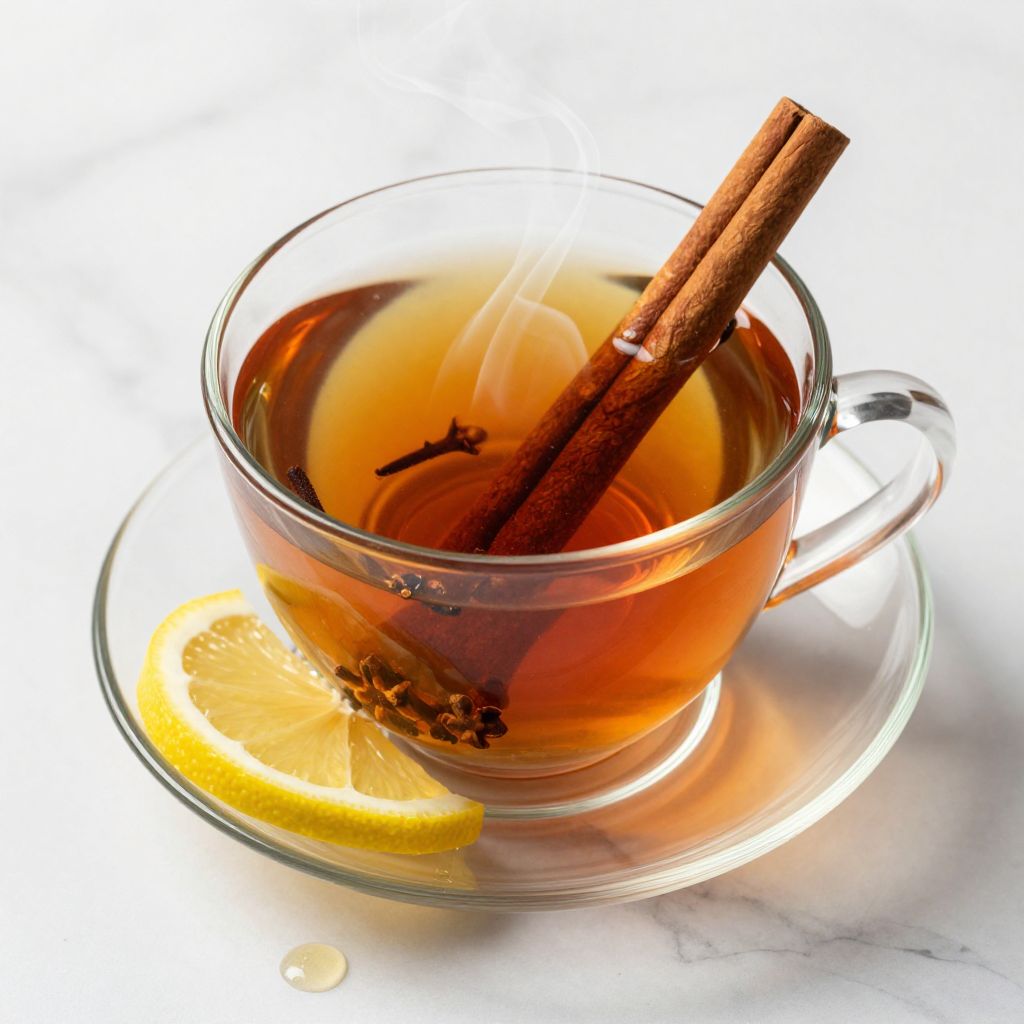
- Cinnamon stick: 1 small piece (optional, for warmth)
- Ginger slices: 2 to 3 thin slices (optional, for spice and digestion)
Ingredient Notes and Substitutions
- Whole cloves: Whole cloves infuse more gently and release flavor slowly, creating a balanced taste. Ground cloves work faster but can become bitter, so use half the amount and reduce steeping time to 5 minutes.
- Honey: Honey adds natural sweetness and has mild antimicrobial properties. You can swap it for agave nectar, maple syrup, or brown sugar, though each brings a slightly different depth.
- Cinnamon: A cinnamon stick adds warmth and complements clove beautifully. Ground cinnamon works but can make the tea cloudy, so strain well or use just a pinch.
- Ginger: Fresh ginger enhances digestion and adds a pleasant spicy kick. Dried ginger or ginger powder can replace it, though use about one-third the amount since it’s more concentrated.
- Water: Filtered water tastes cleaner, but tap water works fine if that’s what you have on hand.
How to Make Clove Tea
Step 1: Measure Your Cloves
Grab 4 to 6 whole cloves and place them in your empty mug. Whole cloves are preferable to ground because they infuse gently without creating bitterness or sediment.
Step 2: Boil Your Water
Fill your kettle with 1 cup of fresh, cold water and bring it to a rolling boil. Using freshly boiled water ensures proper extraction of the clove’s oils and compounds.
Step 3: Pour the Hot Water
Once the water reaches a full boil, carefully pour it directly over the cloves in your mug. The hot water immediately activates the clove’s aromatic oils and begins the steeping process.
Step 4: Add Optional Aromatics
If you’re using cinnamon, ginger, or both, add them now to the hot water. These ingredients benefit from the same infusion time as the cloves and create a more complex, warming blend.
Step 5: Cover and Steep
Cover your mug with a small plate or saucer to trap the steam and heat. Steep for 8 to 10 minutes, allowing the cloves to fully release their flavor and beneficial compounds without over-extracting and turning bitter.
Step 6: Test the Flavor
After 8 minutes, carefully take a small sip to check if the tea has reached your desired strength. If it tastes mild, give it another minute or two, but avoid steeping beyond 12 minutes or the flavor becomes harsh.
Step 7: Strain Into Your Cup
Using a fine-mesh strainer, pour the tea into your serving cup, catching all the solids. A fine strainer keeps small particles of clove from ending up in your cup, giving you a cleaner drinking experience.
Step 8: Sweeten and Adjust
Stir in honey, lemon juice, or other additions to taste while the tea is still hot. Hot tea dissolves honey and other sweeteners more easily than cooler liquid, ensuring everything blends smoothly.
Pro Tip: Bruise your whole cloves gently with the back of a spoon before steeping to crack the outer shell slightly, which speeds up flavor release without bitterness.
Tips for the Best Clove Tea
- Use whole cloves whenever possible, as they infuse more evenly and taste cleaner than ground cloves. Whole cloves stay fresher longer too.
- Don’t skip the cover during steeping. Trapping steam keeps the heat high and prevents flavor from escaping into the air.
- Taste your tea at the 8-minute mark so you can stop steeping at exactly the right moment. A minute too long and the flavor shifts from pleasant to astringent.
- Keep your cloves in an airtight container away from light and heat. Cloves lose potency over time, so buy small amounts and replace them every 6 to 12 months.
- Make a larger batch by steeping multiple portions at once in a small teapot, then strain and serve into individual cups.
- Pair clove tea with warm spices like cardamom or nutmeg for an even more complex flavor profile. A single clove from a whole nutmeg kernel is stunning here.
Common Mistakes to Avoid
- Steeping ground cloves too long: Ground cloves release flavor quickly and become intensely bitter within 5 to 7 minutes, overpowering the tea completely.
- Using water that’s not quite boiling: Water below 200 degrees Fahrenheit doesn’t extract clove oils effectively, leaving you with weak, flat tea.
- Crushing cloves before steeping: Crushed cloves release tannins too quickly, making the tea taste harsh and astringent rather than warm and smooth.
- Forgetting to strain properly: Stray clove particles in your cup are unpleasant to drink and can make the experience feel gritty and awkward.
- Adding honey to boiling water: While honey is heat-stable, stirring it into water that’s cooled just slightly (below 140 degrees Fahrenheit) preserves more of its nutritional compounds.
Serving Suggestions
Clove tea shines on its own, but it pairs beautifully with light snacks and pairs especially well after a meal. Here are some inspired serving ideas to elevate your tea experience.
- Serve alongside shortbread cookies or digestive biscuits for a simple afternoon treat
- Pair with warm spiced cake or ginger snaps for a cozy dessert pairing
- Enjoy after dinner as a natural digestive aid and palate cleanser
- Offer to guests during cooler months as a welcoming, warm beverage alternative to coffee
- Serve in small teacups for a calming bedtime ritual paired with quiet time and a good book
Variations to Try
- Chai-Inspired Clove Tea: Add a small piece of fresh ginger, a cinnamon stick, and a cardamom pod, then finish with a splash of milk and honey for a creamy, spiced version that tastes like a lighter chai.
- Citrus Clove Tea: Steep a thin slice of fresh orange or lemon peel alongside the cloves for brightness and complexity. The citrus oils play beautifully against clove’s warmth.
- Minty Clove Tea: Add a small handful of fresh mint leaves during steeping for a cooling, refreshing variation that still retains clove’s warmth. Perfect for warmer afternoons.
- Spiced Apple Clove Tea: Steep the cloves with a small slice of dried apple and a tiny pinch of nutmeg for an earthy, slightly sweet version reminiscent of autumn spices.
- Clove and Star Anise Tea: Combine 3 cloves with one small piece of star anise for a licorice-forward sweetness that balances clove’s slight heat.
Dietary Adaptations
- Gluten-Free: Clove tea is naturally gluten-free and contains no grains or processed ingredients, making it safe for anyone avoiding gluten.
- Dairy-Free: Plain clove tea contains no dairy. If you want creaminess, swap honey milk for a splash of coconut milk, almond milk, or oat milk.
- Vegan: Use maple syrup or agave nectar instead of honey, and choose plant-based milk if you want a creamy version. Everything else in clove tea is naturally vegan.
- Low-Carb and Keto: Plain clove tea has minimal carbohydrates. Skip honey and use a zero-calorie sweetener like stevia or monk fruit if you need sweetness.
Storage and Reheating
Refrigerator
Store brewed clove tea in a sealed glass container in the refrigerator for up to 3 days. The flavor remains pleasant, though it will taste slightly less vibrant than fresh.
- Serve chilled over ice as a refreshing summer drink
- Reheat gently in the microwave or on the stovetop without boiling, which can degrade flavor
- Add a squeeze of fresh lemon before chilling to brighten the flavor
Freezer
Freeze brewed clove tea in ice cube trays, then store the cubes in a freezer bag for up to 2 months. This is perfect for adding to smoothies or making iced tea quickly.
- Pop a cube into a mug of hot water for instant clove tea whenever you want it
- Add frozen cubes to apple cider or warm milk for a spiced beverage
Reheating
Reheat refrigerated clove tea gently on the stovetop over low heat or in the microwave in 30-second intervals until warm. Never boil reheated tea, as this damages the delicate flavor compounds you steeped so carefully.
- Warm gently just until steam begins to rise
- Add fresh honey or a squeeze of lemon when reheating to refresh the flavor
Nutrition Information
| Nutrient | Amount |
|---|---|
| Calories | 2 |
| Total Fat | 0g |
| Saturated Fat | 0g |
| Carbohydrates | 0.5g |
| Fiber | 0g |
| Sugar | 0g |
| Protein | 0g |
| Sodium | 2mg |
| Cholesterol | 0mg |
This nutrition information reflects plain clove tea with water only. Adding honey, milk, or other ingredients will increase the calorie and carbohydrate content accordingly.
Frequently Asked Questions
Can I Use Ground Cloves Instead of Whole Cloves?
Yes, but use only 1/4 teaspoon of ground cloves and reduce steeping time to 5 minutes. Ground cloves release flavor much faster and can become bitter if steeped too long, so close monitoring is essential.
How Often Is It Safe to Drink Clove Tea?
Most people can safely enjoy clove tea daily, and it’s been used for centuries as a regular beverage in many cultures. If you’re pregnant, nursing, or taking blood thinners, consult your doctor before making it a daily habit.
Does Clove Tea Really Help With Digestion?
Cloves contain compounds like eugenol that have traditionally been used to support digestive comfort and reduce bloating. While scientific research is ongoing, many people report noticing improvements when drinking clove tea after meals.
Can I Make Clove Tea Ahead of Time and Reheat It?
Absolutely. Brew it fresh, let it cool, then store it in the refrigerator for up to 3 days. Reheat gently without boiling to preserve the flavor, and consider adding fresh honey or lemon when reheating to brighten it.
What Does Clove Tea Taste Like?
Clove tea tastes warm, slightly sweet, and mildly spicy with an earthy undertone. It’s not bitter when brewed correctly, and the aroma is even more appealing than the flavor itself.
Can Children Drink Clove Tea?
Yes, clove tea is safe for children in moderate amounts. Make it milder by using just 3 cloves and shorter steeping time, and let it cool slightly before serving to avoid burns.
Final Thoughts
Clove tea is proof that the simplest recipes often deliver the most comfort. With just one or two pantry staples, you create a beverage that soothes, warms, and delights in ways that nothing else quite can.
Make yourself a cup today, settle in somewhere quiet, and let the aroma remind you why this ancient drink has remained beloved across continents and centuries. Once you do, clove tea will become your go-to comfort in a mug.
Clove Tea
Ingredients
Equipment
Method
- Grab 4 to 6 whole cloves and place them in your empty mug. Whole cloves are preferable to ground because they infuse gently without creating bitterness or sediment.
- Fill your kettle with 1 cup of fresh, cold water and bring it to a rolling boil.
- Once the water reaches a full boil, carefully pour it directly over the cloves in your mug. The hot water immediately activates the clove's aromatic oils and begins the steeping process.
- If you're using cinnamon, ginger, or both, add them now to the hot water.
- Cover your mug with a small plate or saucer to trap the steam and heat. Steep for 8 to 10 minutes, allowing the cloves to fully release their flavor and beneficial compounds without over-extracting and turning bitter.
- After 8 minutes, carefully take a small sip to check if the tea has reached your desired strength. If it tastes mild, give it another minute or two, but avoid steeping beyond 12 minutes or the flavor becomes harsh.
- Using a fine-mesh strainer, pour the tea into your serving cup, catching all the solids.
- Stir in honey, lemon juice, or other additions to taste while the tea is still hot.